Savory Spinach Parmesan Bread (Bread Machine Dough + Oven-Baked)
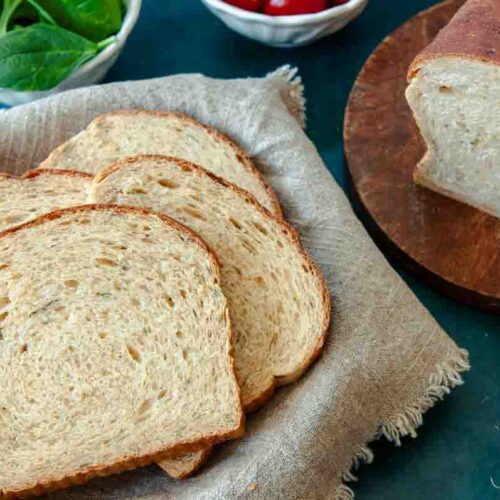
Make this savory spinach bread using your bread machine’s DOUGH cycle, then shape and bake it in a conventional oven for better texture. Parmesan, garlic, and caramelized onion give it bold flavor—and smart timing keeps the spinach from turning the loaf green.
14
slices
Ingredients
- ½ cup (114 g) milk
- ½ cup (114 g) water
- 1½ tablespoons (21 g) butter
- 2 teaspoons granulated sugar
- 1 teaspoon salt
- ¼ cup (27 g) grated Parmesan cheese
- 1½ tablespoon (10 g) instant minced onion
- 2 cups (240 g) bread flour
- 1 cup (113 g) whole wheat flour
- 1½ teaspoons instant yeast
- ¼ cup (15 g) finely chopped fresh spinach leaves
Instructions
Add ingredients to the bread machine
- Place ½ cup milk, ½ cup water, 1½ tablespoons butter, 2 teaspoons granulated sugar, 1 teaspoon salt, ¼ cup grated Parmesan cheese, 1½ tablespoon instant minced onions, 2 cups bread flour,1 cup whole wheat flour, and 1½ teaspoons instant yeast into the bread machine pan. If possible, weigh the flour.
- Select the DOUGH cycle and press START.
Check the dough
- First time: Open the lid and check the dough after it has mixed for 1-2 minutes. Ensure the paddle(s) is engaged, and the dough is starting to clump into a ball.
- Second time: After 15-18 minutes, open the lid again and check the moisture level of the dough. It should be sticky enough to stick to the sides, then pull away cleanly. If the dough is bouncing off the pan walls or riding on top of the paddle like a top, add more water one tablespoon at a time until the dough is slightly tacky.
- If the dough is too wet, and doesn't pull away from the sides cleanly, add flour one tablespoon at a time. Read more about this surprising trick for making good bread in a bread machine.
- When the machine beeps that it's time for add-ins, add ¼ cup finely chopped fresh spinach leaves to the dough. If your machine doesn't have a beep, add it in the last 3-4 minutes of the kneading phase.
Let the machine complete the cycle.
- The dough cycle will mix, knead, and allow the dough to rise. This usually takes about 1.5 hours, depending on your machine.
- When the DOUGH cycle completes, check to ensure the dough has doubled in size. If not, leave it in the machine to rise until it does. When doubled, remove the dough to a lightly floured surface. (I use a floured silicone mat for easy cleanup.)
Shaping
- Remove the dough from the bread machine onto a lightly floured surface. Knead lightly and shape into a smooth round ball.
- Use your hands and a rolling pin to roll into a rectangle approximately 9x11 inches. Make sure any large, visible bubbles are pressed out.
- Starting with the short end closest to you, begin rolling the dough to make a loaf. Don't stretch the dough or leave spaces between the layers. Pinch the seam shut. Then, pinch the ends shut and pull them towards the seam. If you are confused, watch the video.
- Grease the pan beforehand unless otherwise instructed by the manufacturer. Place the dough into a 10 x 5-inch loaf pan (paid link) (or use two 8½ x 4⅓-inch pans) with the seam side down. Use your flat palms to gently but firmly press the dough into the pan as evenly as you can.
Final Rise
- Cover pan with a cheap shower cap or tea towel and let the dough rise in a warm place (75-78˚F) until the dough peeks over the edge of the pan no more than 1 inch. Preheat your oven to 350˚F about 15 minutes before you think the bread will be ready to bake.
Bake
- Bake at 350˚F for 35 minutes or until the internal temperature reaches 200˚F.
Cool before slicing
- Allow the loaf to cool for 15 minutes before turning the bread onto a cooling rack. Let the loaf cool for at least an hour before slicing.
Serve and enjoy!
- Slice and serve warm, toasted, or however you like. Store leftovers in an airtight container at room temperature for up to 3 days.
Notes
Tips for Success
- Use a quick-read thermometer to check the dough’s internal temperature after baking.
- Let the bread cool for at least 1 hour before slicing for clean cuts.
- Leftover bread makes amazing croutons: cube, spray with butter, and bake at 350˚F for 10-15 minutes.
- In a heavy-duty stand mixer, add the ingredients to the bowl in the specified order.
- Begin mixing on low speed until all the ingredients are moistened.
- Switch to a dough hook attachment and increase the speed to 2 or 3.
- Continue beating/kneading until the dough becomes smooth and elastic, typically about 5-10 minutes.
- Cover the dough and let it rise in a warm place.
- Once risen, gently deflate the dough and shape it as directed in the recipe.
- Combine all the ingredients in a large bowl until they form a shaggy ball.
- Turn the dough out onto a floured surface.
- Knead the dough with your hands until it becomes smooth and elastic, which may take around 10-20 minutes, depending on your experience.
- Place the dough ball in a greased bowl.
- Cover the bowl and allow the dough to double in size.
- After rising, gently deflate the dough and shape it according to the recipe's instructions.
Nutritional Information
Serving: 1slice | Calories: 154kcal | Carbohydrates: 26g | Protein: 5g | Fat: 3g | Saturated Fat: 2g | Polyunsaturated Fat: 0.3g | Monounsaturated Fat: 1g | Trans Fat: 0.1g | Cholesterol: 8mg | Sodium: 253mg | Potassium: 77mg | Fiber: 1g | Sugar: 2g | Vitamin A: 146IU | Vitamin C: 1mg | Calcium: 39mg | Iron: 0.4mg