Steakhouse-Style Brown Bread (Bread Machine Dough, No Rye)
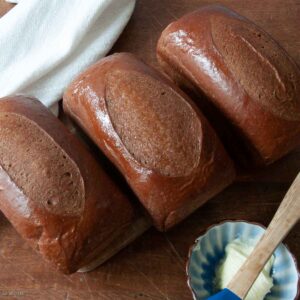
This Brown Bread Recipe is dark-colored bread like we used to get at the local Steak and Ale. It was not related to pumpernickel because it had no rye in it. Directions for mixing and kneading in a bread machine are included.
12
Ingredients
- ⅞ cup + 1 tablespoon (212 g) water
- ¼ cup (57 g) orange juice
- ¼ cup (84 g) honey
- 1 ¼ teaspoon (1 ¼ teaspoon) salt
- 2 tablespoons (2 tablespoons) Dutch-process cocoa -
- 3 tablespoons (42 g) unsalted butter (chopped)
- 1 ⅔ cup (200 g) whole wheat flour
- 1 ⅔ cup (200 g) unbleached bread flour
- 2 teaspoons (2 teaspoons) instant yeast
Instructions
- Add ingredients to a bread machine pan: ⅞ cup + 1 tablespoon water, ¼ cup orange juice, ¼ cup honey, 1 ¼ teaspoon salt, 2 tablespoons Dutch-process cocoa, 3 tablespoons unsalted butter (chopped), 1 ⅔ cup whole wheat flour, 1 ⅔ cup unbleached bread flour, and 2 teaspoons instant yeast. Select the DOUGH cycle and press START.
- Check paddle engagement: Open the lid in the first minute to make sure the paddles are engaged and the dough is starting to clump together.
- Check dough consistency: Recheck the dough after 15-18 minutes. If it's too sticky, add flour 1 tablespoon at a time. If it's slapping loudly or too dry, add water 1 tablespoon at a time. The ideal texture sticks to the sides, then pulls away cleanly.
- Remove and divide the dough: When the dough has doubled and the cycle ends, transfer it to a floured board or a silicone mat (easy cleanup--just throw it in the dishwasher).Divide into three equal parts and shape each into a ball.
- Shape the dough: Roll each ball into a 7x9-inch rectangle. Roll tightly into a log, pinch the seams and ends shut, and place seam-side down into a mini loaf pan. Repeat with remaining dough.Note: Fill pans ⅓ to ½ full after shaping. If the pans are too large, the loaves may look squat. Too small, and the dough might rise too high and tear during baking.
- Let rise again: Cover loaves with a tea towel and let rise until puffy and nearly doubled.
- Preheat your oven to 350˚F (180˚C) while the loaves are rising.
- Bake until done: Bake mini loaves for 20–25 minutes. For a single large loaf, bake 30–35 minutes. Look for browning on the bottom or use a thermometer to ensure the internal temperature reaches 190–195˚F (88˚C).
- Cool and serve: After 5 minutes, remove loaves from pans and cool on a rack. Enjoy warm with butter.
Notes
Heads-up: Avoid doubling this recipe. Most bread machines cannot adequately knead more than 4½–5 cups of flour and may overheat. More details here.
Make Ahead: Dough can be refrigerated after the DOUGH cycle or shaped first and chilled overnight. Let rise until soft and puffy before baking.
Freezing Options:
- Unbaked dough: Freeze after the DOUGH cycle or after shaping (before final rise). Defrost in the fridge overnight.
- Baked: Double-wrap and freeze up to one month. Reheat gently.
- Stand Mixer: Mix until moistened, then knead with a dough hook (speed 2–3) until smooth and elastic (5–10 minutes). Let rise, deflate, and shape as directed.
- By Hand: Mix to a shaggy dough, knead on a floured surface until smooth and elastic (10–20 minutes). Let rise, deflate, and shape as directed.
Nutritional Information
Serving: 1(1/4 of a loaf) | Calories: 176kcal | Carbohydrates: 32g | Protein: 5g | Fat: 4g | Saturated Fat: 1g | Polyunsaturated Fat: 1g | Monounsaturated Fat: 2g | Sodium: 278mg | Potassium: 119mg | Fiber: 3g | Sugar: 6g | Vitamin A: 137IU | Vitamin C: 3mg | Calcium: 12mg | Iron: 1mg