Blue-Ribbon Buttermilk Bread (Bread Machine + Oven-Baked)
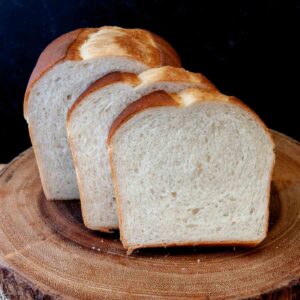
This Buttermilk Bread Machine recipe makes a soft white sandwich loaf. Skip the hassle of kneading. Let your bread machine do the job instead. Shape the dough by hand and bake in your oven for a blue-ribbon loaf.
12
slices
Ingredients
- ⅞ cup (210 g) buttermilk
- 1 large (50 g) egg
- 2 tablespoons granulated sugar
- 1¼ teaspoon table or sea salt
- 1½ tablespoon (21 g) butter (finely chopped)
- 3 cups + 2 tablespoons (375 g) all-purpose flour
- 1½ teaspoon bread machine or instant yeast
Instructions
- Load Ingredients into the Bread Machine: ⅞ cup buttermilk, 1 large egg, 2 tablespoons granulated sugar, 1¼ teaspoon table or sea salt, 1½ tablespoon butter (finely chopped), 3 cups + 2 tablespoons all-purpose flour, 1½ teaspoon bread machine or instant yeast into bread machine pan in the order listed above.Select the DOUGH cycle and press START.
- Dough Check: Lift the lid to peek at the dough at least twice during the mixing and kneading phase. The first time, look immediately after the machine starts mixing to ensure the paddles are engaged correctly. Look again 15 minutes into the DOUGH cycle to assess the consistency of the dough. For most recipes, the dough should stick to the side, then pull away cleanly.If your dough is too wet, add flour one tablespoon at a time.Conversely, if the dough is too dry, add one tablespoon of liquid at a time until the dough looks just right. Read more about this surprising secret to success with a bread machine here.
- First Rise: Once the DOUGH cycle is complete, turn the dough onto a lightly floured surface.
- Shaping: Shape dough with your hands or a rolling pin into a rectangle roughly 14 x 10 inches. If dough is too elastic to shape, cover with a tea towel and let it rest for 10 minutes before trying again.Be sure there are no large visible bubbles, especially on the sides of the rectangle. Press them out or pinch them with your fingers to avoid tunnels in your bread. Also, brush off any excess flour as you go.Starting from the short side nearest you, roll the dough into a cylinder. Try not to stretch the dough, but neither should it be too loose. Pinch the seam shut and pull up the ends toward the seam and pinch them closed.Turn the cylinder of dough over to reveal the smooth top. Place it into a lightly greased 8½ x 4½-inch loaf pan or a 9 x 4 x 4-inch Pullman pan. Gently smoosh the dough with your palms to make it level throughout the pan.
- Second Rise: Cover with a cheap shower cap or a tea towel. Let rise until peeking over the edge of the pan.
- Preheat: About 15 minutes before you think your bread will be ready to bake, preheat your oven to 350 °F (180˚C).
- Bake: Brush the top of the loaf with melted butter. Make one slash down the middle with a sharp knife or a razor blade. Pop into the oven for 30-40 minutes or until the internal temperature is 200 °F (93˚C).
- Cool: Let bread cool for 5 minutes. Remove the loaf from the pan and cool on a wire rack. To avoid squashing the loaf, let it cool at least 30 minutes before cutting.
Notes
Heads-up: Avoid doubling this recipe. Most bread machines cannot adequately knead more than 4½–5 cups of flour and may overheat. More details here.
Make Ahead: Dough can be refrigerated after the DOUGH cycle or shaped first and chilled overnight. Let rise until soft and puffy before baking.
Freezing Options:
Active dry yeast may be substituted. Use about ¼ teaspoon more than instant yeast. Dissolving first is optional. Storage tips: Cool completely before storing. Keep unsliced in a plastic bag or bread box. For freezing, double-wrap and use within one month. Avoid refrigerating—bread molds faster in humid cold.
- Unbaked dough: Freeze after the DOUGH cycle or after shaping (before final rise). Defrost in the fridge overnight.
- Baked loaf: Double-wrap and freeze up to one month. Reheat gently. Frost after thawing.
- Stand Mixer: Mix until moistened, then knead with a dough hook (speed 2–3) until smooth and elastic (5–10 minutes). Let rise, deflate, and shape as directed.
- By Hand: Mix to a shaggy dough, knead on a floured surface until smooth and elastic (10–20 minutes). Let rise, deflate, and shape as directed.
Active dry yeast may be substituted. Use about ¼ teaspoon more than instant yeast. Dissolving first is optional. Storage tips: Cool completely before storing. Keep unsliced in a plastic bag or bread box. For freezing, double-wrap and use within one month. Avoid refrigerating—bread molds faster in humid cold.
Nutritional Information
Serving: 1slice | Calories: 155kcal | Carbohydrates: 27g | Protein: 5g | Fat: 3g | Saturated Fat: 1g | Polyunsaturated Fat: 1g | Monounsaturated Fat: 1g | Trans Fat: 1g | Cholesterol: 19mg | Sodium: 280mg | Potassium: 77mg | Fiber: 1g | Sugar: 3g | Vitamin A: 93IU | Vitamin C: 1mg | Calcium: 28mg | Iron: 2mg