Bread Machine Golden Egg Bread (with Dried Fruit)
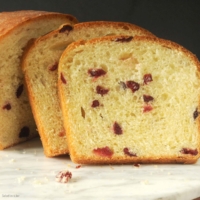
This bread machine dried fruit bread has a soft, egg-enriched crumb with bursts of dried fruit. The dough is mixed and kneaded in the bread machine, then shaped and baked in the oven for the best texture. Ideal for toast, French toast, or even bread pudding!
12
slices
Ingredients
- ⅔ cup (151 g) water
- 2 large (100 g) eggs
- ⅓ cup (72 g) vegetable oil - (I prefer olive oil)
- 3 tablespoons (36 g) granulated sugar
- 1¼ teaspoons table or sea salt
- 3⅓ to 3½ cups (400 g) unbleached bread flour - (Start with 3⅓ cups of flour and add more if necessary.)
- 2 teaspoons instant or bread machine yeast
- ¾ cup (91 g) dried cranberries, dried cherries, dried apricots, chopped dates, raisins, or a combination
Instructions
- Making the Dough: Place ⅔ cup water, 2 large eggs, ⅓ cup vegetable oil, 3 tablespoons granulated sugar, 1¼ teaspoons table or sea salt, 3⅓ to 3½ cups unbleached bread flour, and 2 teaspoons instant or bread machine yeast in the bread machine pan in the order listed. Select the DOUGH cycle and press START.
- First check: After a couple of minutes, check the dough to make sure it is coming together into a raggedy ball. If not, add more water 1 tablespoon at a time. If you see pancake batter instead of dough, you forgot some flour—just add it slowly until everything pulls together.Second check: Check dough again after about 15 minutes. The dough should stick to the sides of the pan, then pull away cleanly. If too wet, add flour 1 tablespoon at a time. If too dry and the dough doesn't stick at all, add more liquid. See more details--Surprising Secret for Making Better Bread with a Bread Machine.NOTE: Bread dough is influenced by flour, humidity, and even your kitchen temperature—so use this step to fine-tune the dough for your environment.
- Add Dried Fruit - In the last 5 minutes of the kneading, (most bread machines beep) add ¾ cup dried cranberries, dried cherries, dried apricots, chopped dates, raisins, or a combination when the add-in beep signals or about 5 minutes before the kneading phase ends. Mix the fruit in by hand while shaping the dough if you forget
- First Rise – Let the dough rise in the machine until doubled in size. If it needs more time, leave it in the pan until ready.
- End of DOUGH cycle: The dough should be doubled. If not, give it more rise time until it is. Restart the DOUGH cycle and knead for 5 seconds to deflate the dough. Stop the machine and turn the dough out onto a lightly floured surface, shape into a smooth ball, cover, and let rest for 10 minutes.
- Preparing to shape: Press with your hands or use a rolling pin to shape the dough into a rectangle, with the shortest side slightly longer than your pan.
- Shape dough into a log: Starting with the short side nearest you, use your hands to roll the dough into a cylinder shape. Tuck ends under and carefully place the roll into a loaf pan (10 x 5-inches or 9 x 5-inches). It should fill the pan about halfway.
- Second Rise: Cover and let the dough rise in a warm place until nearly doubled.. This rise may take as long as an hour or more, but don't watch the clock. The dough appearance is your only true guide.
- Bake: Preheat the oven to 350˚F (180˚C). Bake for 35-40 minutes until golden brown and the internal temperature reaches 190-195°F (88-91°C). Check with a quick-read digital thermometer. Cover with foil if it browns too quickly.
- Cool - Let the baked loaf cool in the pan on the counter for 15 minutes. Turn out onto a cooling rack. Allow the bread to cool completely (1 hour) before slicing, or you risk squashing it as you slice. (Sometimes, eating warm bread is worth the risk of crushing it. :-))
Notes
Heads-up: Avoid doubling this recipe. Most bread machines cannot adequately knead more than 4½–5 cups of flour and may overheat. More details here.
Make Ahead: Dough can be refrigerated after the DOUGH cycle or shaped first and chilled overnight. Let rise until soft and puffy before baking.
Freezing Options:
- Unbaked dough: Freeze after the DOUGH cycle or after shaping (before final rise). Defrost in the fridge overnight.
- Baked bread: Double-wrap and freeze up to one month. Reheat gently.
- Stand Mixer: Mix until moistened, then knead with a dough hook (speed 2–3) until smooth and elastic (5–10 minutes). Let rise, deflate, and shape as directed.
- By Hand: Mix to a shaggy dough, knead on a floured surface until smooth and elastic (10–20 minutes). Let rise, deflate, and shape as directed.
Nutritional Information
Serving: 1slice | Calories: 236kcal | Carbohydrates: 35g | Protein: 6g | Fat: 8g | Saturated Fat: 1g | Polyunsaturated Fat: 4g | Monounsaturated Fat: 2g | Trans Fat: 0.05g | Cholesterol: 31mg | Sodium: 305mg | Potassium: 69mg | Fiber: 2g | Sugar: 8g | Vitamin A: 46IU | Vitamin C: 0.02mg | Calcium: 12mg | Iron: 1mg