Bread Machine Oatmeal Sunflower Bread
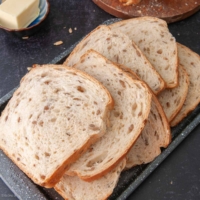
This soft oat bread is one I come back to often—mild, sliceable, and just right for toast or sandwiches. The bread machine does the work, and baking it in the oven gives it a golden crust worth waiting for.
12
slices
Ingredients
- ½ cup (114 g) whole or 2% milk (cool)
- ½ cup (114 g) water
- ¼ cup (85 g) honey
- 2 tablespoons (28 g) unsalted butter
- 1¼ teaspoon table or sea salt
- 3 cups (360 g) bread flour
- ½ cup (40 g) quick or old-fashioned oats (not instant)
- 2¼ teaspoons (2¼ teaspoons) instant yeast
- ½ cup (67 g) hulled sunflower seeds, toasted
Instructions
- Load Bread Maker: ½ cup whole or 2% milk (cool) and ½ cup water, ¼ cup honey, 2 tablespoons unsalted butter, 1¼ teaspoon table or sea salt, 3 cups bread flour, ½ cup quick or old-fashioned oats (not instant) , 2¼ teaspoons instant yeast--everything except for seeds.
- Select the DOUGH cycle and start.First check: After a couple of minutes, check the dough to make sure it is coming together into a raggedy ball. If not, add more water 1 tablespoon at a time. If you see pancake batter instead of dough, you forgot some flour—just add it slowly until everything pulls together.Second check: Check dough again after about 15 minutes. The dough should stick to the sides of the pan, then pull away cleanly. If too wet, add flour 1 tablespoon at a time. If too dry and the dough doesn't stick at all, add more liquid. See more details--Surprising Secret for Making Better Bread with a Bread Machine.NOTE: Bread dough is influenced by flour, humidity, and even your kitchen temperature—so use this step to fine-tune the dough for your environment.
- Add Seeds: Add the ½ cup hulled sunflower seeds, toasted at the add-in signal, or knead them in by hand before shaping.½ cup hulled sunflower seeds, toasted
- End of DOUGH cycle: The dough should be doubled. If not, give it more rise time until it is. Restart the DOUGH cycle and knead for 1 minute to deflate the dough. Stop the machine and turn the dough out onto a lightly floured surface, shape into a smooth ball, cover, and let rest for 10 minutes.
- Shape the Dough: When the dough cycle has completed, remove the dough to a floured surface and flatten it into a rectangle. Roll into a cylinder that is about 10 inches wide.Pinch the seams and ends together. Place seam-side down into a 9x5-inch greased loaf pan. Pat the dough down with your hands to fill the pan evenly.
- Final Rise: Cover (I like a cheap shower cap) and let rise until the dough is approximately 1/2 to 1 inch above the rim of the pan.
- Preheat your oven to 350˚F (180˚C).
- Bake: Bake for 30-35 minutes or until internal temperature reaches 190˚F (88˚C). Testing with a thermometer is the best way to know when it's properly baked.Note: Check the loaf halfway through baking and cover with foil if getting too brown.
- Cooling: Let rest in the pan 10–15 minutes. Then transfer to a rack and cool completely before slicing.
Notes
Heads-up: Avoid doubling this recipe. Most bread machines cannot adequately knead more than 4½–5 cups of flour and may overheat. More details here.
Make Ahead: Dough can be refrigerated after the DOUGH cycle or shaped first and chilled overnight. Let rise until soft and puffy before baking.
Freezing Options:
- Unbaked dough: Freeze after the DOUGH cycle or after shaping (before final rise). Defrost in the fridge overnight.
- Baked bread: Double-wrap and freeze up to one month. Reheat gently.
- Stand Mixer: Mix until moistened, then knead with a dough hook (speed 2–3) until smooth and elastic (5–10 minutes). Let rise, deflate, and shape as directed.
- By Hand: Mix to a shaggy dough, knead on a floured surface until smooth and elastic (10–20 minutes). Let rise, deflate, and shape as directed.
Nutritional Information
Serving: 1 | Calories: 206kcal | Carbohydrates: 32g | Protein: 6g | Fat: 6g | Saturated Fat: 2g | Polyunsaturated Fat: 1g | Monounsaturated Fat: 1g | Trans Fat: 1g | Cholesterol: 5mg | Sodium: 245mg | Potassium: 69mg | Fiber: 2g | Sugar: 6g | Vitamin A: 59IU | Vitamin C: 1mg | Calcium: 9mg | Iron: 1mg