Honey Oat Dinner Rolls (Bread Machine Dough)
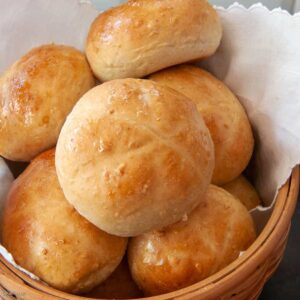
These Honey Oat Dinner Rolls are soft, light, and fluffy with just enough oatmeal to give a little chew and make them interesting. Honey adds the right amount of sweetness.
14
rolls
Ingredients
- ¾ cup (170 g) milk - cool
- ¼ cup (84 g) honey
- 1 large (50 g) egg
- 1 teaspoon (1 teaspoon) salt
- ¼ cup (57 g) unsalted butter
- ⅔ cup (60 g) old-fashioned oats
- 2 ½ cups (300 g) bread flour
- 1 tablespoon (1 tablespoon) vital wheat gluten - (optional)
- 2 ¼ teaspoons (2 ¼ teaspoons) bread-machine yeast or instant yeast
Glaze:
- 1 (50 g) egg
- 1 tablespoon water
Instructions
- Load the bread machine pan: Add 3/4 cup milk, 1/4 cup honey, 1 large egg, 1 teaspoon salt, 1/4 cup unsalted butter, 2/3 cup old-fashioned oats, 2 1/2 cups bread flour, 1 tablespoon vital wheat gluten, and 2 1/4 teaspoons bread-machine yeast or instant yeast.Set your bread maker on the DOUGH cycle and press START.
- Check the dough: Look at least twice by lifting the lid to take a peek. The first time, look immediately after the machine starts to ensure the paddles are engaged correctly. Look again 15 minutes into the DOUGH cycle to assess the consistency of the dough. The dough should stick to the side, then pull away cleanly.If your dough is too wet, add flour one tablespoon at a time. Conversely, if the dough is too dry, add one tablespoon of liquid at a time until the dough looks just right. Read more about this surprising secret to success with a bread machine here.
- After the DOUGH cycle ends: Turn the dough out onto a floured surface. Divide dough in half. Divide each half into 7 rolls for a total of 14. Use your fingers to make each portion into a smooth ball.Place dough balls onto a greased cookie sheet. Allow to rise until almost doubled.
- Preheat the oven to 350˚F (180˚C) about 15 minutes before you anticipate the rolls will be ready to bake.
- Glaze: Whisk 1 egg and 1 tablespoon water together. Brush the tops of the rolls carefully so it doesn't drip and glue the rolls to the baking sheet.Use the dull side of a thin knife or a wooden skewer to gently press down 1-3 times in the middle of each roll to make a decorative pattern.
- Bake and cool: Bake at 350˚F (180˚C) for 10-13 minutes. Allow to cool on a rack for a few minutes or eat as soon as they don't burn your fingers.
Notes
Heads-up: Avoid doubling this recipe. Most bread machines cannot adequately knead more than 4½–5 cups of flour and may overheat. More details here.
Make Ahead: Dough can be refrigerated after the DOUGH cycle or shaped first and chilled overnight. Let rise until soft and puffy before baking.
Freezing Options:
- Unbaked dough: Freeze after the DOUGH cycle or after shaping (before final rise). Defrost in the fridge overnight.
- Baked bread: Double-wrap and freeze up to one month. Reheat gently.
- Stand Mixer: Mix until moistened, then knead with a dough hook (speed 2–3) until smooth and elastic (5–10 minutes). Let rise, deflate, and shape as directed.
- By Hand: Mix to a shaggy dough, knead on a floured surface until smooth and elastic (10–20 minutes). Let rise, deflate, and shape as directed.
Nutritional Information
Serving: 1roll | Calories: 167kcal | Carbohydrates: 25g | Protein: 6g | Fat: 5g | Saturated Fat: 3g | Polyunsaturated Fat: 1g | Monounsaturated Fat: 1g | Trans Fat: 1g | Cholesterol: 33mg | Sodium: 184mg | Potassium: 86mg | Fiber: 1g | Sugar: 6g | Vitamin A: 149IU | Vitamin C: 1mg | Calcium: 27mg | Iron: 1mg