Multigrain Burger Buns (Bread Machine Dough)
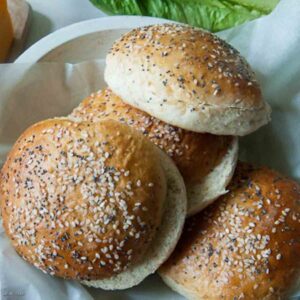
These multigrain burger buns combine a soft, enriched dough with the hearty texture of 7-grain cereal. The addition of mashed potatoes helps them stay fresh longer, making them perfect for burgers, barbecue, or even breakfast sandwiches. Let your bread machine do the work, then shape and bake them to golden perfection.
8
buns
Ingredients
Dough:
- ½ cup (82 g) 7-grain mix
- ⅔ cup (151 g) milk
- 1 large (50 g) egg
- 2 tablespoons (24 g) granulated sugar
- 1 teaspoon (1 teaspoon) table or sea salt
- ¼ cup (57 g) butter (chopped into small pieces)
- ½ cup (125 g) well-seasoned mashed potatoes
- 2½ cups (300 g) unbleached bread flour
- 2 teaspoons (2 teaspoons) bread machine yeast
Glaze:
- 1 large (50 g) egg
- 1 tablespoon (14 g) water
- sesame seeds (white and/or black) or poppy seeds
Instructions
Prepare the dough:
- Pour ½ cup 7-grain mix into the bread machine pan. Heat ⅔ cup milkin the microwave on HIGH power for 1 minute and 30 seconds. Pour the hot milk over the cereal in the pan. Let the milk cool for 5 minutes.
- Add 1 large egg, 2 tablespoons granulated sugar, 1 teaspoon table or sea salt, ¼ cup butter (chopped into small pieces) , ½ cup well-seasoned mashed potatoes, 2½ cups unbleached bread flour, and 2 teaspoons bread machine yeast in the bread machine pan.
- Select the DOUGH cycle and press START.
- Check the dough at least twice during the mixing and kneading phase by lifting the lid to take a peek. The first time, look immediately after the machine starts mixing to ensure the paddles are engaged correctly. Recheck after 15 minutes to assess the consistency of the dough. For most recipes, the dough should stick to the side, then pull away cleanly.If your dough is too wet, add flour one tablespoon at a time.Conversely, if the dough is too dry, add one tablespoon of liquid at a time until the dough looks just right. Read more about this surprising secret to success with a bread machine here.
- When the dough cycle finishes, check the dough. Test with two fingers. The indentation should fill in slowly. If it fills in immediately, leave the dough to rise until it doubles in size and passes the indentation test.
Shape the buns:
- Transfer the dough from the bread machine pan to a floured surface when ready. Divide into 8 or 10 portions and form into balls. Place the balls on a prepared baking sheet (greased or lined with a silicone mat or parchment paper). Let the balls relax for 15 minutes. Cover the balls with a sheet of plastic wrap before flattening them to prevent sticking. Severely flatten balls with the palm of your hand, a meat flattener, or a clear, flat-bottom bowl or plate to keep your buns from being too thick in the middle.
- Allow buns to rise until puffy. Preheat the oven to 375˚F (190˚C).
- Flatten buns one more time immediately before glazing.
Glaze:
- Make the glaze by whisking 1 large egg and 1 tablespoon water together in a small bowl. Brush the tops and sides of the buns, being careful not to let the glaze drip onto the tray. Sprinkle with sesame seeds (white and/or black) or poppy seeds.
Bake:
- Bake in a preheated 375˚F (190˚C) oven for 15-20 minutes or until golden brown and internal temperature reaches 190˚F (88˚C).
Notes
Toppings: Vary the seeds on top according to what you like and/or have on hand. Or, leave them off if you prefer. I like to make some with, and some without to please all the eaters around my table.
Heads-up: Avoid doubling this recipe. Most bread machines cannot adequately knead more than 4½–5 cups of flour and may overheat. More details here.
Make Ahead: Dough can be refrigerated after the DOUGH cycle or shaped first and chilled overnight. Let rise until soft and puffy before baking.
Freezing Options:
- Unbaked dough: Freeze after the DOUGH cycle or after shaping (before final rise). Defrost in the fridge overnight.
- Baked bread: Double-wrap and freeze up to one month. Reheat gently.
- Stand Mixer: Mix until moistened, then knead with a dough hook (speed 2–3) until smooth and elastic (5–10 minutes). Let rise, deflate, and shape as directed.
- By Hand: Mix to a shaggy dough, knead on a floured surface until smooth and elastic (10–20 minutes). Let rise, deflate, and shape as directed.
Nutritional Information
Serving: 1 | Calories: 177kcal | Carbohydrates: 21g | Protein: 6g | Fat: 8g | Saturated Fat: 4g | Polyunsaturated Fat: 1g | Monounsaturated Fat: 2g | Trans Fat: 1g | Cholesterol: 58mg | Sodium: 381mg | Potassium: 130mg | Fiber: 2g | Sugar: 5g | Vitamin A: 257IU | Vitamin C: 4mg | Calcium: 41mg | Iron: 1mg