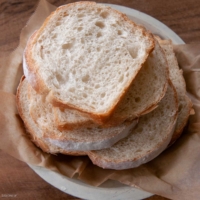
Sourdough Sandwich Loaf (Bread Machine Dough + Oven Bake)
Make this basic sourdough bread machine loaf using the DOUGH cycle of your bread machine, then bake in your oven.
12
slices
Ingredients
- 1 cup (227 g) cool water
- ⅓ cup (80 g) sourdough starter
- 1½ teaspoon table or sea salt
- 1½ teaspoon granulated sugar
- 1½ tablespoon olive oil or softened butter - (optional)
- 3 cups (360 g) bread flour
- 1½ teaspoons instant or bread machine yeast
Instructions
- Add ingredients to the bread machine pan: 1 cup cool water, ⅓ cup sourdough starter, 1½ teaspoon table or sea salt, 1½ teaspoon granulated sugar, 1½ tablespoon olive oil or softened butter, 3 cups bread flour, and 1½ teaspoons instant or bread machine yeast.
- Start Dough Cycle: Select the DOUGH cycle and press START. Open the lid and check the dough during the first minute to ensure the paddles are engaged and the dough is clumping. Recheck dough after 15-18 minutes. It should stick to the sides, then pull away cleanly. Add flour or water if needed, 1 tablespoon at a time, allowing time between each addition. This step is crucial to ensuring a successful outcome.
- End of DOUGH cycle: The dough should be doubled. If not, give it more rise time until it is. Restart the DOUGH cycle and knead for 5 seconds to deflate the dough. Stop the machine and turn the dough out onto a lightly floured surface, shape into a smooth ball, cover, and let rest for 10 minutes.
- Shape Dough: Press into a rectangle (short side slightly wider than bread pan). Roll into a cylinder, seal seams, and tuck ends under.
- Final Rise: Grease a 9 x 5-inch pan. Place dough seam-side down. Pan should not be more than half full. Cover and let rise until dough is about 1 inch above the top of the pan.
Preheat to 450°F (230°C).
- Bake: Dust with flour, if desired, and slash the top of the loaf. Reduce the oven temp to 425°F (220°C). Bake 25–30 minutes or until internal temperature reaches 200–210°F.
- Cool Bread: Remove from pan after 10 minutes and cool on a rack for 1 hour to prevent gumminess.
Notes
How to Achieve a More Pronounced Sourdough Flavor:
- The day before you want to serve the bread: Combine all of the water, sourdough starter, and half of the bread flour in the bread machine pan. Start the machine and let it mix just until all the flour is moistened. Turn the machine off. Let this mixture sit until you are ready to make bread the next day.
- Making the bread: Add the salt, sugar, remaining flour, and yeast. Mix on the DOUGH cycle. Proceed to Step 4 and finish making the bread as directed.
- Stand Mixer: Mix until moistened, then knead with a dough hook (speed 2–3) until smooth and elastic (5–10 minutes). Let rise, deflate, and shape as directed.
- By Hand: Mix to a shaggy dough, knead on a floured surface until smooth and elastic (10–20 minutes). Let rise, deflate, and shape as directed.
Nutritional Information
Serving: 1 | Calories: 126kcal | Carbohydrates: 25g | Protein: 5g | Fat: 1g | Saturated Fat: 1g | Polyunsaturated Fat: 1g | Monounsaturated Fat: 1g | Sodium: 293mg | Potassium: 46mg | Fiber: 1g | Sugar: 1g | Vitamin A: 1IU | Vitamin C: 1mg | Calcium: 6mg | Iron: 1mg