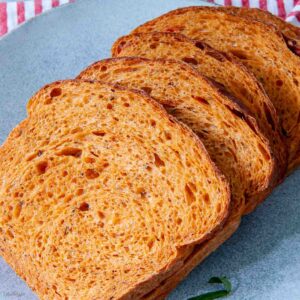
Tomato Basil Bread – (Bread Machine Dough, Oven Baked)
Mix up a savory, herb-infused Tomato Basil Bread using your bread machine for kneading, then shape and bake it in the oven for the best texture and crust. Perfect for sandwiches and toast!
12
slices
Ingredients
- 1 cup (227 g) water
- 3 tablespoons (50 g) tomato paste
- 1 tablespoon (1 tablespoon) oil from sundried tomatoes packed in oil
- 2 tablespoons (2 tablespoons) chopped sundried tomatoes
- 1 teaspoon (1 teaspoon) sea salt
- 1 tablespoon (1 tablespoon) sugar
- ¼ teaspoon (¼ teaspoon) garlic powder
- 2 teaspoons (2 teaspoons) dried minced onion
- 2 teaspoons (2 teaspoons) dried basil
- 2 ¾ cups (330 g) of bread flour
- ½ cup (60 g) whole wheat flour
- 2 ¼ teaspoons (2 ¼ teaspoons) bread machine or instant yeast
Instructions
- Load the Bread Machine: Add all ingredients: 1 cup water, 3 tablespoons tomato paste, 1 tablespoon oil from sundried tomatoes packed in oil,2 tablespoons chopped sundried tomatoes, 1 teaspoon sea salt, 1 tablespoon sugar, ¼ teaspoon garlic powder, 2 teaspoons dried minced onion, 2 teaspoons dried basil, 2 ¾ cups of bread flour, ½ cup whole wheat flour, 2 ¼ teaspoons bread machine or instant yeast) listed to a bread machine pan (with the paddles in place) in the order given.
- Select the DOUGH cycle and start.First check: After a couple of minutes, check the dough to make sure it is coming together into a raggedy ball. If not, add more water 1 tablespoon at a time. If you see pancake batter instead of dough, you forgot some flour—just add it slowly until everything pulls together.Second check: Check dough again after about 15 minutes. The dough should stick to the sides of the pan, then pull away cleanly. If too wet, add flour 1 tablespoon at a time. If too dry and the dough doesn't stick at all, add more liquid. See more details--Surprising Secret for Making Better Bread with a Bread Machine.NOTE: Bread dough is influenced by flour, humidity, and even your kitchen temperature—so use this step to fine-tune the dough for your environment.
- End of DOUGH cycle: The dough should be doubled. If not, give it more rise time until it is. Restart the DOUGH cycle and knead for 5 seconds to deflate the dough. Stop the machine and turn the dough out onto a lightly floured surface, shape into a smooth ball, cover, and let rest for 10 minutes.
- Shape the Dough: Remove the dough from the bread machine pan onto a lightly-floured surface. Lightly press with your fingers into a rectangle shape. Make sure all large bubbles are gently compressed. If the dough is bouncy and won't cooperate, cover it with a tea towel and let the dough relax for 10-15 minutes. Come back and try again.
- Make a rectangle: It should measure about 12 inches long and about 2 inches + the length of your loaf pan. I use an 8½ x 4½ inch loaf pan. So my rectangle should measure approximately 12 x 11 inches. You don't have to measure--just eyeball it.
- Form the Loaf: Spray your loaf pan with non-stick spray. Starting with the short side of the dough rectangle closer to you, roll up the dough. Pinch the seal with your fingers. Pull up each end of the dough cylinder toward the long seam and seal it to make nice round corners on the end. Flip the roll of dough over so the seam side is down and place it into your pan. Pat it down to evenly distribute the log of dough in the pan.
- Second Rise: Cover the bread dough with a tea towel or cheap shower cap. Place it in a warm place (but not too warm) to rise until almost doubled in size. The longer it takes your dough to rise, the better the flavor.
- Bake: When the dough is close to being ready to bake, preheat your oven to 400˚F (200˚C).Turn the oven back to (180˚C)350 °F °F. Bake the bread for 30-35 minutes or until the internal temperature reaches (90-93˚C)195-200 °F
- Cool & Serve: Remove from the oven. Let rest in the pan for 15 minutes, then cool on a wire rack for at least 45 minutes before slicing. Slicing into the bread too quickly may result in a gummy loaf and unappetizing squishing.
Notes
Heads-up: Avoid doubling this recipe. Anything above 4.5-5 cups of flour won’t knead properly in most machines and can cause overheating. More details here.
Make Ahead: Dough can be refrigerated after the DOUGH cycle or shaped first and chilled overnight. Let rise until soft and puffy before baking.
Freezing Options:
- Unbaked dough: Freeze after the DOUGH cycle or after shaping (before final rise). Defrost in the fridge overnight.
- Baked bread: Double-wrap and freeze up to one month. Reheat gently.
- Add ingredients to the bowl in the listed order.
- Mix on LOW until moistened, then knead on speed 2 or 3 with a dough hook for 5-10 minutes until smooth and elastic.
- Cover and let rise in a warm place until doubled.
- Gently deflate and shape as directed in the recipe.
- Mix all ingredients into a shaggy dough ball in a large bowl.
- Turn onto a floured surface and knead for 10-20 minutes until smooth and elastic.
- Place in a greased bowl, cover, and let rise until doubled.
- Gently deflate and shape as directed.
Nutritional Information
Calories: 152kcal | Carbohydrates: 28g | Protein: 5g | Fat: 2g | Saturated Fat: 1g | Polyunsaturated Fat: 1g | Monounsaturated Fat: 1g | Trans Fat: 1g | Sodium: 235mg | Potassium: 156mg | Fiber: 2g | Sugar: 2g | Vitamin A: 95IU | Vitamin C: 3mg | Calcium: 15mg | Iron: 1mg