
Bread Machine vs. Stand Mixer: Which Is Better for Bread Dough?
This post contains affiliate links. As an Amazon Associate, I earn from qualifying purchases at no extra cost to you.
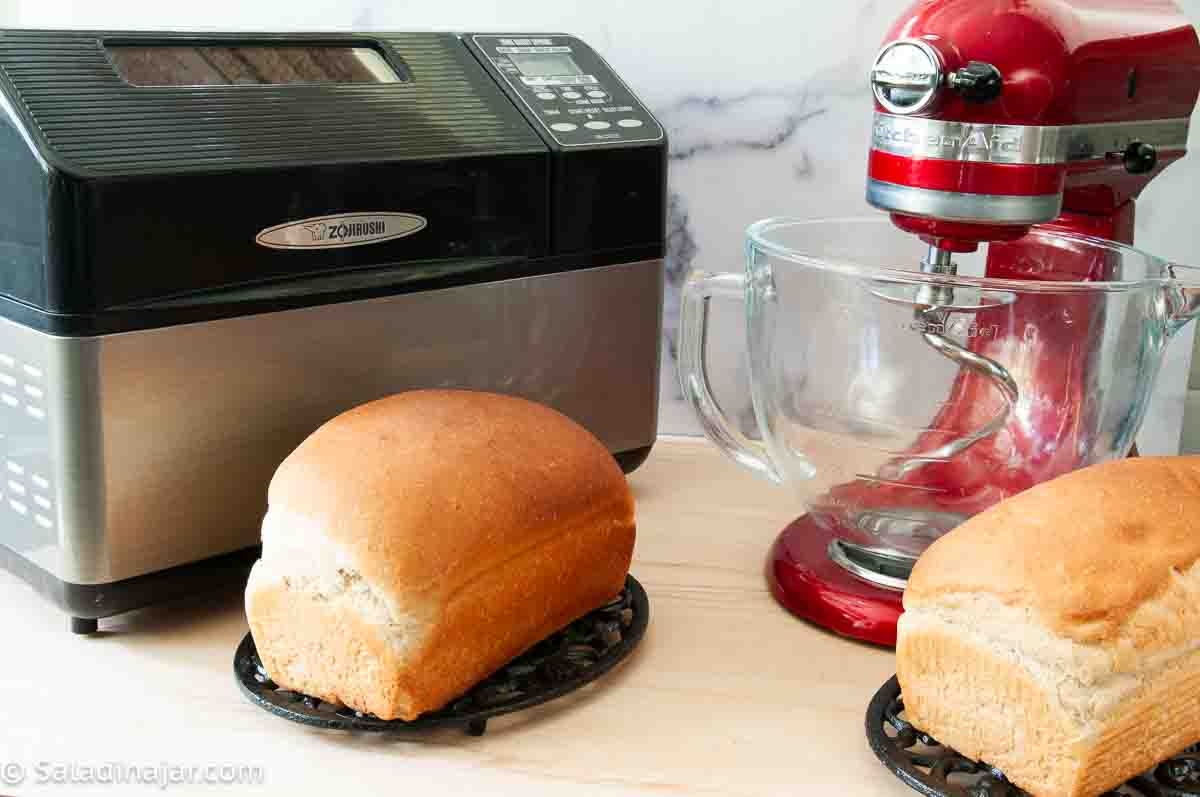
A bread machine is my first choice for mixing, kneading, and proofing one batch of yeast dough with minimal supervision. A stand mixer is more versatile and generally better for larger batches—but it requires you to control the kneading and rising times.
Neither appliance automatically makes better bread. The best choice depends on how much bread you make, whether you need a multipurpose mixer, and how involved you want to be in the process.
I own and use both, but for most rolls, pizza crusts, and sandwich loaves, I prefer the bread machine’s DOUGH cycle. After the first rise, I shape the dough by hand and bake it in my conventional oven.
| Consideration | Bread Machine | Stand Mixer |
|---|
| Best for | Yeast bread (1 loaf) | Bread dough plus general baking |
| Mixing and kneading | Automatically timed | Baker controls speed and time kneading process |
| First rise | Programmed by the machine | Baker monitors the first rise |
| Batch size | Usually limited | Often accommodates larger batches depending on the model |
| Dough adjustments | Easy to make during kneading | Easy, but may require stopping the mixer |
| Oven required | Not necessarily (Keep reading) | Yes |
| Cakes and pastries | Limited usefulness | Much more versatile |
| Attention required | Less | More |
| Shaping | Done by hand after the DOUGH cycle | Done by hand after the first rise |
| Finished bread quality | Excellent when dough is shaped, proofed, and oven-baked | Excellent when properly mixed, proofed, shaped, and baked |
Advantages of a Bread Machine
- Automatic cycle: The machine mixes, kneads, and manages the first rise according to a programmed schedule.
- Easy dough corrections: Watch the dough as it kneads and add flour or liquid when necessary to correct the moisture level. This is an important secret to making good bread with a bread machine.
- Start-to-finish option: A bread machine can also bake the loaf when using a conventional oven is inconvenient or impractical. I normally use the bread machine only for mixing, kneading, and the first rise. Shaping the dough myself and baking it in a conventional oven produces a better shape, texture, and crust.
- Built-in proofing environment: The machine provides gentle warmth during the first rise. It works well in most kitchens, although unusually hot or cold room temperatures can affect the dough.
- If you’re leaning toward a bread machine, see the five benefits that have kept mine on the counter for more than 35 years.
Disadvantages of a Bread Machine
- Limited versatility: It is designed primarily for mixing, kneading, rising, and baking yeast dough.
- Smaller capacity: Most machines should not handle recipes containing more than 4½–5 cups of flour, so doubling is usually not recommended.
- False sense of automation: A bread machine cannot evaluate the dough or correct a problem. Bread machines don’t have a brain; they still benefit from human judgment.
A note about delayed starts: Some bread machines can postpone the beginning of a cycle. Consult your manual before using this feature with eggs, milk, or other perishable ingredients.
Advantages of a Stand Mixer
- Greater versatility: Use it for yeast dough, cakes, cookies, frostings, whipped cream, and many pastry tasks.
- Larger capacity: Depending on the model, a stand mixer may accommodate more dough than a bread machine.
- More control: You choose the attachment, mixing speed, kneading time, and when the dough is ready to rise and ready to shape.
Disadvantages of a Stand Mixer
• More hands-on attention: You must control the speed and kneading time rather than relying on a programmed cycle.
• Proofing is not automatic: Cover the mixing bowl, move it to a suitable location if necessary, and monitor the dough until it has risen sufficiently.
• More judgment required: You must recognize when the dough is properly developed and stop before it overheats or becomes overkneaded.
What if I already own a stand mixer?
You do not need a bread machine to make excellent bread. If you are comfortable monitoring the kneading and providing a suitable place for the dough to rise, your stand mixer may be all you need.
A bread machine earns its counter space by offering something different: a programmed mixing and kneading cycle plus a protected environment for the first rise. I find that convenience especially useful when making one batch of rolls or a loaf of bread. I don’t have to decide if the dough has been kneaded properly. The machine will automatically stop at the proper time.
Which One Should You Choose?
- Choose a bread machine if you usually make one batch of yeast dough and value automatic kneading and a built-in environment for the first rise.
- Choose a stand mixer if you want one appliance for many baking jobs, regularly make larger batches, or prefer more control over kneading.
- Either can produce excellent dough. The recipe, dough consistency, fermentation, shaping, and baking matter more than the appliance used for kneading.
- Check the manufacturer’s capacity. A larger pan or bowl does not necessarily mean the motor can safely knead heavier dough.
Final Thoughts
I own and use both appliances, but for one batch of rolls or sandwich bread, I usually reach for my bread machine. Its programmed kneading and built-in environment for the first rise make breadmaking easier to fit into my day. For larger batches—and nearly everything besides yeast dough—my stand mixer earns its keep.
p.s. Some stand mixers have been known to walk off the counter when kneading large amounts of dough. Be aware!
— Paula, Home Economist
Homemade Food Worth Sharing
Need help troubleshooting?
Email me: Paula at saladinajar.com — photos help!

My bread machine creeped until I put a placemat under it.
Bread machines are easier to clean.
Hi John,
Great tip!!!! Thanks for sharing.
I have both machines and I use both machines. Unfortunately, I am not eating a lot of carbs these days, so I guess the truth right now is I don’t use either one. 🙁
Karen,
Totally understandable. Those machines can wait. 🤔