
Mason Jar Vacuum Sealer (Portable Model I Use Every Day)
Sneak Preview: See how I use a portable Mason jar vacuum sealer to keep lettuce, nuts, seeds, and pantry staples fresh longer—with setup tips, troubleshooting, and everyday examples from my kitchen.
This post contains affiliate links. As an Amazon Associate, I earn from qualifying purchases at no extra cost to you.
Thanks to an observant reader, I discovered a small gadget that makes vacuum-sealing Mason jars surprisingly easy. I’ve been using it for chopped lettuce, fruit, and pantry staples—and included a short video to show exactly how it works and what to expect.
This small rechargeable jar sealer is very different from the older countertop vacuum machines many of us used years ago—it’s compact, cordless, and seals jars with one button.
Why I Love This Mason Jar Sealer
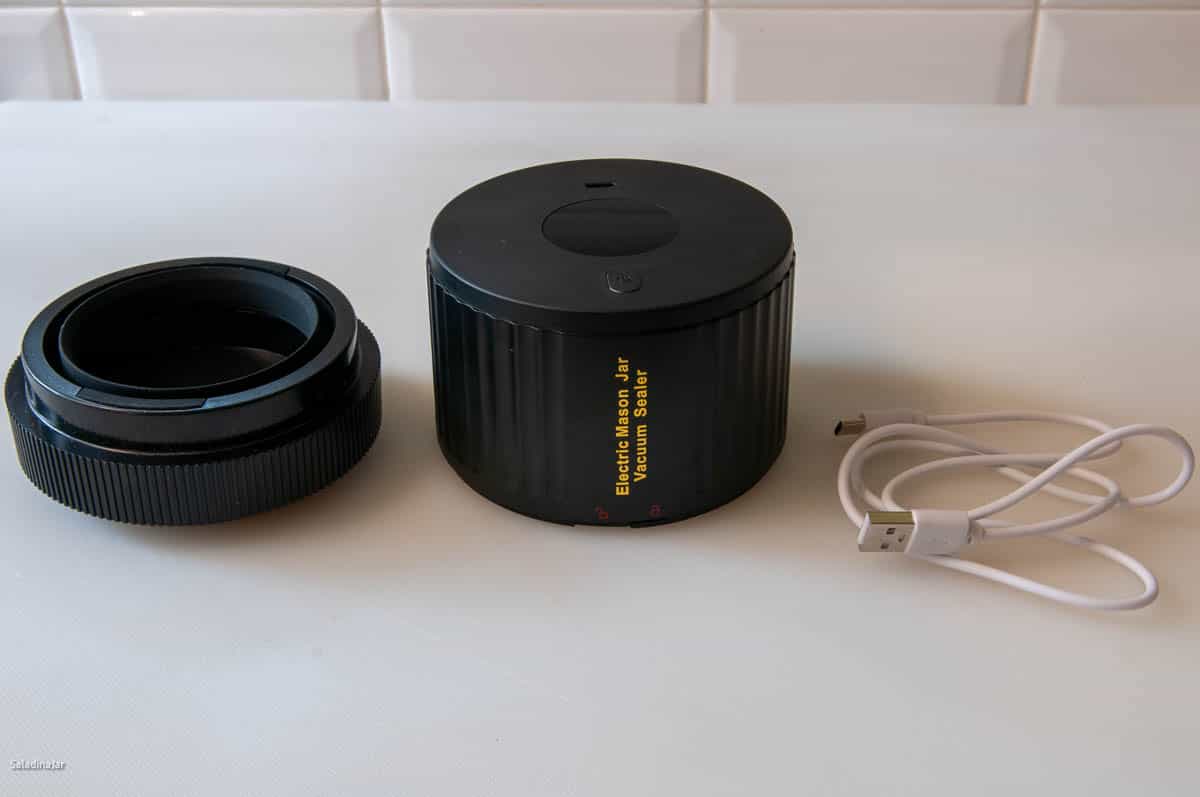
Compact and Easy to Store: Small enough to keep in a drawer, so it’s handy when I need it instead of hiding in a cabinet like older countertop machines.
Rechargeable and Cordless: No hoses, no attachments, and no dragging out a big appliance—just press the button and go.
Works with Both Jar Sizes: Includes adapters for wide-mouth and regular-mouth jars, so I can seal whatever I already have on hand.
Reliable Seal: Consistently pulls a strong vacuum that keeps lettuce, nuts, seeds, and pantry staples fresh longer.
Simple to Use: One-button operation makes it practical for everyday use, not just occasional projects.
Important: This is Not a Canning Method
Vacuum sealing is not a substitute for heat or pressure canning. Perishable items (e.g., lettuce, dressing, mayonnaise) must be refrigerated. Do not use for canning meat or cooked vegetables like tomatoes or green beans.
If you’re still using one of the older handheld Mason jar adapters, here’s the method I used before switching to this portable sealer.
How to use the Mason Jar Vacuum Sealer
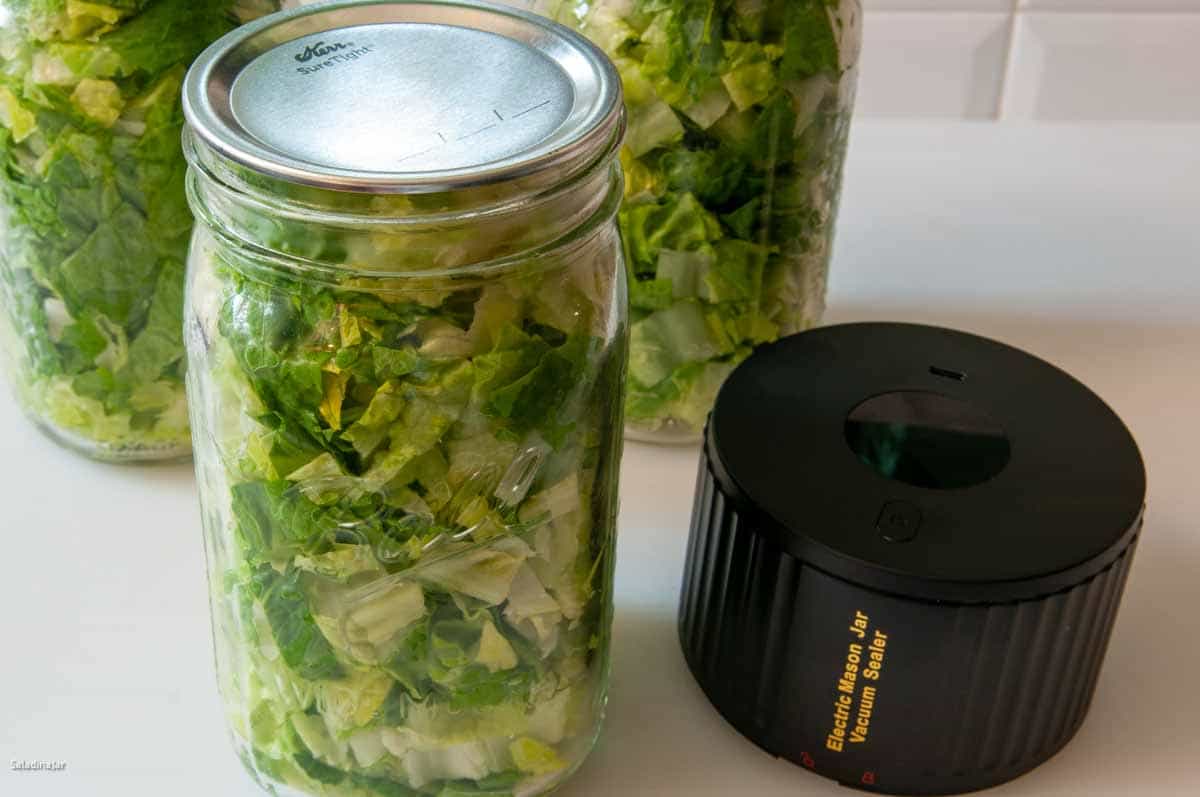
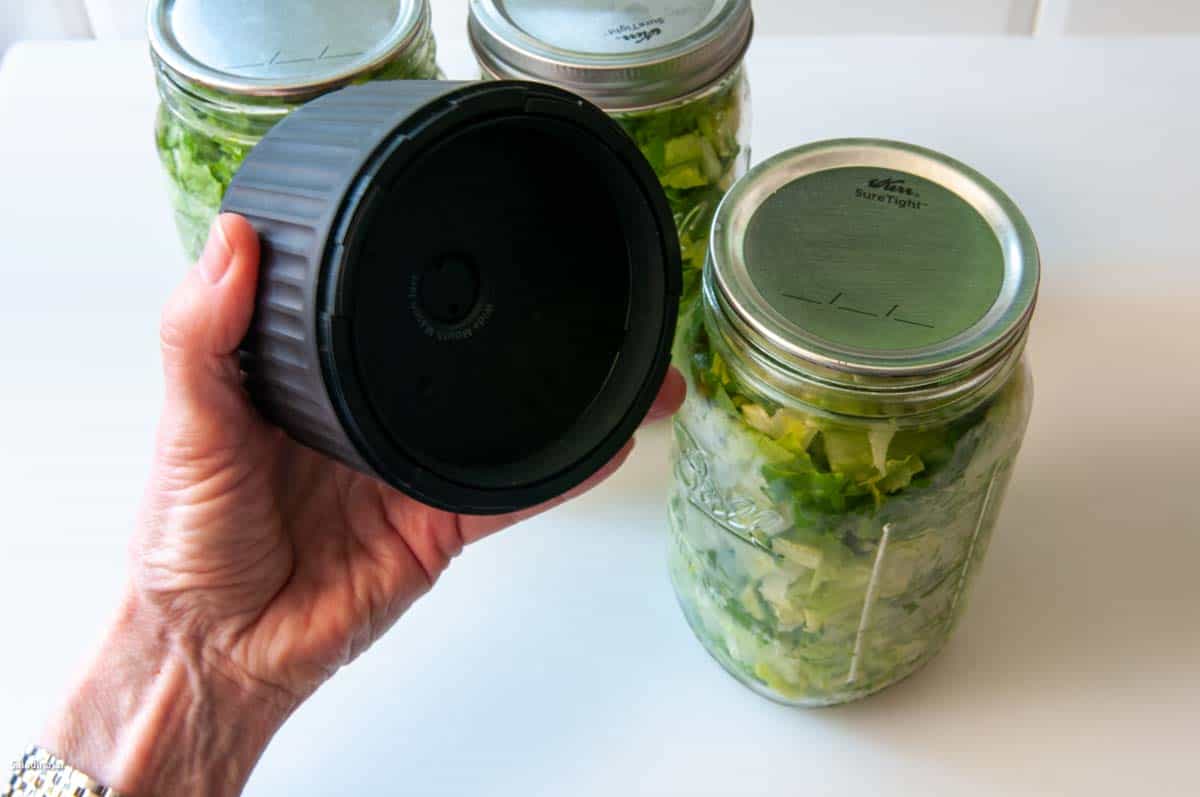
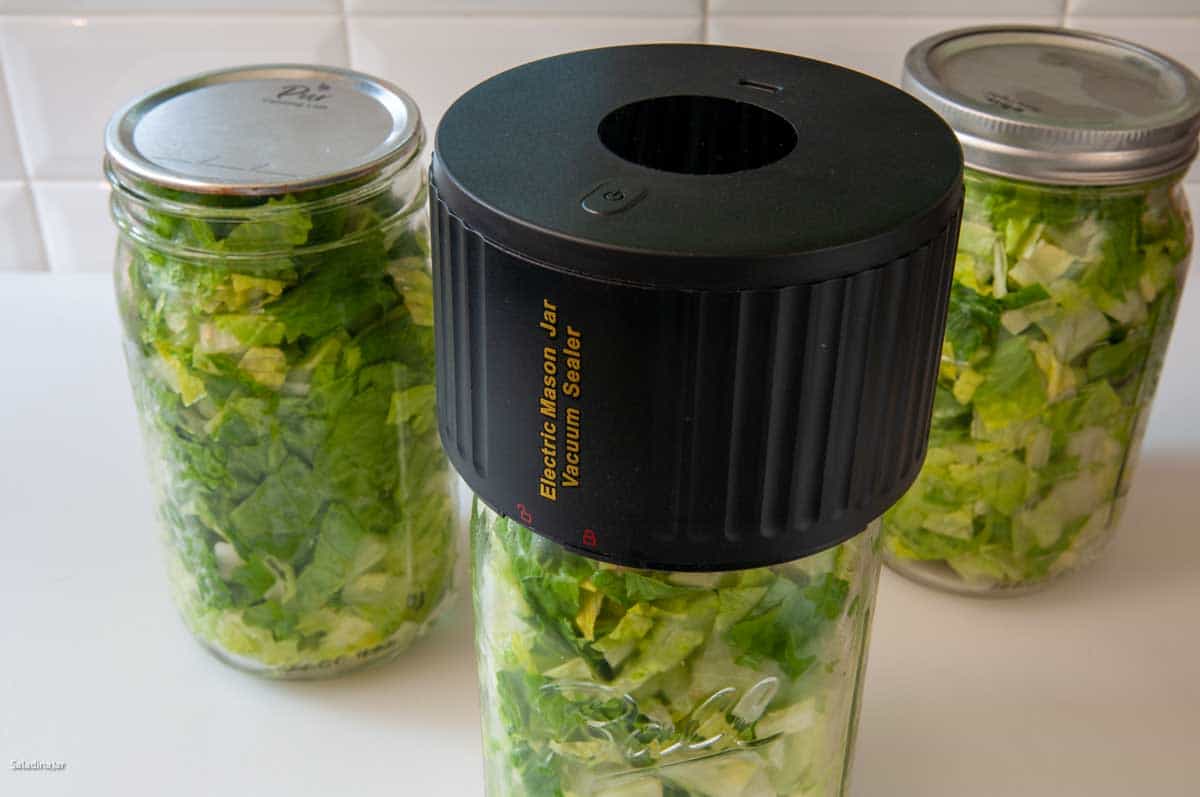
Stop after the pitch changes: Let it run about 10 seconds longer, then turn it off and remove the unit.
Once sealed, the lid should stay firmly attached when you lift the jar by the edge of the lid.
Troubleshooting Tips
Hard to Remove the Sealer: Don’t press down too firmly when starting. If needed, rub a tiny drop of oil on the rubber gasket.
No Pitch Change: Apply gentle downward pressure or try a different jar. Some lids seal more easily than others.
Lid Won’t Stay Sealed: The flat lid may be bent or previously used too many times. Try a fresh lid for best results.
Still Not Sealing? Make sure the unit is fully charged. A weak charge often causes incomplete seals.
Jar Overfilled: Leave at least ½ inch of headspace. Overfilled jars often fail to seal properly.
Won’t Recharge: Double-check the charging cord. One reader thought her sealer had stopped working, but the problem turned out to be the wrong cable.
Still having trouble? See my complete guide with 12 common causes and fixes here.
Foods You Can Vacuum Seal
Pantry Staples
- Oatmeal, cereal, flour, and whole grains
- Rice, pasta, dried beans, and coconut
- Nuts, seeds, spices, and baking ingredients
- Crackers, cookies, and snack mixes
Refrigerator Storage
- Chopped lettuce (romaine, kale, spinach)
- Fresh berries and sturdy cut fruit
- Avocado halves
- Shredded cheese
- Chopped onions or herbs
Freezer Storage (Short-Term Organization)
- Nuts and seeds
- Cooked grains
- Small portions of leftovers
I use mine most often for chopped lettuce, nuts, and flour—the difference in freshness is noticeable within a few days.
NOTE: Vacuum sealing removes air but does not make food shelf-stable. Refrigerate or freeze perishable foods after sealing.
Final Thoughts
This compact vacuum sealer (paid link) makes it much easier to keep everyday foods fresh without dragging out a countertop machine. Use it to save money, reduce waste, and keep your kitchen organized. Don’t forget to look for a coupon (not always there) on the product page to save even more!
— Paula, Home Economist
Homemade Food Worth Sharing
Need help troubleshooting?
Email me: Paula at saladinajar.com — photos help!

My one sucks lid into the unit.
Hi Gabby,
This is frustrating. I’ve had it happen a few times. In my experience, it means the sealer is having trouble getting into a “vaccuum” situation. Check out my post about problem-solving with vacuum-sealing.
Mine is on the way. I had to order one after reading your post! Thanks for the info!
If you cook a lot, you’ll love it!
I cook, can, ferment etc. 😀
There is no reason you shouldn’t use this vacuum system for storing leftovers of all kinds. Think of all the nanoplastic you will be eliminating from your diet.
Hi Brian,
I’m not sure what kind of leftovers you are referring to. I never vacuum-seal cooked leftovers (they must be stored in the refrigerator anyway) because I rarely keep them more than 2-3 days.
How long will lettuce, celery and grapes stay fresh. Is it a week andd what to look for. Thank you.
Hi Katherine — great question! After 20-plus years of vacuum-sealing cut lettuce (I talk about it often on Salad in a Jar), here’s what I’ve learned:
Lettuce–It’s much more about the variety than the number of days. Romaine and radicchio are the real champions — when they’re fresh going into the jar and dry, they typically stay crisp up to 7–10 days.(This is cleaned and chopped.) There’s really no advantage to vacuum-sealing whole heads of lettuce.
Delicate greens (spring mix, spinach, butter lettuce) don’t love vacuum pressure or being chopped and can actually break down faster, so I don’t usually seal those.
Celery–Whole stalks or cut sticks hold up very well — often 2–3+ weeks in a sealed jar. Keep them in the coldest part of your fridge.
Vacuum-sealed grapes generally last 10–14 days. Just be sure they’re totally dry before sealing and check for any soft or moldy ones before storing.
A quick tip about temperature- No matter what you’re storing, make sure the jar isn’t pressed against the back wall of the fridge — that’s the coldest spot and can freeze the contents, which turns them mushy even in a vacuum. One way you will know that something needs to be tossed is the smell and the texture. If either is bad or significantly going downhill, it’s time to toss it.
I recommend you start experimenting with small amounts of your favorite produce. It’s the best way to figure out what works best. There are too many variables to generalize how long any particular item will last.
If you’re going to seal celery, may as well ferment it. Just my two cents
That’s an idea–if you like fermented celery. Thanks for the suggestion.
Just how long does using this sealing method keep foods fresh? Lettuce? Jams? fruits, veggies? meat? cheeses? ETC..
Hi Sara,
It all depends. Don’t you hate that answer? Me, too. Of course, everything must be kept in the refrigerator, even when vacuum-sealed — this is not a heated process that kills bacteria before sealing. In general, the condition of the food before you seal it has a lot to do with how long it will stay fresh. Some lettuce works great–like Romaine. Delicate greens and spinach are not sturdy enough for the process and will break down pretty fast. I’ve never tried vacuum-sealing meats. It works well with cheese, especially cream cheese. Some fruits work well, but the more delicate fruit (like strawberries) doesn’t last much longer. I highly recommend investing in a portable vacuum sealer and starting to experiment. They don’t cost much, and that’s the only way you’re going to know if it works with your lifestyle and favorite foods in the kitchen.
Should I wash the fruit before vacuum seal it for the fridge?
Hi Rita,
That’s a good question. I don’t vacuum-seal fruit because it is too delicate and doesn’t hold up well in my experience. If you decide to try it and want to wash it first, be sure to dry it as thoroughly as possible. If you try it, let me know how it goes for you.
I sometimes have salsas, sauces, etc. that I have home canned not keep in the frig very long, if I have only used part of the jar. Can I use the vacuum sealer to reseal the jar and keep it in the frig. Do you think this would help preserve it for longer?
Hi Lee,
Yes, you can reseal those jars and keep them in the fridge, but I can’t guarantee the contents will last that much longer–maybe a week or two? The best thing would be to experiment. By removing the extra air from the jar, you’re slowing down the process of oxidation, which is a big factor in spoilage. While it won’t replace proper canning or refrigeration, it’s a useful step to keep the contents fresh for a little longer.
One tip: Since you are resealing jars that have already been opened and used, be sure the rim of the jar is clean and free from any food residue before sealing to ensure a tight vacuum seal.
I’m new to mason jar sealing. I just bought all the quart Jars I think I need to begin. I bought this on Amazon as it was highly recommended, I pray it works well. [SelePow VP06+ Mason Jar Vacuum Sealer, Electric Vacuum Sealer for Jars with Wide and Regular Mouth Mason Lids, Cordless Handheld Jar Vacuum Sealer for Food Storage] I bake a lot and have many high-quality flours that I never want to go rancid…some I use daily some not as often but are needed. I want to seal these to preserve them. Am I heading in the right direction?
Also. I washed all the jars and lids very well in dawn and very hot water, rinsed them well in hot water, by hot I mean 130 degrees, then soaked them in a hot water and white distilled vinegar rinse water, lightly rinsed and set them upside down on clean towels to dry. I used a Bounty PT to be sure they were dry as a bone and set them upside down in the box on PT and covered them with a tea towel as I wait impatiently for the machine to arrive. Please, is this sufficient or will I need to boil them?
You’re absolutely on the right track, and it sounds like you’ve done an excellent job preparing your jars! Vacuum-sealing your high-quality flours in mason jars is a fantastic way to preserve them, especially for those you don’t use often. Here’s some feedback and tips to address your questions:
Vacuum sealing helps protect your flours from air, which can cause rancidity, especially for whole-grain and specialty flours. Be sure to check the seal on each jar after vacuum-sealing to ensure it’s airtight. It’s also a good idea to check the seals every month or two to make sure they are still sealed.
Your cleaning method is excellent! Washing with hot water, Dawn, and a vinegar rinse, followed by thorough drying, is more than sufficient for storing dry goods like flour. Since you’re not canning or storing wet/low-acid foods, boiling the jars is unnecessary. Boiling is typically reserved for sterilizing jars for canning to kill potential bacteria for items that will be shelf-stable without refrigeration.
Ensure the flour is completely dry before sealing (no residual moisture from measuring or handling).
Store your sealed jars in a cool, dark place to further protect the contents from heat and light.
Additional Advice for Long-Term Flour Storage:
For flours you use less frequently, consider dividing them into smaller jars to minimize opening and resealing.
If you’re storing whole-grain flours (like whole wheat or rye), consider freezing them for extended preservation, especially if your climate is warm or humid.
You’ve put in so much care and effort already—you’re setting yourself up for success. Hope you love your new sealer! ? If you have any trouble getting your jars to seal, check out this post for some tips.
I have the VP06 vacuum sealer. After the vacuum function stops the lid comes off he jar when I remove the sealer. How can I correct this???
Hi Cathy,
That’s frustrating. Here are a couple of things to try:
1. Sometimes the vacuum sealer isn’t pushed down far enough on top of the jar to create a good seal. Trying pushing down on the entire unit.
2. Try a different lid and/or a different jar. If the lid is bent or damaged in any way, it may not seal. Also, it could be the jar. Some brands may not work or a particular jar may have something weird going on around the top of the jar.
Check out this post for more about #2.
Does this work on small mouth and large mouth mason jars? TIA
Hi Cherrie,
Yes, the sealer comes with an adapter for small-mouth jars. Use it without the adapter for large-mouth jars.
Hi Laura,
I have tried vacuum-sealing spinach but it was not a good idea. In my experience, spinach is too delicate. It didn’t last long at all. Romaine works best. Raddichio does, too. The best way to find out what works is to experiment with your favorite lettuce.
Can I use it to seal somethings like spegetty sauces if I store it in the freezer
Hi Guy,
Yes. Remember to leave plenty of space for the contents to expand when they freeze. In general, all perishables that have not been properly heat-processed and sealed must be refrigerated or frozen, even when vacuum-sealed.
If I use a food dehydrator & dry tomatoes or peppers, is it safe to then store in a vacuum sealed mason jar?
Hi Cathy,
I can only guess about this since I haven’t tried it. If you normally store your dehydrated food in the pantry, then it should be fine in a vacuum-sealed jar.
Can I use this vacuum sealer on any jar that I have saved froom the store?
Holley
The short answer is no, you can’t use it on all jars, but there are some that you can. The circumference of the opening must perfectly match the size of the flat lids manufactured for canning jars, either the wide-lid or the regular-size lid. You’ll just have to try it. I have found that some of the spaghetti sauce jars will work. Because I have tons of canning jars, I haven’t tried repurposing that many jars.
Do you set the sealer to Lock or unlock? I’ve tried thei repeatedly with Cereal but every time I lift the sealer, the lid comes right with it?!?
You don’t need to lock or unlock. That’s for the size adapter. Sounds like something else is preventing the seal. Be sure the rim of the jar is absolutely clean. Check to make sure the lid is not bent. And lastly, be sure you have pushed the sealer down far enough to create a seal. However, if the sealer is hard to get off, you may have pushed it down too far. It’s a learning process. Keep trying.
I can not unlock the top part from the lower to even use the VPO5 LARGE MOUTH SEALER. We have tried everything! please recommend. TY
Hi Vicky,
Check out this video where you can watch somebody do it. I’m not crazy about her video but she shows how to do it.
https://www.youtube.com/watch?v=EI6WCod953g
When using an electric vacuum sealer, can you use it to process meat? And is it still required to water bath?
Hi Pat,
So nice to hear from you. A vacuum sealer is not a substitute for a water bath or pressure canning. It is only good for non-perishable food
(chips, nuts, grains, etc.) or fresh produce that you store in the fridge but want to last a few more days. How much longer it gives you with fresh fruit and veggies depends on their freshness when you seal them, how they are prepared, and how fragile they are to begin with. Raspberries and Spring lettuce don’t last long. But sturdier veggies like chopped romaine lettuce, radicchio, and carrots can last 7-10 days depending on what I just described above.
It works great to keep bugs of out grains, rice, and the like. Never try it with meat, tomatoes, or veggies like green beans. These all require pressure canning or a hot water bath. I’m not really an expert on home canning, so if that’s what you need, please seek advice from a website that specializes in home canning.
Have a good day.
hi I’m interested in getting one of these vacuum sealers. I was just wondering about like the lettuce and fruits and vegetables. Is there a certain way or how do you prep them or how long does it last. I’m very interested in this product. I’m very new .to this whole thing. I have had people tell me in the past that you can put berries in a mason jar but I’m not real sure what to do. Thanks ?
Hi Angel,
So nice to hear from you. I use mine mainly for lettuce: How To Keep Romaine Lettuce Fresh: Make It Easy To Eat More Salad
I also like to use it for non-perishable food (stored in the pantry). Depending on the food, it keeps the bugs out and can extend its freshness for weeks.
You can use it for fruits and vegetables, too. However, vacuum sealing is not a substitute for canning. All perishable food must be stored in the refrigerator. Vacuum-sealing might give you a few more days of freshness. It depends on the particular food you are storing, how fresh it is to begin with, and how you prepare it. Some fragile foods (like fresh tomatoes or spring mix) do not appreciate being vacuum-sealed, apparently.
I hope this gives you a better idea of what you can expect.
Thanks for the helpful information.
One question, can you use any flat lid to seal or does it have to be the ones that come with the sealer?
Hi Tammy,
You can use any flat “canning” lid that fits the jar you are sealing. Usually, a sealer will only seal large-mouth or regular-mouth lids on the standard Mason jars. There are many versions of sealers on the market, but if you are talking about the sealer shown in my article, it will only seal those two standard sizes.
If you open the jar can you use the lid again?
Hi Karla,
Yes. I reuse my lids countless times. Of course, if they get bent, they won’t work, but that’s hard to do. I don’t throw mine away until they rust.
can i use the for putting homemade chicken noodle soup in mason jars , how long will it last in the refrigerator
Hi Joe,
I have not tried this. I don’t normally vacuum-seal cooked foods. If I have leftovers or more than what is needed for one meal, I freeze them.
If you try it, just make sure you keep the soup in the refrigerator. Vacuum-sealing does not replace heat canning with pressure.
Have a good day.
Hello. At the top of the article, you say you have included a how-to video. I can’t seem to find any link or video on this page. Thanks for everything.
–Nancy
Hi Nancy,
Check to make sure you don’t have any ad-blockers on the browser you are using.
I’m wondering if this system or another is good to create shelf stable canning. I’d love to can tomatoes and have them shelf stable.
Thanks, Deb
Hi Deb,
I’m glad you asked. This is absolutely not safe for canning tomatoes. They must be heated under pressure. This is only good for non-perishable foods that you would keep in the pantry. Or it can be good for food you store in the fridge, but it only extends the freshness; depending on what it is, that may be only a few extra days or maybe 2-3 weeks.
If I vacuum seal flour or oats or the like in a jar, can I reseal that jar with the same lid after I have opened it to use some of the product? I’m really excited to be making my own dry soup mixes or sauce mixes but won’t be using the entire jar all the time. I’m hoping I can re-vacuum seal the jar until the next time.
Many thanks for your help!
Colleen
Hi Colleen,
Yes, you can seal or reseal as many times as you need or want to. As long as you don’t bend the flat lid, they will last until they rust. That could be years if you don’t wash them in the dishwasher.
Can I use this canner for leftover chili? I’m so glad to find you
I want to use it for unused leftovers
Hi Linda,
Nice to hear from you. I’m glad you found me, too.
I’m not sure what your intention is with the chili. Anything perishable must be stored in the refrigerator, including your leftover chili. You might get a few more days of edibility with vacuum sealing, but that’s all. However, if you were thinking you could put it into the pantry for a month or six months, that’s not possible. You must heat seal perishable food to store without refrigeration. That requires a full canning process.
If I have misunderstood your question, please write back.
Can you use store bought flats or is there special one you have to use for the electric sealer?
Hi Carla,
I’m not sure what you mean by the term, “store bought flats.” I sent you an email. If you didn’t get it, check your junk mail.
I’ve used mine almost every day sealing an avocado in a jar. Thank you so much for introducing me to this sealer. It is so very easy to use and I can’t be happier! And the coupon was awesome!
You’re welcome, Donna. I agree that it is very easy to use.
Just hit the order button for the sealer…. hope it holds up!
Me, too. So far, so good.
Thanks, Paula! Although I have an Avid Armor vacuum sealer that I really like, it is a bit of a job to pull it out of the cabinet and hook it up to the jars, so having one of these will make it much easier to seal jars, and I will be more inclined to do it. 😉 And thanks for the hint about a discount. The first link did not give me one, but I searched around and found one! Happy Monday, and thanks for always being so helpful.