
Gluten-Free Bread in a Bread Machine: Is It Worth It?
Sneak Preview: Most gluten-free bread recipes behave more like batter than kneaded dough, so bread-machine paddles rarely improve texture. Here’s why gluten-free formulas respond differently—and why other mixing methods usually work better. Read time: about 3 minutes.
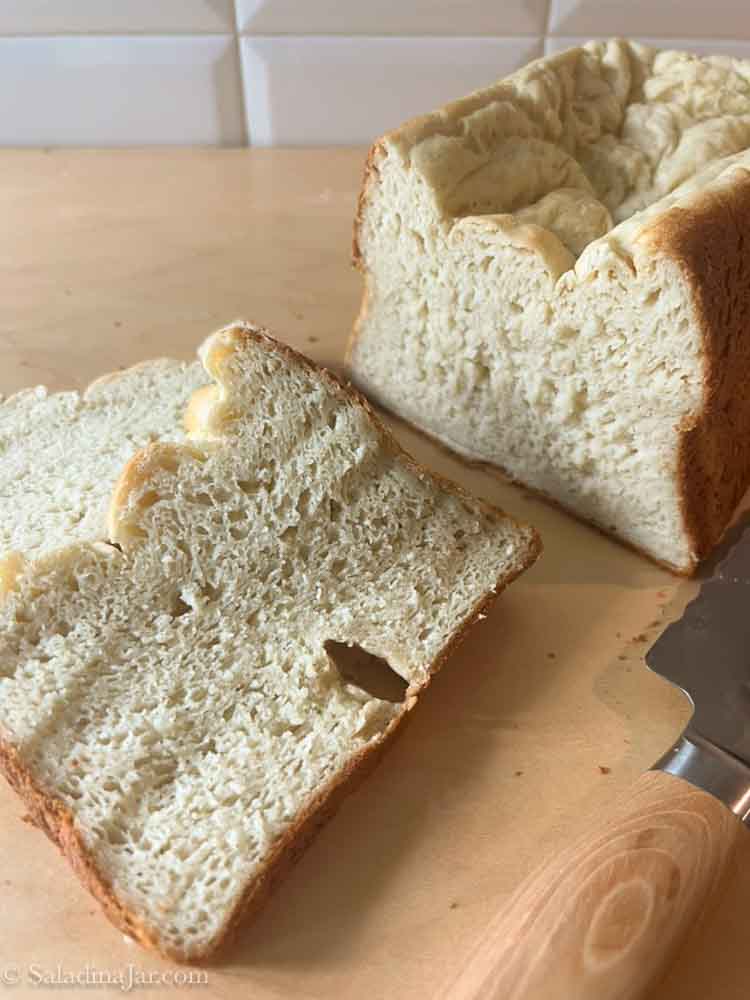
Many readers ask whether they can use a bread machine to make gluten-free bread for someone they care about. It’s usually not about convenience—it’s about kindness. And since I’m all about making food worth sharing, it’s worth taking a closer look at what actually works.
Some people also hesitate to buy gluten-free bread at the store because of the cost. So can you save money and still bake something worth sharing at home with a bread machine?
The Short Answer
Yes, you can make gluten-free bread in a bread machine, especially with a recipe and cycle designed for it. However, based on my testing, I don’t think a bread machine is usually the best tool for mixing or baking gluten-free bread.
That surprises people because bread machines are designed to mix dough automatically. But gluten-free “dough” usually behaves more like cake or cookie batter than kneaded dough, so the paddles don’t do the job people expect.
Understanding this difference prevents a lot of frustration—and wasted ingredients.
Most gluten-free bread recipes simply aren’t designed for bread-machine mixing.
Why Gluten-Free Bread Doesn’t Respond to Kneading
Traditional yeast dough develops structure when gluten strands stretch during kneading and bind together.
Gluten-free bread works differently.
Instead of gluten development, structure comes from:
- eggs
- starch blends
- xanthan gum or psyllium
- careful hydration
- controlled baking
Because there’s no gluten network forming, extra kneading doesn’t improve texture.
Why Bread Machine Paddles Struggle With Gluten-Free Recipes
Most gluten-free mixtures behave like thick batter. That creates several problems inside a bread machine:
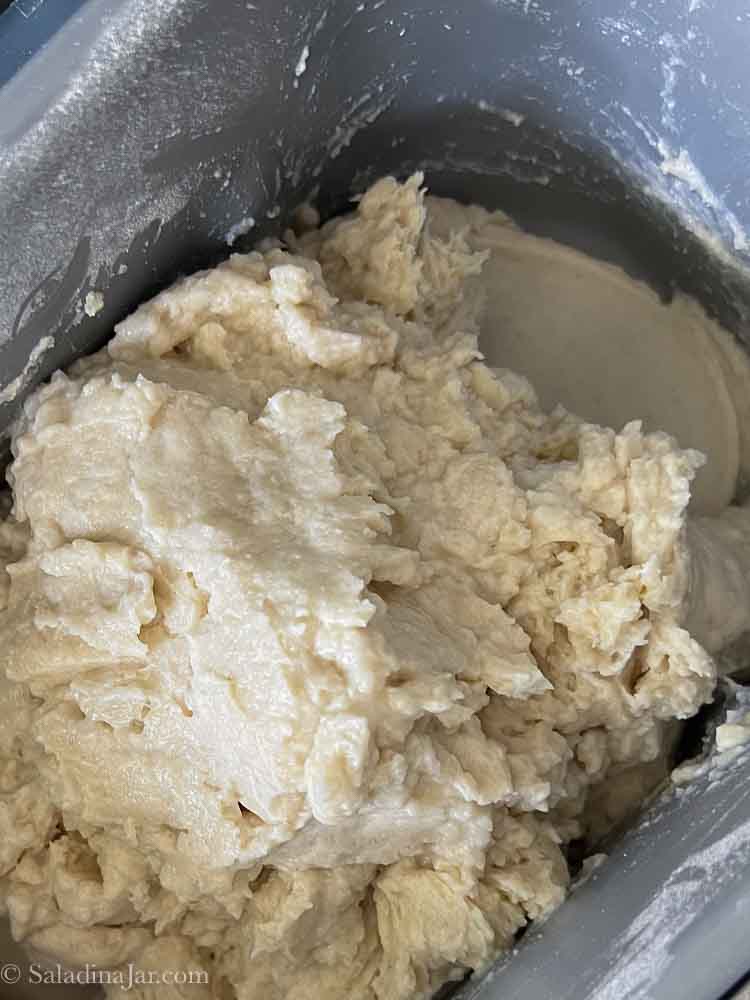
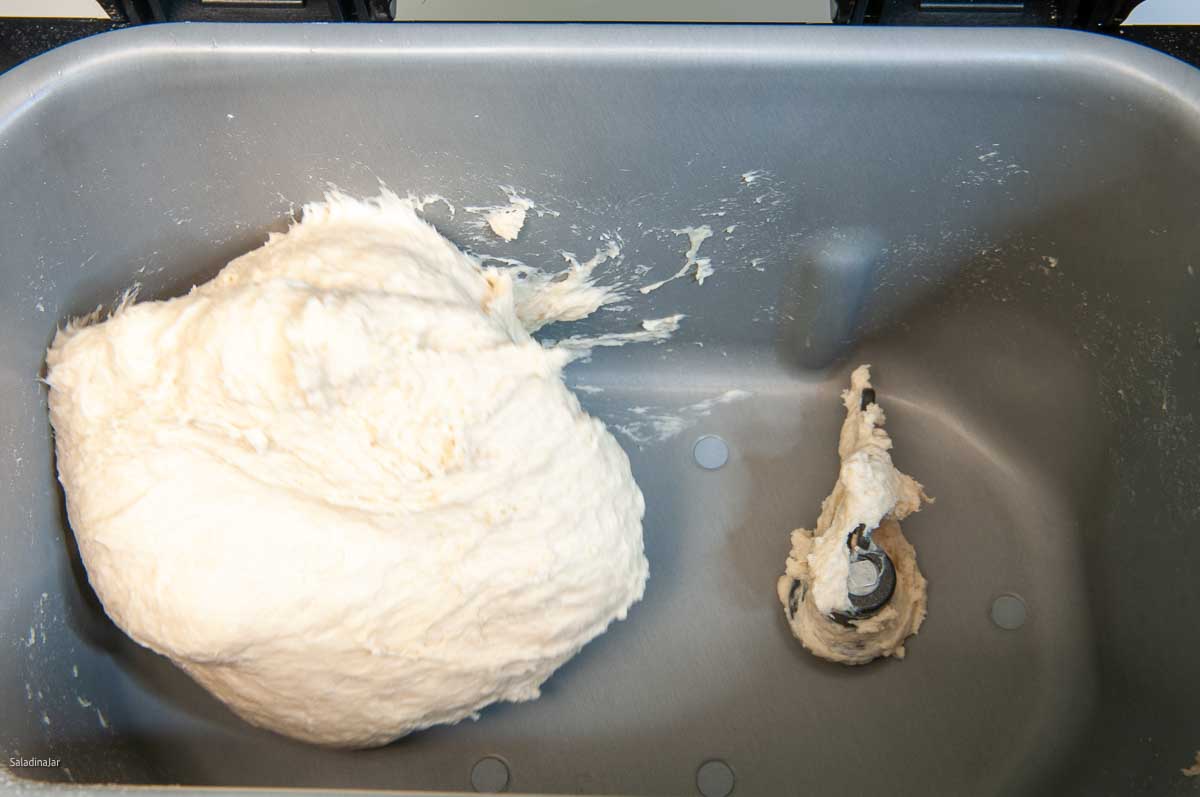
- the paddles push batter around instead of kneading
- you often need to scrape the pan with a spatula
- timing for proofing and baking is often inaccurate
- the loaf bakes around the paddles leaving large holes in the bottom
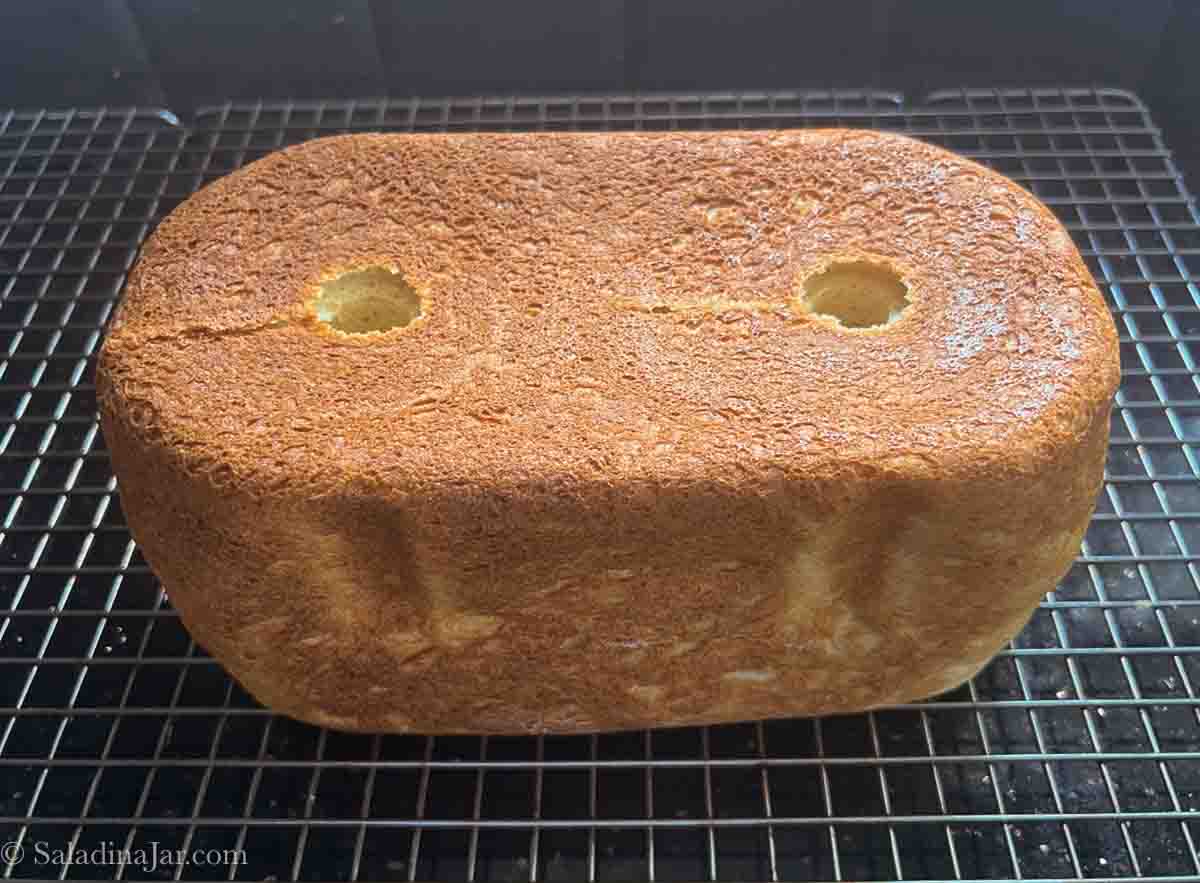
Many people expect a hands-off process and end up babysitting the machine instead with a spatula in hand. (See the quick video below.)
What About the Gluten-Free Cycle on Bread Machines?
Many machines include a gluten-free setting, but it doesn’t solve the structural issues that make gluten-free bread different from wheat bread.
Most gluten-free cycles simply:
- shorten mixing time
- skip extended kneading
- allow one rise instead of two
- begin baking sooner
These adjustments match gluten-free formulas better than standard cycles—but they don’t improve how paddles handle batter-style dough.
That’s why results are inconsistent from one recipe to another.
When a Bread Machine Can Help With Gluten-Free Bread
A bread machine may be useful in a few situations.
Some bakers use it to:
- mix ingredients before transferring batter to a pan (often requires scraping the sides)
- handle proof-and-bake cycles on machines designed specifically for gluten-free formulas (appearance and timing can still be inconsistent)
But most gluten-free recipes mix just as easily with a stand mixer, handheld mixer, or by hand—and sometimes more reliably. In addition, when you use a loaf pan, it’s easier to get the rise and the oven bake temperature and time just right without any holes (from paddles) in the bottom.
Why This Matters When Adapting Recipes
Readers often ask whether they can convert a favorite gluten-free recipe for a bread machine the same way they convert wheat-flour recipes.
Usually the answer is no.
Traditional yeast dough benefits from kneading. Gluten-free bread does not.
Trying to adapt gluten-free recipes to a machine designed for gluten development often leads to:
- uneven mixing
- dense texture
- collapsed loaves
- paddle holes in the finished bread
Knowing this ahead of time saves time and money for expensive ingredients.
A Better Use for Your Bread Machine
Bread machines shine when mixing dough that’s sticky or difficult to knead by hand, such as:
These doughs benefit from kneading because gluten structure matters.
Gluten-free formulas rely on a completely different structure altogether.
Final Thoughts
Bread machines are excellent tools for traditional yeast dough, even when the dough is sticky or enriched. But gluten-free bread follows different rules. Understanding that difference makes it easier to choose the right mixing method—and helps you make bread that’s truly worth sharing.
— Paula, Home Economist
Homemade Food Worth Sharing
Paula Rhodes, Home Economist & Owner
As a retired home economist, I created Saladinajar.com to prove that you don’t have to be a chef to find joy in creating food worth sharing. Bread machines (used in an unconventional way), homemade yogurt, and quick microwave recipes are my favorite ways to do that.