
Bread Machine Focaccia with Rosemary and Parmesan
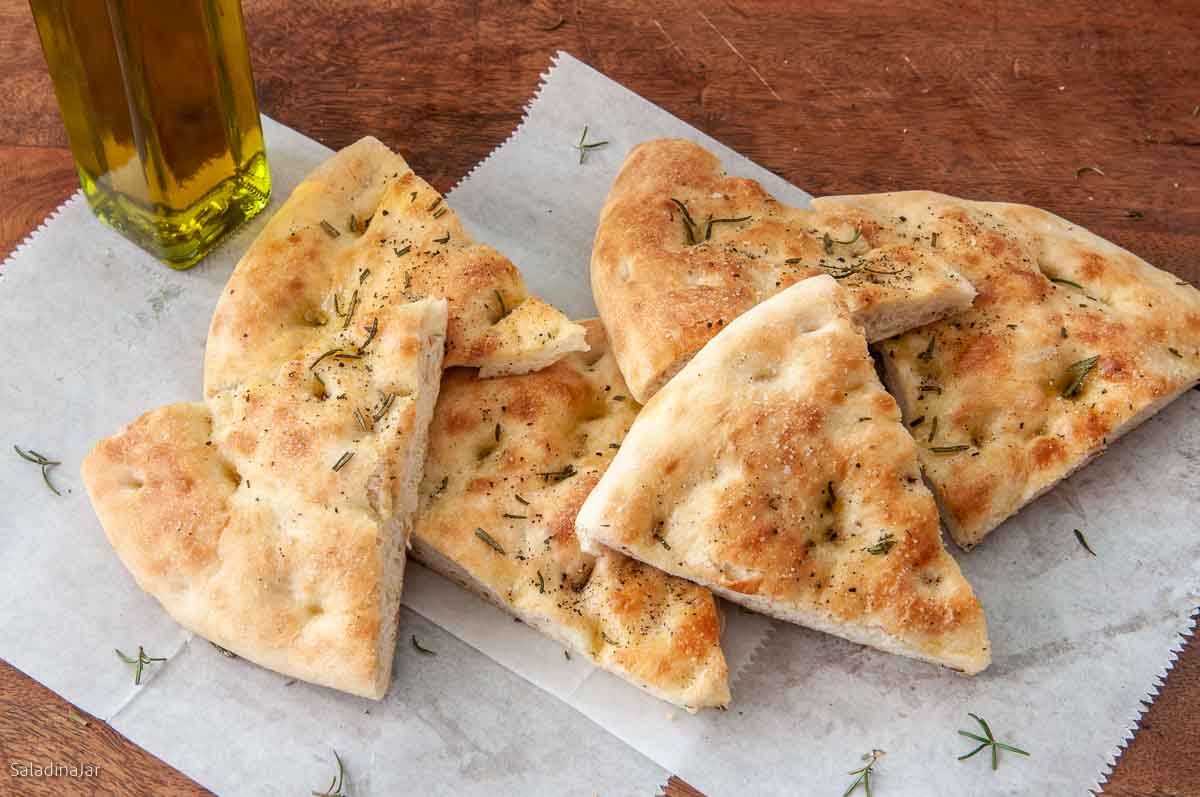
Sneak Preview: This bread machine focaccia is mixed and kneaded on the DOUGH cycle, then shaped and baked in the oven for a soft, dimpled crumb and a golden crust. Topped with fresh rosemary and Parmesan, it’s ready in about 2¼ hours and works well thick or thin.
This post contains affiliate links. As an Amazon Associate, I earn from qualifying purchases at no extra cost to you.
Have you tried to make bread before, and it didn’t turn out as you had hoped? Focaccia is a good place to reset. It’s forgiving, flexible, and doesn’t require shaping skills or perfect timing.
This version uses a bread machine to mix and knead the dough, then finishes in the oven for better structure and crust. You can stretch it thick and pillowy or thinner and crisp—either way, it’s a reliable place to start.
How I Use a Bread Machine for Better Bread
I use my bread machine (this is the model I use) to mix and knead the dough using the DOUGH cycle, then shape it by hand and bake it in a conventional oven. This approach takes advantage of the machine’s consistent kneading while giving me full control over shaping, rising, and baking—especially important for rolls, pizza, and other swirled and shaped breads.
My free Bread Machine Crash Course explains this approach in more detail.
Ingredients & Substitutions
• WATER: Tap or filtered water both work; no need to warm—it heats during mixing.
• SUGAR: Granulated or brown sugar adds mild sweetness and helps with browning.
• SALT: Table or sea salt work as written; add about ¼ teaspoon more if using kosher salt. If you prefer less salt, try this salt-free focaccia.
• OLIVE OIL: Adds flavor and tenderness; other neutral oils work, but olive oil is traditional.
• HONEY: Adds subtle sweetness and color; maple syrup can be substituted but changes the flavor slightly.
• FLOUR: All-purpose flour works well; bread flour adds more chew. Weigh for best results.
• YEAST: Instant or bread machine yeast is best; if using active dry yeast, increase by ¼ teaspoon.
• ROSEMARY: Fresh rosemary gives the best flavor and aroma; dried rosemary is not recommended.
• PARMESAN: Freshly grated or slivered Parmesan works best; avoid shelf-stable grated cheese.
No bread machine? See the recipe notes for how to make this recipe with a stand mixer or by hand.
Step-by-Step to Make Bread Machine Focaccia
⬇️ See the recipe card for exact amounts and complete instructions.
Mix and Knead
Shape and Final Rise
Bake

Bread Machine Focaccia with Rosemary and Parmesan
Video
Ingredients
Dough
- 1 cup (227 g) water
- 1 teaspoon granulated sugar
- 1 teaspoon salt
- 2 tablespoons (26 g) olive oil
- 1 tablespoon (21 g) honey
- 3 cups (360 g) unbleached all-purpose flour
- 2 teaspoons bread machine yeast
Toppings
- 2 tablespoons (26 g) olive oil
- 2 teaspoons fresh rosemary chopped
- freshly ground black pepper
- 1 teaspoon Kosher salt
- 2 tablespoons Parmesan cheese slivered
Instructions
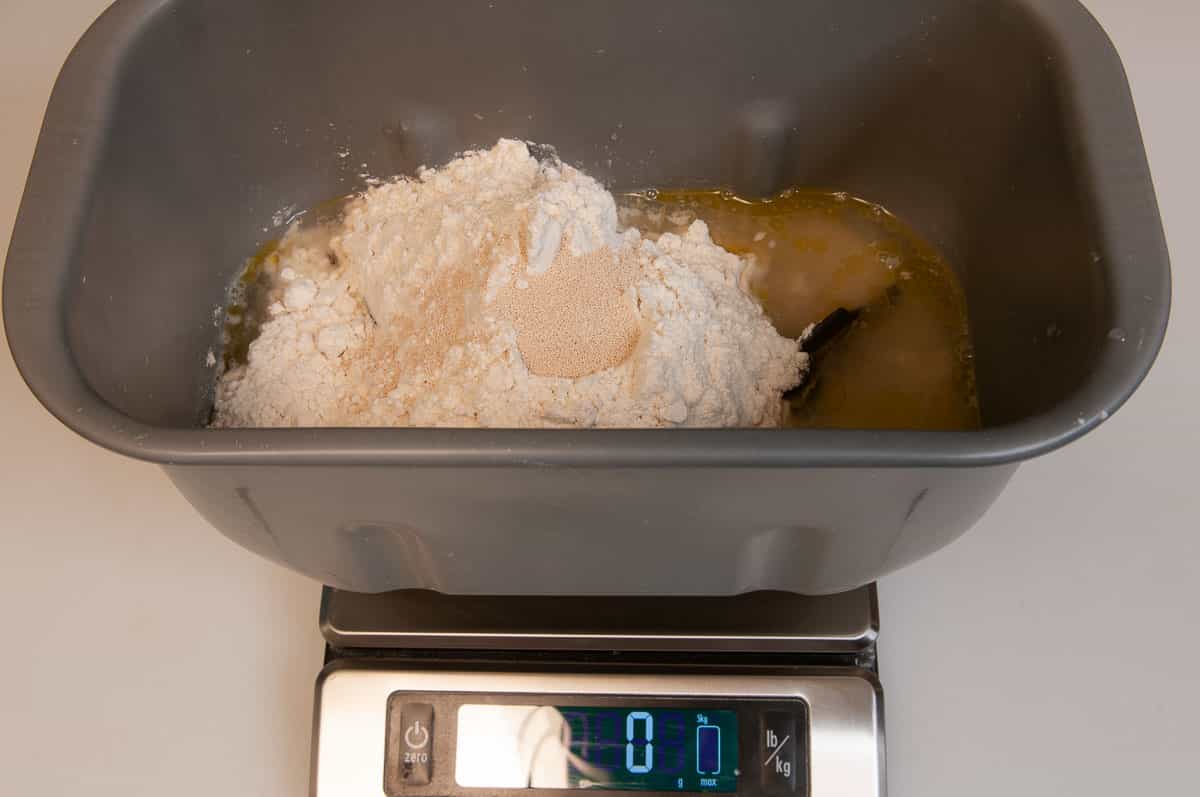
- Prepare the Dough: Add ingredients to the bread machine pan in the order given: 1 cup (227 g) water, 1 teaspoon granulated sugar, 1 teaspoon salt, 2 tablespoons (26 g) olive oil, 1 tablespoon (21 g) honey, 3 cups (360 g) unbleached all-purpose flour, and 2 teaspoons bread machine yeast,
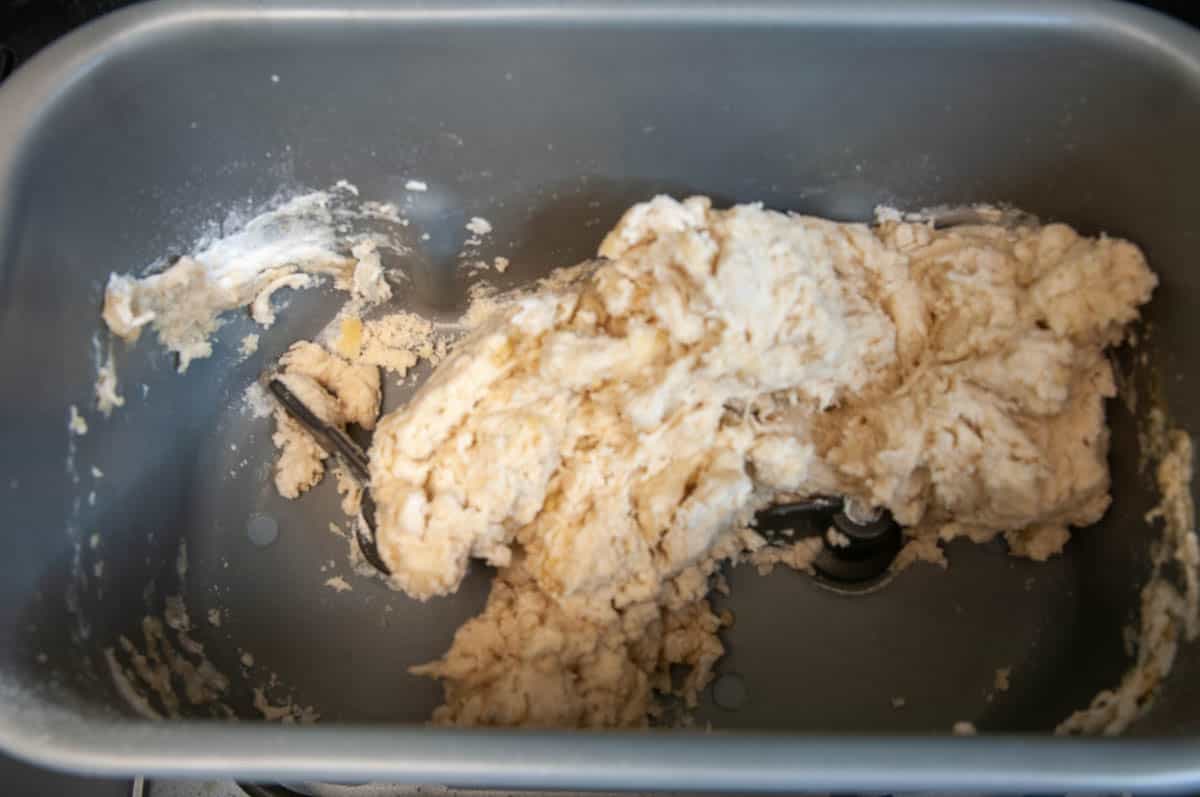
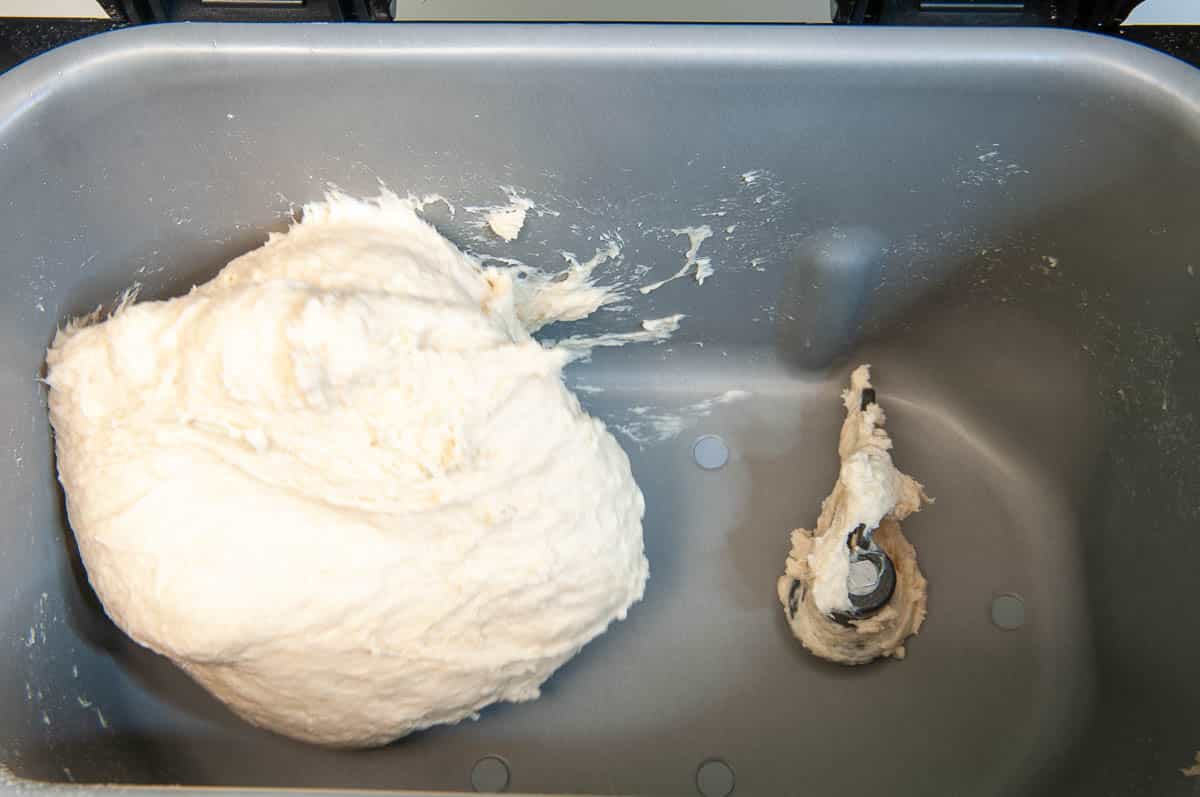
- Select the DOUGH cycle and start.First check: After a couple of minutes, check the dough to make sure it is coming together into a raggedy ball. If not, add more water 1 tablespoon at a time. If you see pancake batter instead of dough, you forgot some flour—just add it slowly until everything pulls together.Second check: Check dough again after about 15 minutes. The dough should stick to the sides of the pan, then pull away cleanly. If too wet, add flour 1 tablespoon at a time. If too dry and the dough doesn't stick at all, add more liquid. See more details–Surprising Secret for Making Better Bread with a Bread Machine.NOTE: Bread dough is influenced by flour, humidity, and even your kitchen temperature—so use this step to fine-tune the dough for your environment.
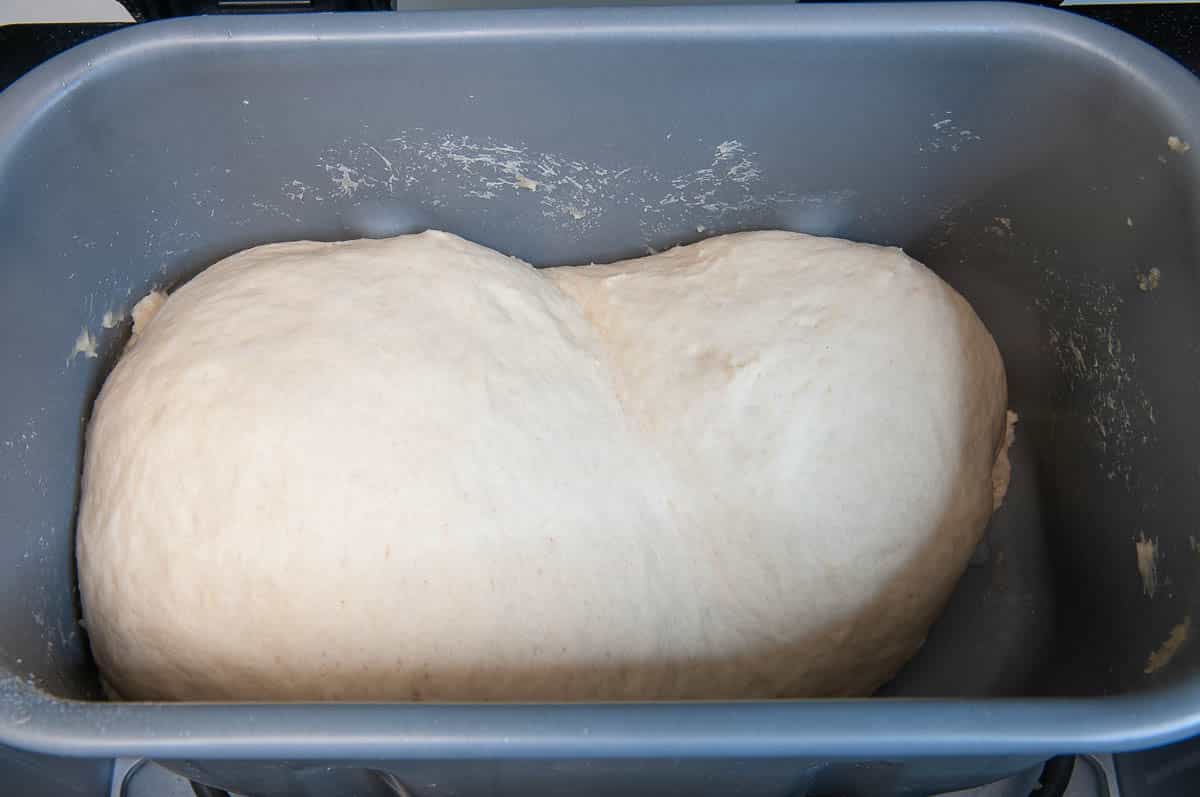
- Let the DOUGH Cycle Finish: At the end of the DOUGH cycle, the dough should be doubled in size. If not, leave it in the bread machine until it rises to twice its original volume.
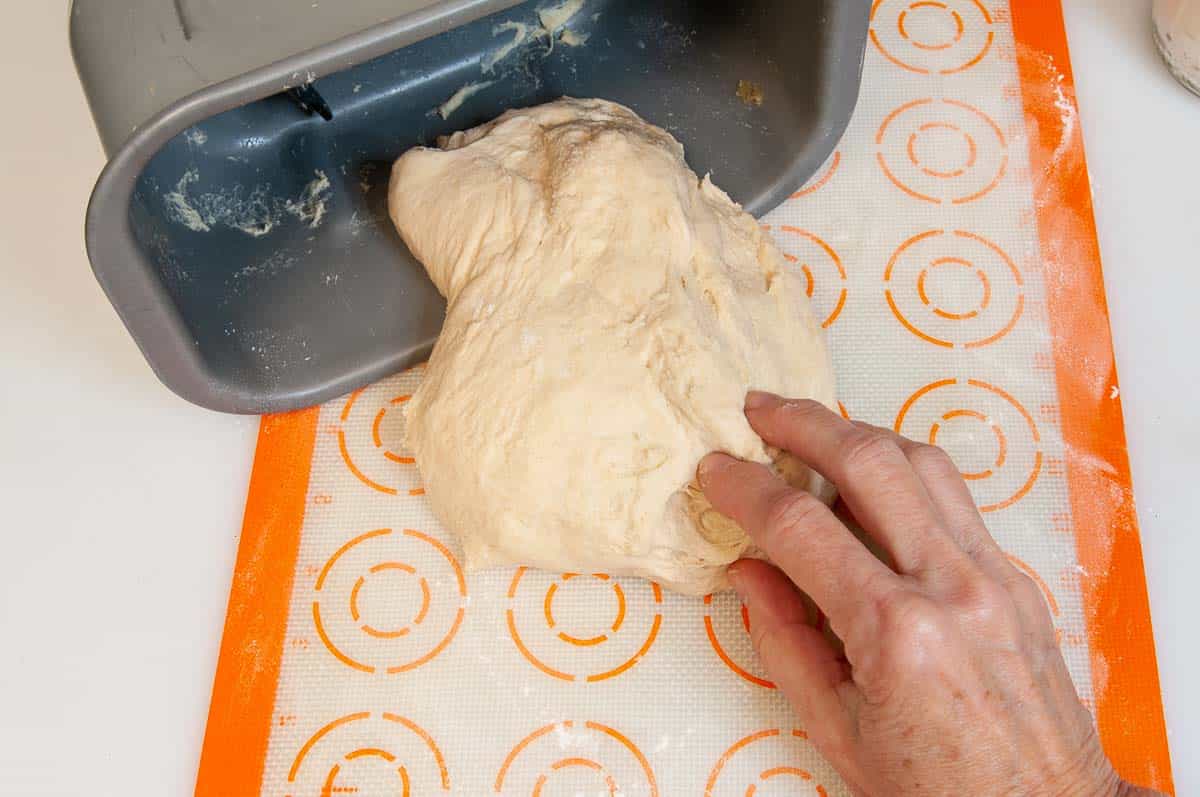
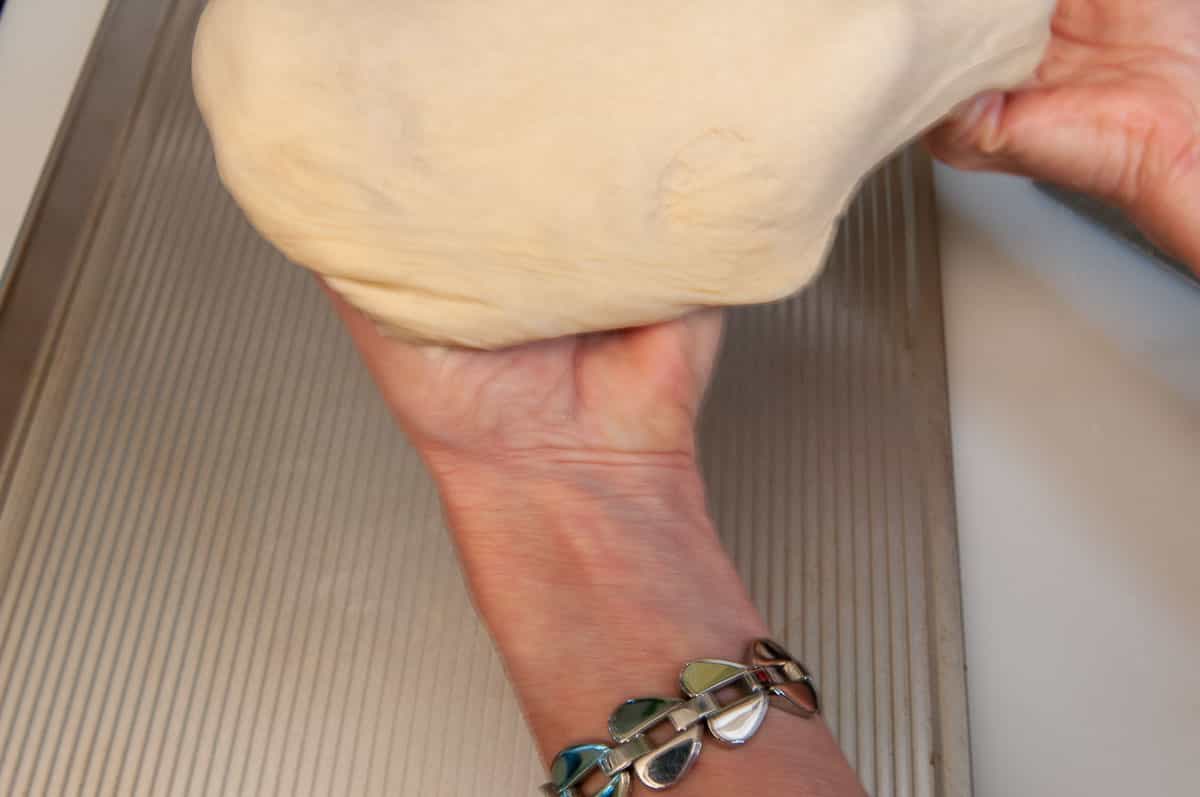
- End of DOUGH cycle: The dough should be doubled. If not, give it more rise time until it is. Restart the DOUGH cycle and knead for 1 minute to deflate the dough. Stop the machine and turn the dough out onto a lightly floured surface, shape into a smooth ball, cover, and let rest for 10 minutes.
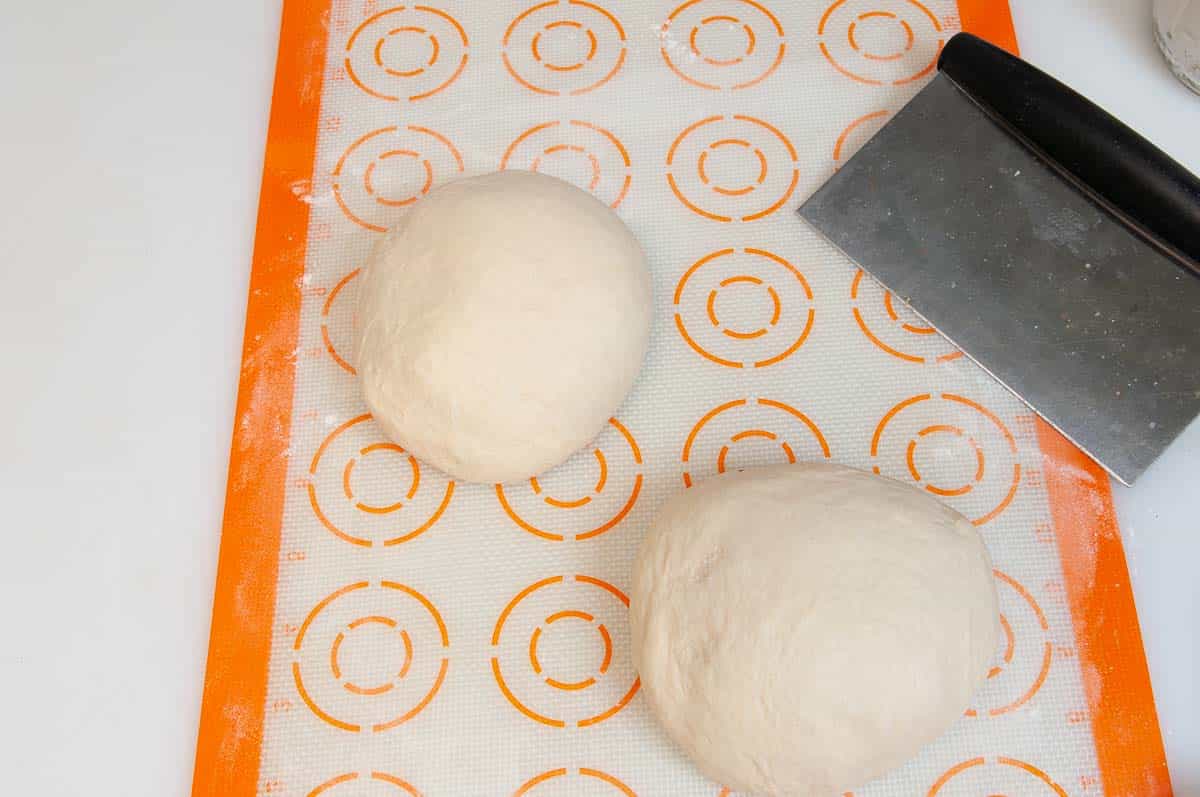
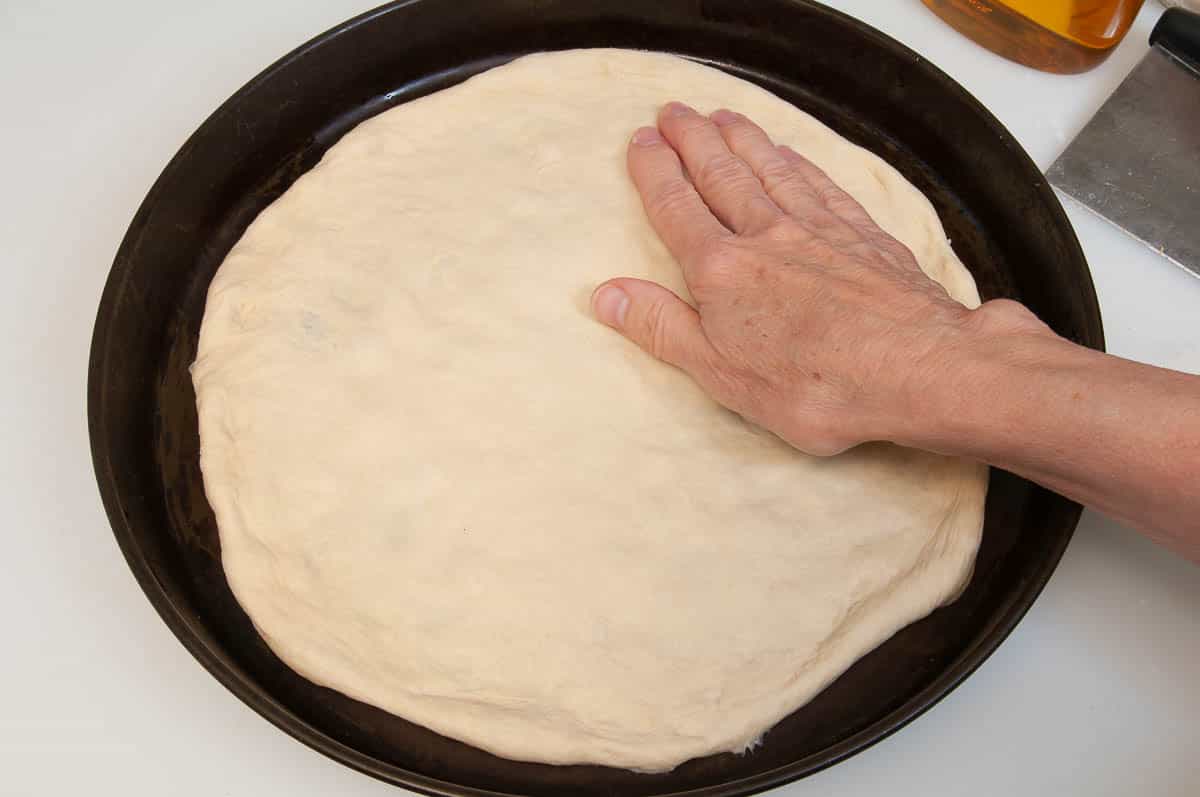
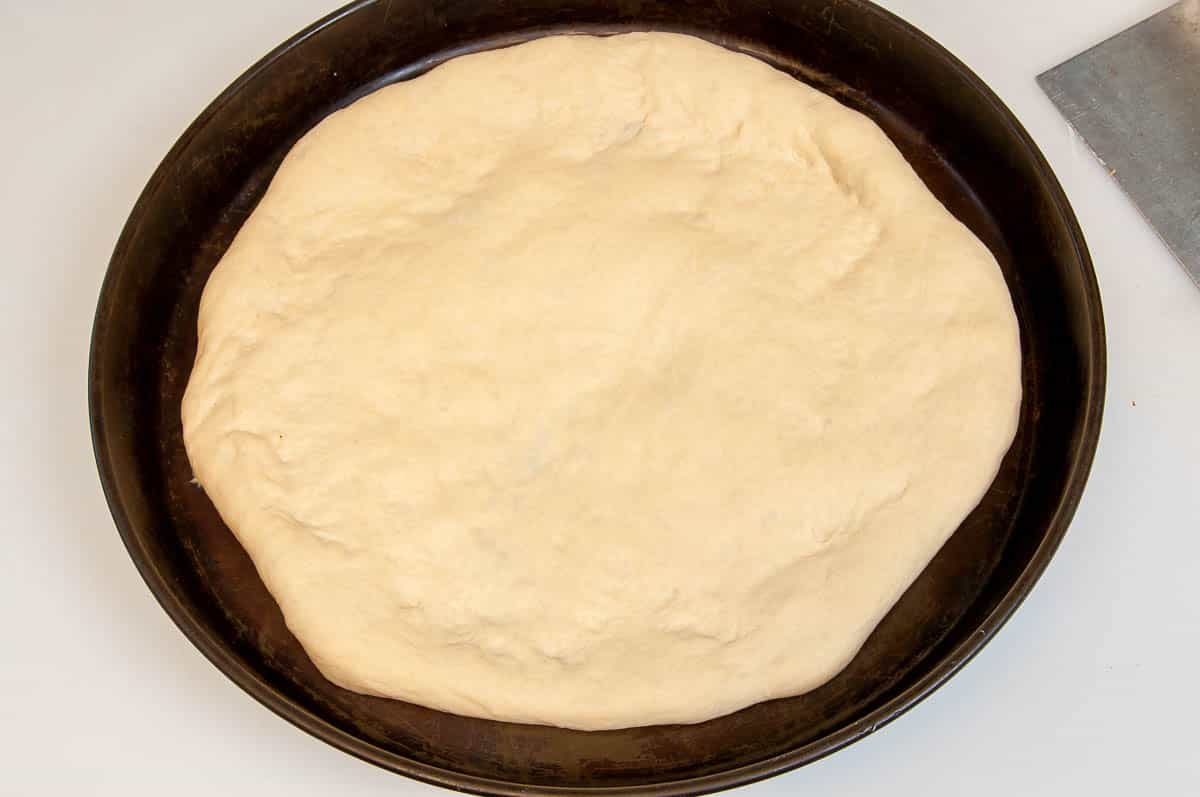
- Shape Dough: Shape into one large ball, and divide into two equal balls. Cover and let rest for 10–20 minutes.Place each dough ball into a 13-inch pizza pan or use a heavy baking sheet. Flatten and stretch the dough to your preferred thickness. Cover with a tea towel and let rise for 30–40 minutes until puffy.
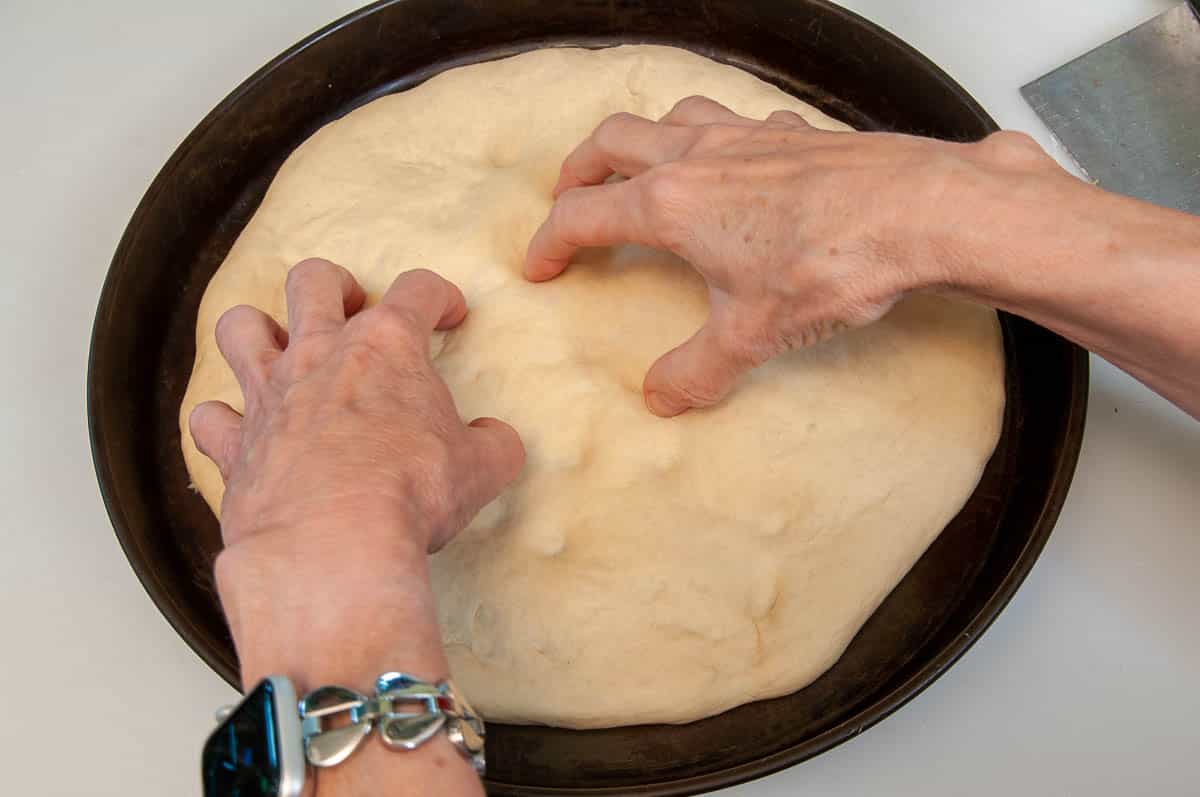
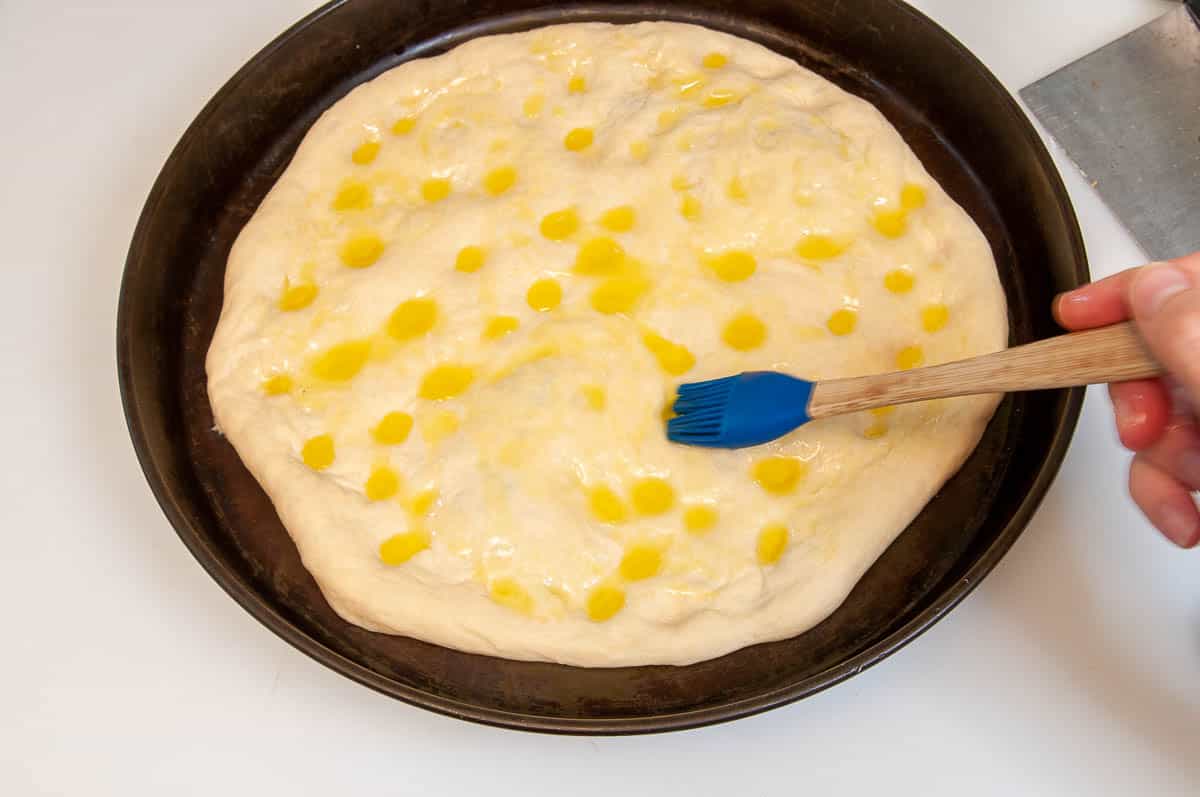
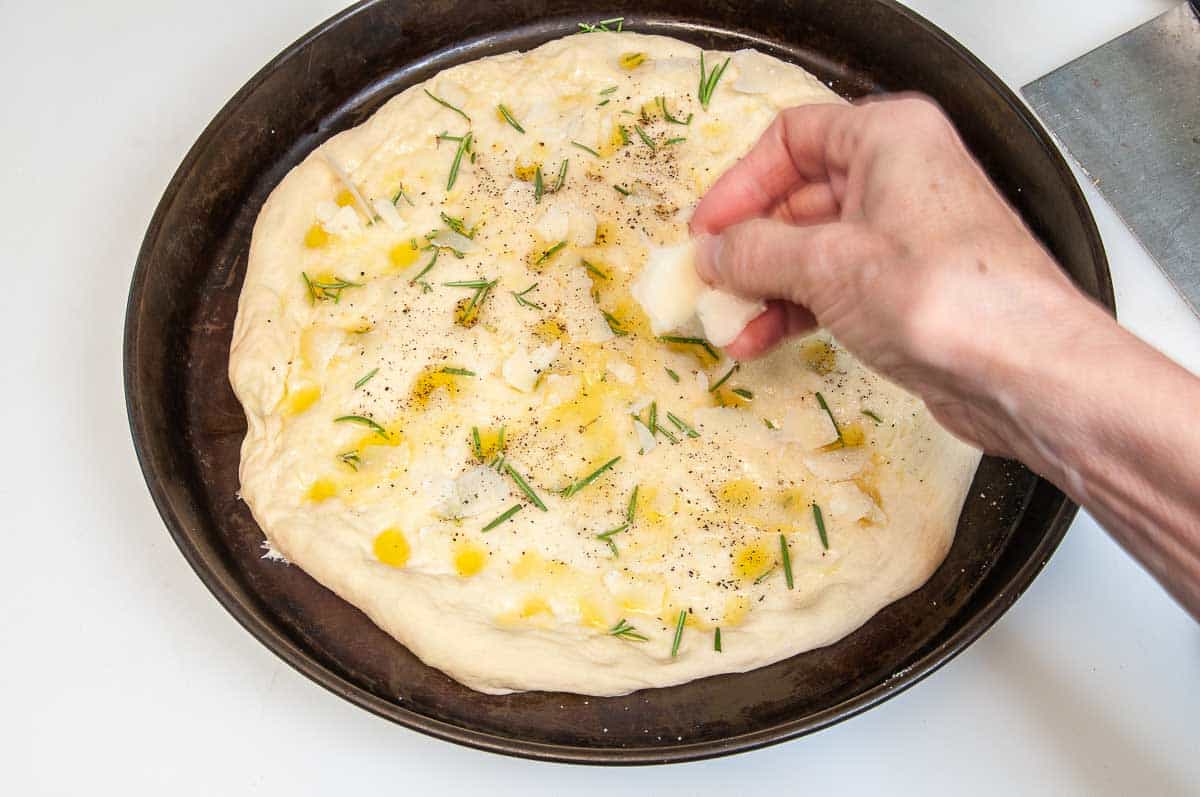
- Prepare to Bake: Preheat your oven to 425˚F (220˚C).Use your fingertips to dimple the dough. Drizzle 2 tablespoons (26 g) olive oil (divided) on top of each half. Sprinkle 2 teaspoons fresh rosemary and freshly ground black pepper and 1 teaspoon Kosher salt over the oil. Finally, scatter 2 tablespoons Parmesan cheese on top.
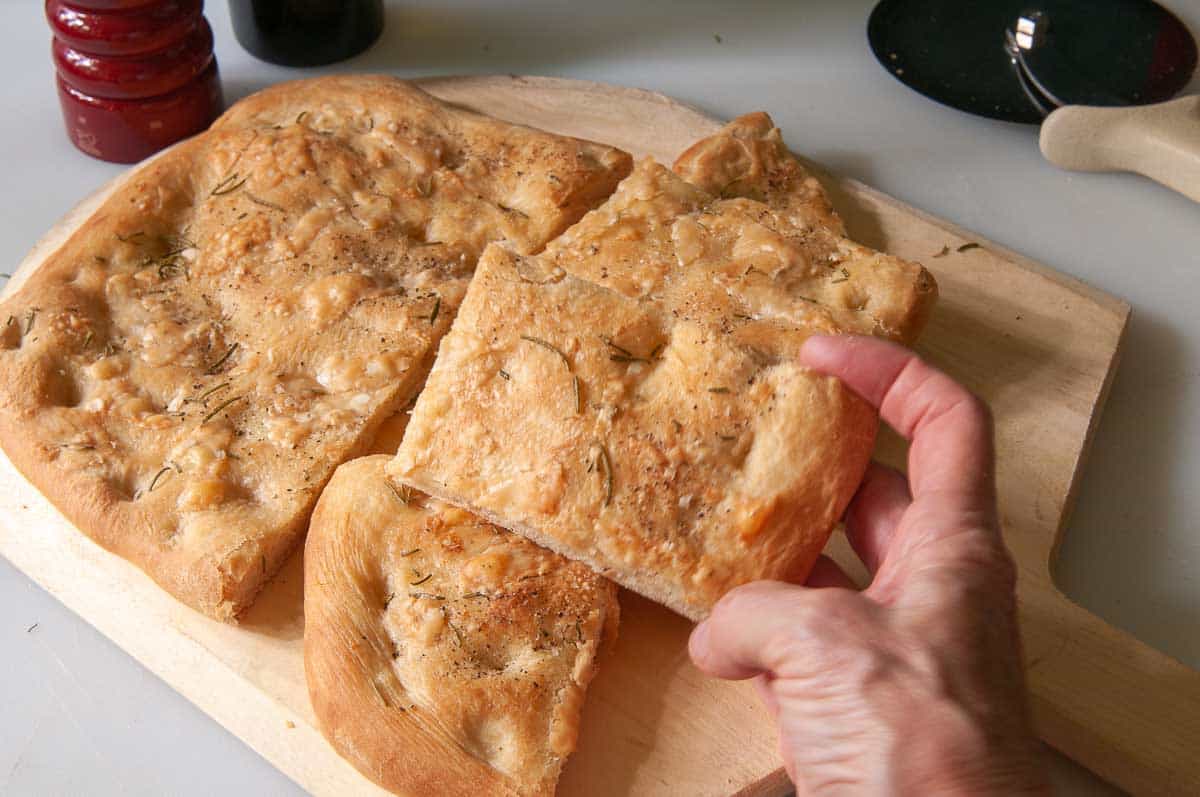
- Bake at 425˚F (220˚C) for 12-14 minutes until golden brown.
Notes
- Unbaked dough: Freeze after the DOUGH cycle or after shaping (before final rise). Defrost in the fridge overnight.
- Baked bread: Double-wrap and freeze up to one month. Reheat gently.
- Stand Mixer: Mix until moistened, then knead with a dough hook (speed 2–3) until smooth and elastic (5–10 minutes). Let rise, deflate, and shape as directed.
- By Hand: Mix to a shaggy dough, knead on a floured surface until smooth and elastic (10–20 minutes). Let rise, deflate, and shape as directed.
Equipment
Nutrition
All images and text ©️ Paula Rhodes for Salad in a Jar.com
How To Serve Focaccia
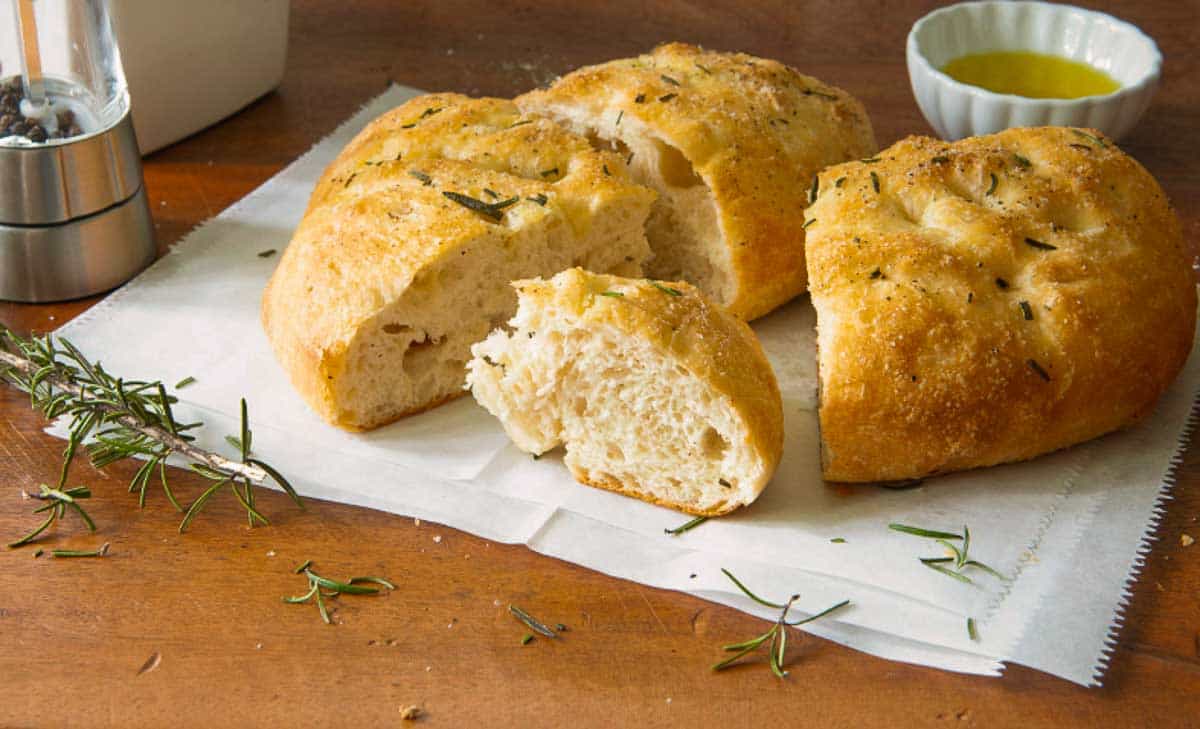
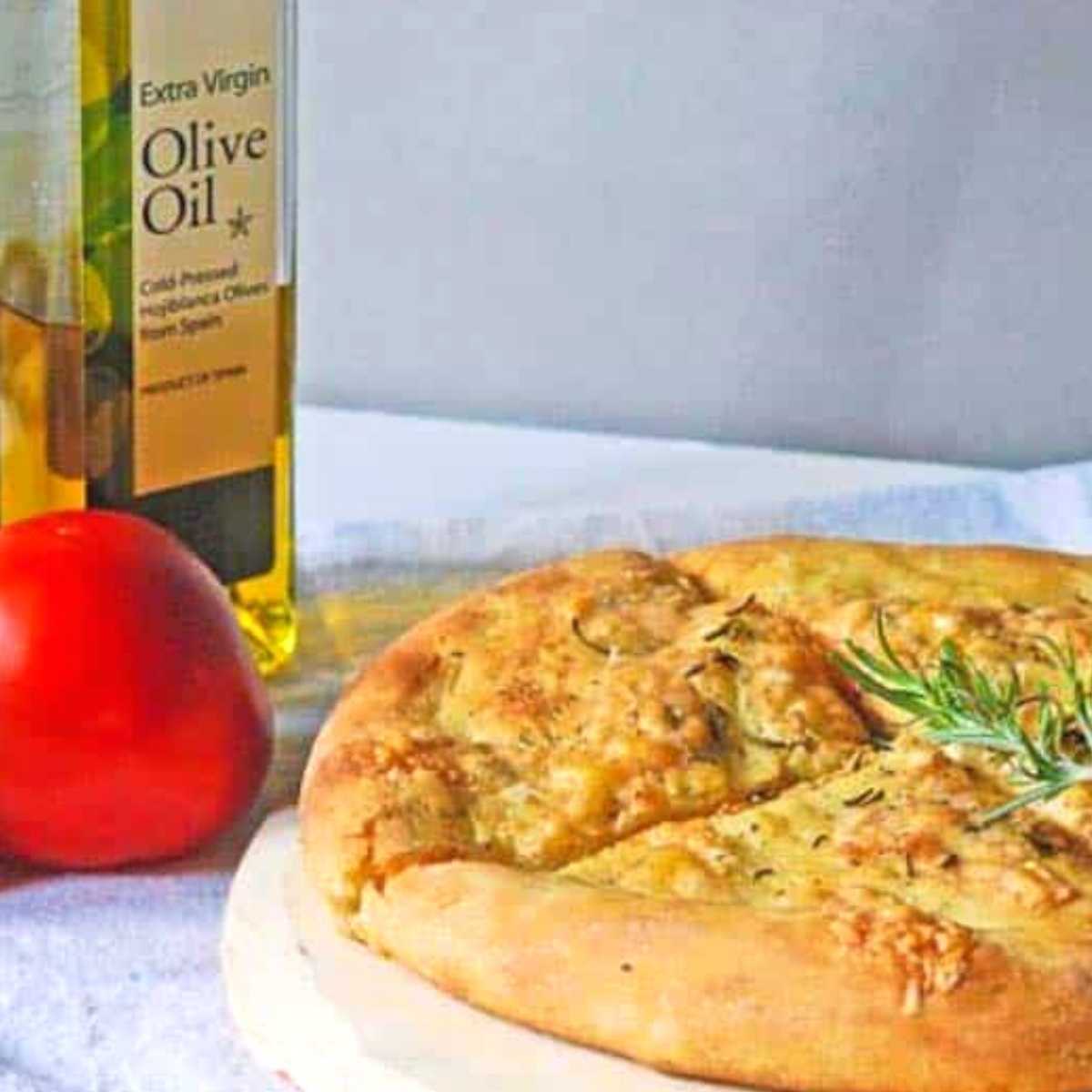
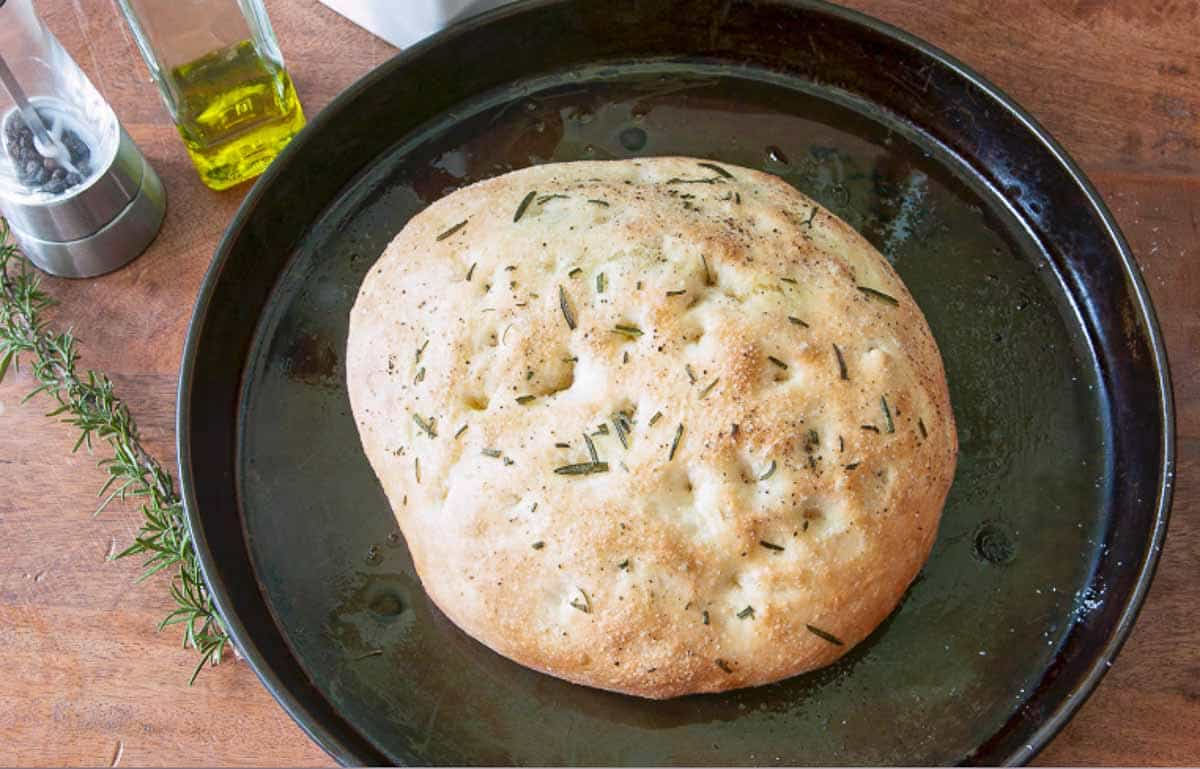
Perfect with pasta–use a pizza cutter to cut wedges like you would cut a pizza. It’s also suitable for sandwiches if you make it thick, as shown in the picture below. Split the focaccia in half horizontally. Toasting is optional.
Final Thoughts
If bread-making has ever felt like more trouble than it’s worth, this focaccia is a good reset. It’s adaptable, forgiving, and doesn’t demand perfection. Let the machine help, trust the dough, and enjoy the process—because good bread has a way of making the effort feel worthwhile.
I think you’ll enjoy serving focaccia with one of my most popular recipes, Scooter’s Baked Spaghetti with Cream Cheese, or this Stuffed Shells with Mascarpone Cheese and Spinach.
— Paula, Home Economist
Homemade Food Worth Sharing
Need help troubleshooting?
Email me: Paula at saladinajar.com — photos help!

Made this today.
I have never made focaccia before and this recipe was so easy to follow.
I had to refrigerate the dough for the afternoon because of an unexpected appointment but finished it tonight.
Smells wonderful!!
The again for your wonderful recipes.
Glad to share the recipe, Lois. Thank you for writing.
Hello, I have a question: in step three the dough is divided into two balls. But in the next steps, everything is for one piece of dough . The same thing as shown in the photos. when are the two pieces of dough united? Or are there two focaccia? Thank you!
Hi Gina,
Thank you so much for your question—I can see how that might be a little confusing! I actually use two 13-inch pizza pans for my focaccia, with one ball of dough for each pan, so the recipe makes two focaccia. If you prefer a thicker focaccia, you can combine the two balls and use just one pan instead. It really depends on the pans you have and the thickness you’re aiming for.
Dead easy! But a question, should I line my baking tray with greaseproof paper?
Hi Sue,
I never line mine, but it’s probably a good idea if you have trouble with the bread sticking.
This is another winner! O my gosh! All of your recipes are one better than the other! So well thought through and explained! I use my bread machine to do most of the work.. I thank you – and so does my family and friends! Delicious – easy!
Thank you, Adele. I bet your family has a great time eating everything you bake.
I’ve had PanPhobia (fear of bread making) since I botched Focaccia not once, but twice, in quantity foods lab in my dietetics major days. No more! Came out perfect and delicious. I love how it’s not chock full of olive oil, too. No sacrifice in flavor.
This made a an easy, tasty bread! I made this today, easy as could be with the bread machine to do the heavy work. Paninis for dinner tonight!
Way to go, Dave. Paninis sound delicious.
This is not focaccia bread this is pizza dough. You aren’t even poking holes in the dough.
Hi Christian,
Point well taken. I wrote in the directions to use your finger tips to flatten the dough. I probably need to re-write them to be more clear. Thank you for taking the time to write.
Hi Paula, may I know what’s the reason focaccia recipe doesn’t need a long 2nd proofing? Thanks.
It’s like pizza. Like most breads, the second proof goes much faster than the first. I like it proofed a shorter time because it makes the bread more chewy and a little less puffy.
@Paula, that’s great!!
I made this for lunch today… no leftovers ?
I love hearing this. It’s one of the easiest bread recipes I have. Wouldn’t you agree?
Made this for lunch again today upon son’s request, after a long break…..
I incorporated the rosemary during the DOUGH cycle, so all evenly distributed .
I also mixed the ground black pepper with the grated Parmesan before sprinkle on top.
While I was spreading out the dough onto the baking tray, I already somehow poke holes into the dough, instead of after the 40mins 2nd rise, is that ok Paula?
Dear Paula,
I have a question Paula. In your recipe for Bread Machine Rosemary Parmesan Foccacia one of the ingredients is 2 1/4 t. bread machine yeast. I have regular dry active yeast in a jar. How much of the regular dry active yeast should I use?
Thank-you,
~Lori
Lori,
Use the same amount of yeast. However, you must dissolve it before adding to the other ingredients. Just use about 1/4 cup of the warm water specified in the recipe. Stir the yeast into the water and let it sit for about 10 minutes. Then add to the other ingredients and proceed as usual.
Thank you for including directions on adjusting dough consistency. I have made wet dough before and guessed at how much flour to add. Your instructions will make a difference.
Hi! I just found this site and have a question on the focacia. When you say to run through the dough cycle, do you mean kneading and rising? Or just the kneading?
Your pizza recipe called for bread flour, which I went ahead and bought — pizza was delicious, thank you! Instead of making two circles, I spread it in one of my “1/2 sheet” cookie pans. Also made the dough the night before, took it out of the fridge, let it rest about 20 min., then was able to spread it out.
My question is — this recipe says unbleached all purpose flour — why not bread flour?
Hi Paula, thanks you for your awesome recipes, my greek yogurt is near perfect, I jar now almost everything, and I got a bread maker.. yeah!! something I wouldn’t have though of it since I used to hand knead my bread.. my bread now rises beautifully (not before with this Texas weather). Now I have a question, I normally weight most of my baking ingredients, how much in grams or oz. would be your cup of flour for the Foccacia, thank you.
Hi Alejandra,
Weighing flour to make bread is definitely the better way. My cup of flour equals 4.5 ounces or 127 grams. That’s what it was with today’s humid conditions and the way I stirred the flour and the cup I used. etc. In other words, it can vary. That’s why it may be necessary to make adjustments as you go. Lots of articles on the internet about why there is so much variation. paula
Thank you Paula!, close enough, I weighted 125 grams. per cup. and the focaccia came out nice.
I have made this bread 3 times already-It is perfect foccacia -Ready and baked in 2 hours-It is better than any restaurant or bakery and the best part is,I can make it any time I want-Thank you for a lovely recipe-I heart you
Thanks Analiese. Wonderful to hear that you like it.
Um…didn’t work out for me. Did you forget the salt? It also didn’t set up properly and just turned to crunch. Was really hopeful…
Holly,
I am completely embarrassed. Yes, I did leave out the salt. It should have 1 teaspoon. I make this recipe from memory all the time so I never look at this recipe. So sorry. Hope you weren’t having company. 🙁
Hi Paula,
I stumbled here and it’s a godsend. I have a bread machine and needed ideas for making delicious rolls. I also agree that the machine works wonder with kneading and first proofing, but not so great with baking.
How would you recommend if I need to keep the dough for a few hours or a day before baking?
I have been trying to only use whole white and whole wheat flours. Do you think they would work as a substitute for this recipe? It looks so delicious and I would love to try it.
Thanks!
This is delicious!! I made it today and it turned out perfect!!! Thank you so much for this recipe!
Is it supposed to be soft? I’m not sure if I didn’t cook it long enough, The inside was soft and normal but the crust top and bottom were also soft. It may also have been that I used 2 1/2 cups of white whole wheat and 1/2C all purpose flour. It tastes good so I guess that is what counts the most. lol
Also getting ready to bake your crusty french bread, looking forward to it.
Hi Leigh,
If you brush the pan and the bread with olive oil, you should have a crispy bottom but not so crispy, more chewy crust. A lot depends on your pan. In fact, my daughter-in-laws covet my pizza pans which I inherited from a previous working stint in research and development at Pizza Inn many years ago. If it tasted good, sounds like you did it right. pr
I am making these today- you’ve opened my eyes to just using my bread machine for kneading. Thanks for this blog- I’ve got you in my reader rotation now!!
Kelly Jo, I hope your bread turns out wonderful. Let me know if you have any questions or problems.
The focaccia bread looks delicious. Makes me want to get out my breadmaker and see if it will work
Yum. This could get me into trouble.