
Chewy Bread Machine Bagels with Step-by-Step Video
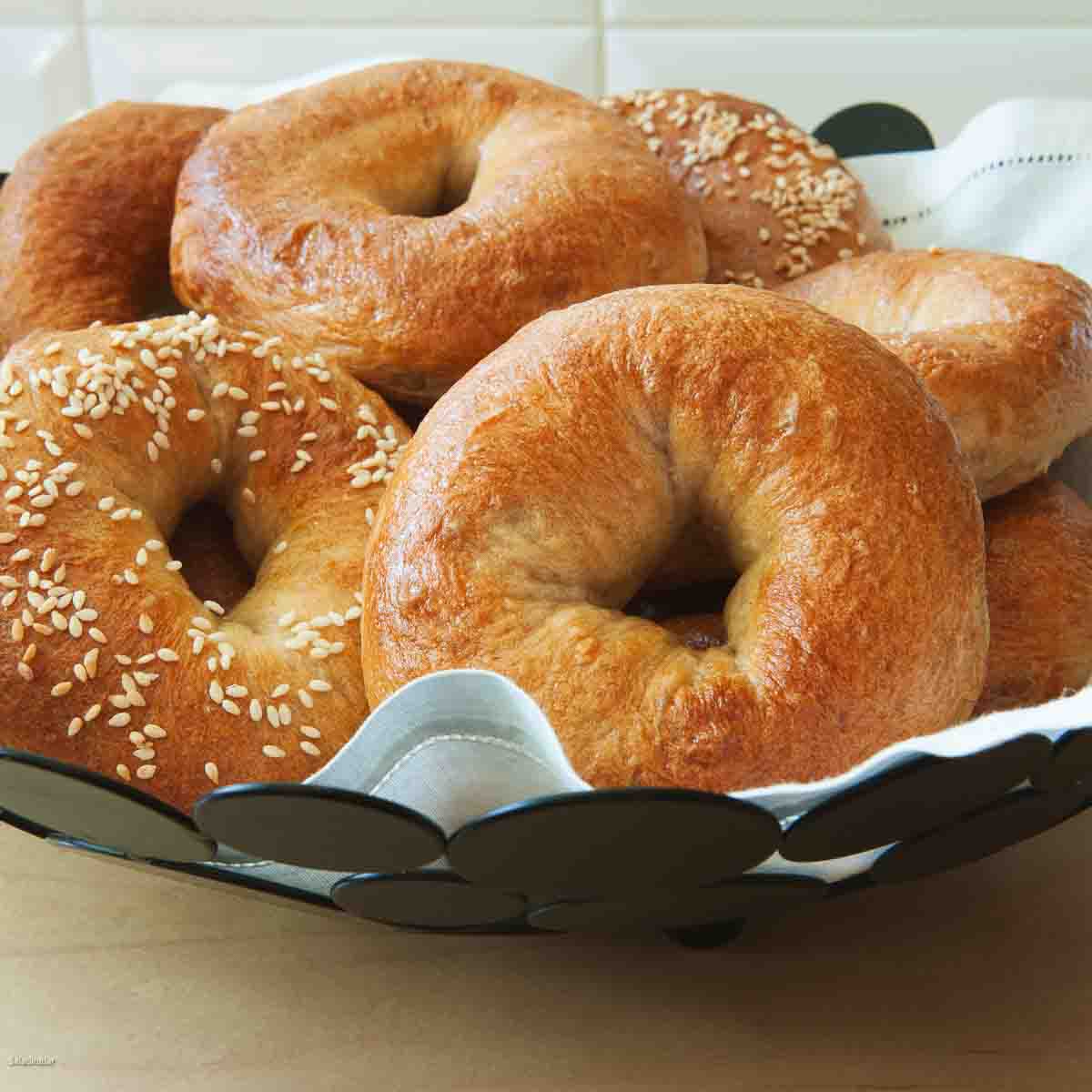
Sneak Peek: These chewy homemade bagels start in a bread machine and finish in your oven after shaping and boiling. A step-by-step video guides you through the process, ready in about 3 hours.
This post contains affiliate links. As an Amazon Associate, I earn from qualifying purchases at no extra cost to you.
Thinking about making your own bagels? Your bread machine makes it easier than you think. Let it handle the mixing and kneading while you focus on the fun part—shaping, boiling, and baking.
Sure, your first batch might look a little rustic (mine did too), but once you taste that chewy crust and fresh-baked flavor, you’ll be hooked. After a couple of rounds, shaping becomes second nature—and suddenly you’re the one known for “those bagels.”
No bread machine? See the recipe notes for how to make this recipe with a stand mixer or by hand.
How I Use a Bread Machine for Better Bread
I use my bread machine (this is the model I use) to mix and knead the dough using the DOUGH cycle, then shape it by hand and bake it in a conventional oven. This approach takes advantage of the machine’s consistent kneading while giving me full control over shaping, rising, and baking—especially important for rolls, pizza, and other swirled and shaped breads.
My free Bread Machine Crash Course explains this approach in more detail.
Ingredients & Substitutions
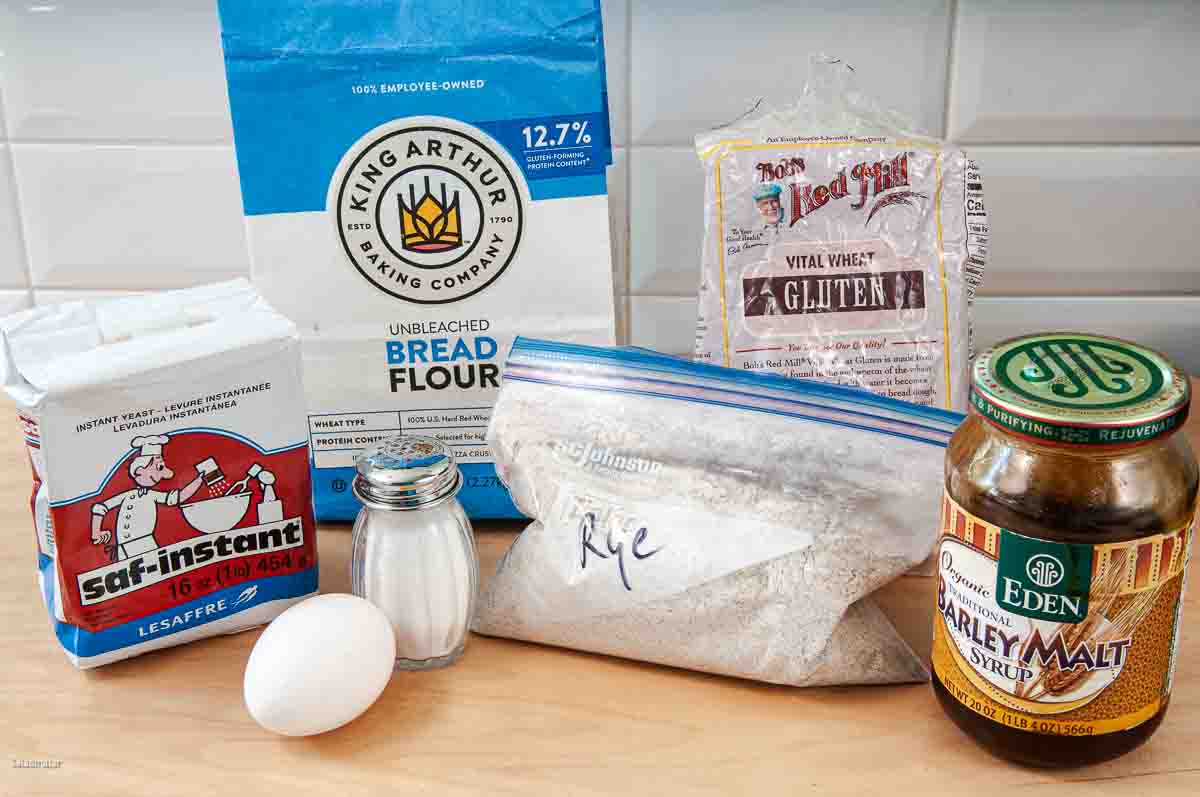
WATER: Use cool filtered or tap water.
BARLEY MALT SYRUP: Adds classic bagel flavor. Sub with honey, maple syrup, or brown sugar (see chart below). Order online (paid link).
SEA SALT: Any fine or medium-grain salt works. Add ¼ tsp more if using Kosher salt.
VITAL WHEAT GLUTEN: Helps with chew and texture. You can substitute with bread flour in a pinch.
RYE FLOUR: Optional, but adds earthy flavor and boosts fermentation. Light or medium rye is fine.
BREAD FLOUR: Provides strength and chew. Avoid all-purpose unless you want a much softer bagel.
INSTANT YEAST: Use bread machine or rapid-rise yeast—no proofing needed. Read more.
EGG WHITE: For glazing. Adds shine and helps toppings stick.
TOPPINGS: Optional. Try sesame seeds, poppy seeds, kosher salt, or everything bagel seasoning.
If You’re Curious: How Boiling Sweeteners Affect Bagels
• Barley Malt Syrup: Classic bagel flavor with a deep golden color and chewy, glossy crust
• Honey: Light sweetness, medium browning, slightly softer crust
• Maple Syrup: Mild maple note, lighter color, thinner crust
• Brown Sugar: Subtle molasses flavor, light crust, softer texture
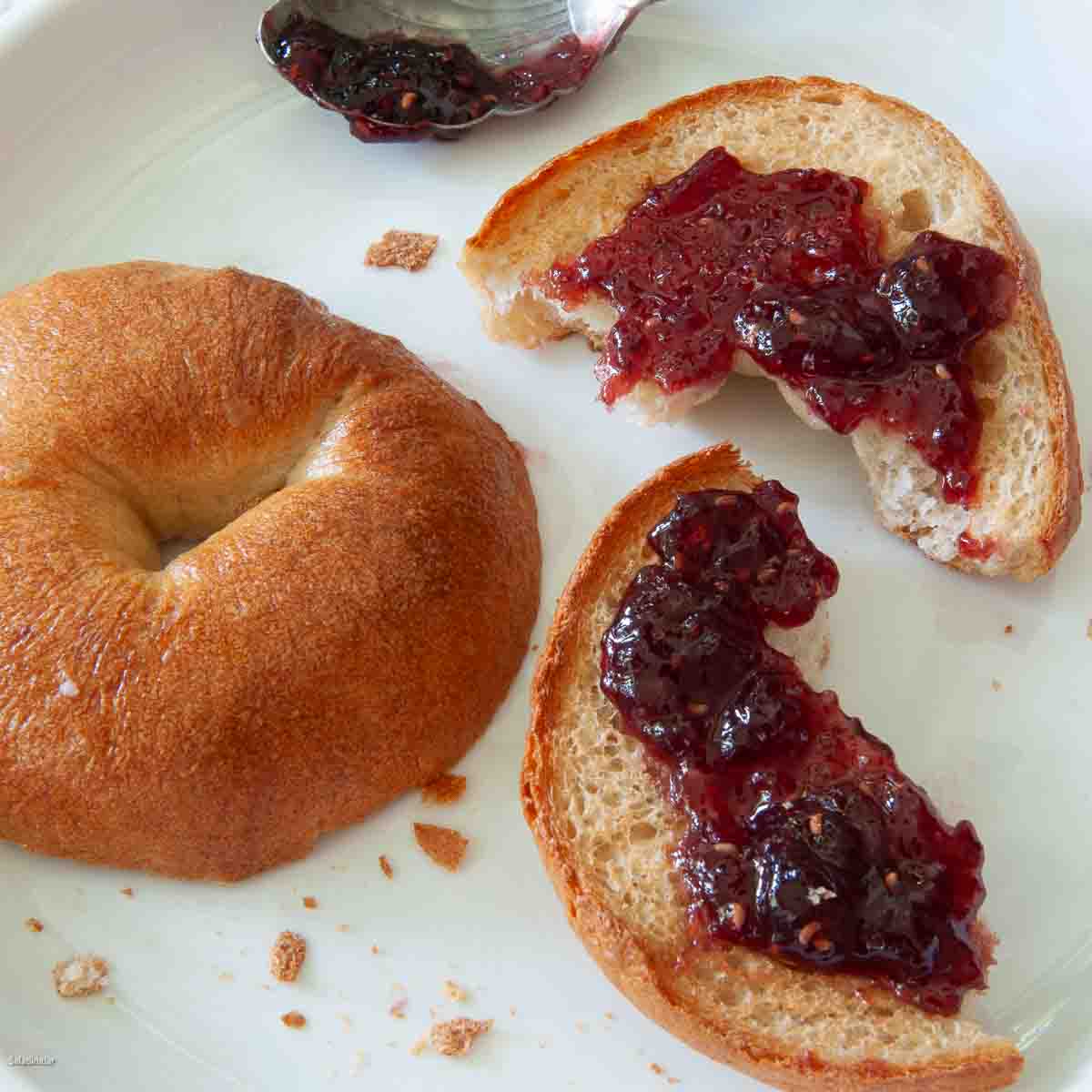
Step-by-Step Pictorial for Making Bagels
⬇️ See the recipe card for exact amounts and complete instructions.
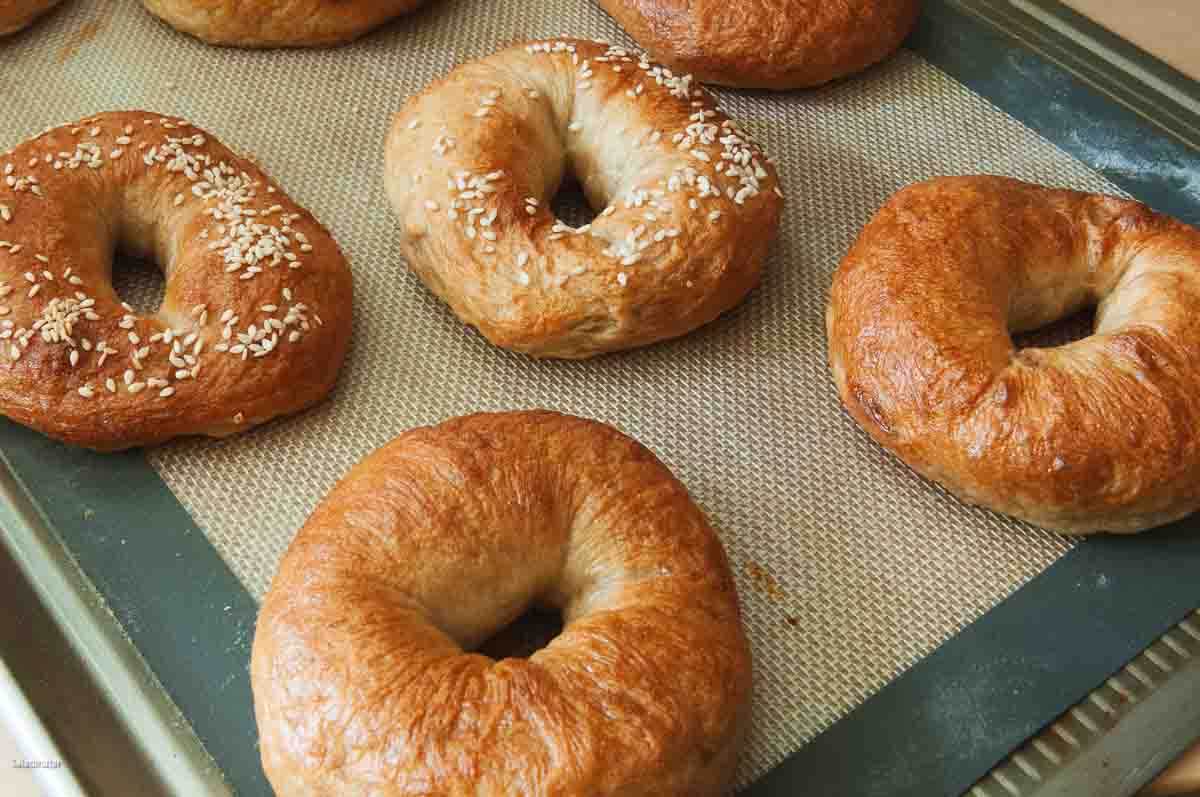
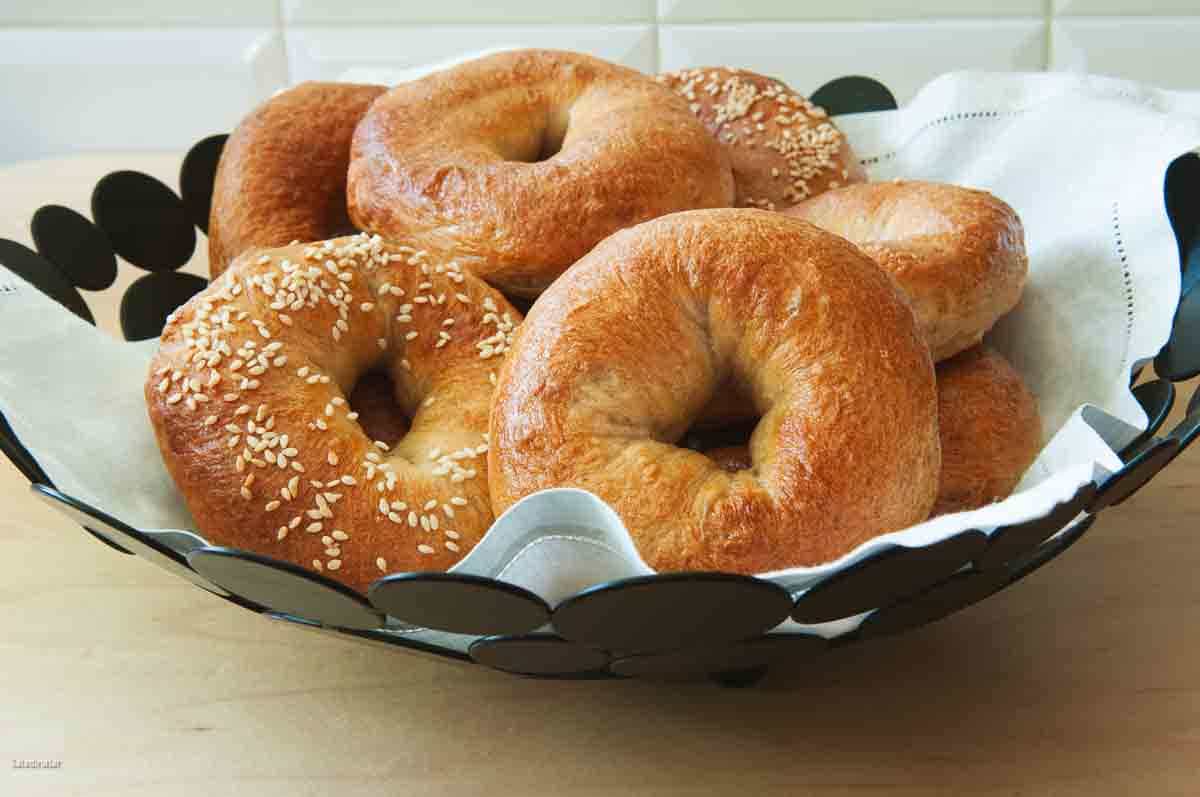
Chewy Bread Machine Bagels with Step-by-Step Video
Video
Ingredients
- 1 cup + 1 tablespoon (241 g) water
- 1½ tablespoons (31 g) barley malt syrup
- 1¼ teaspoons (8 g) sea salt
- 3 tablespoons (22 g) vital wheat gluten
- 1 teaspoon rye flour (optional)
- 2¾ cups (330 g) bread flour
- 2 teaspoons (6 g) instant yeast
Boiling Water
- 2 quarts water
- 2 tablespoons (42 g) barley malt syrup
Glaze
- 1 egg white
- 1 tablespoon water
Toppings-Optional
- sesame seeds, poppy seeds, everything but the bagel seasoning, Kosher salt
Instructions
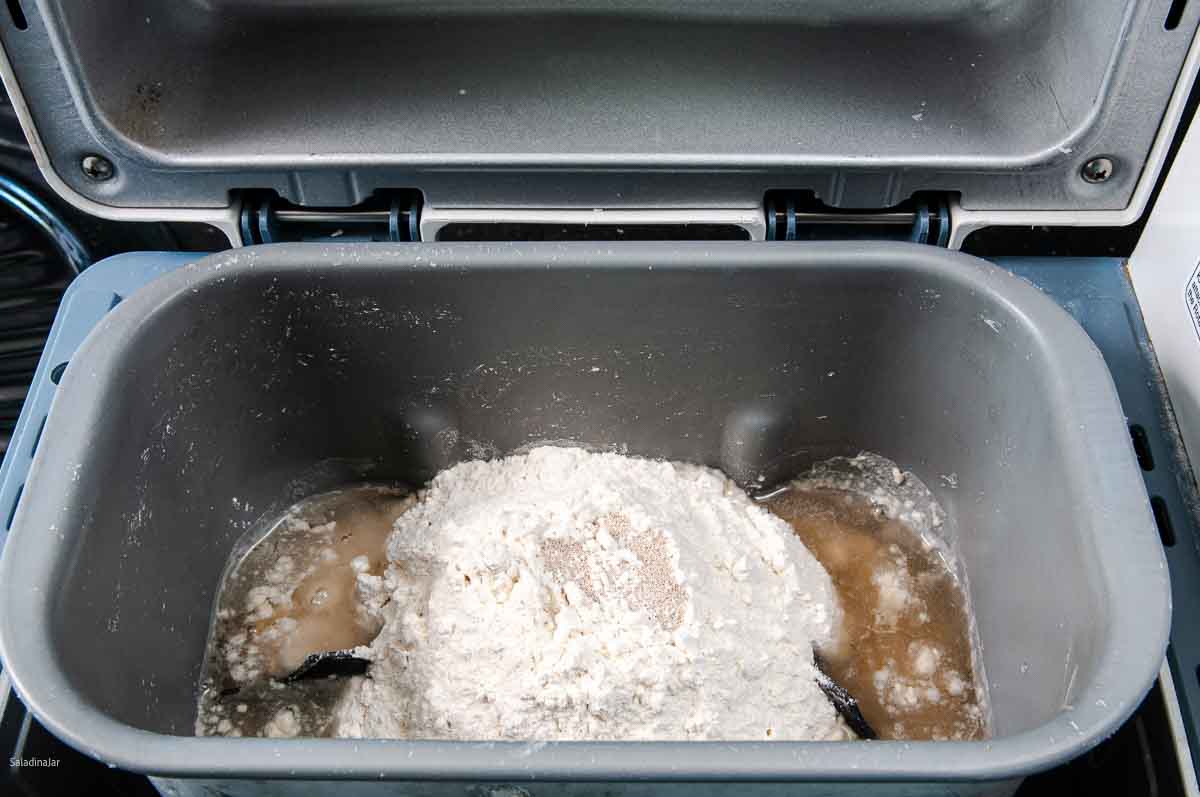
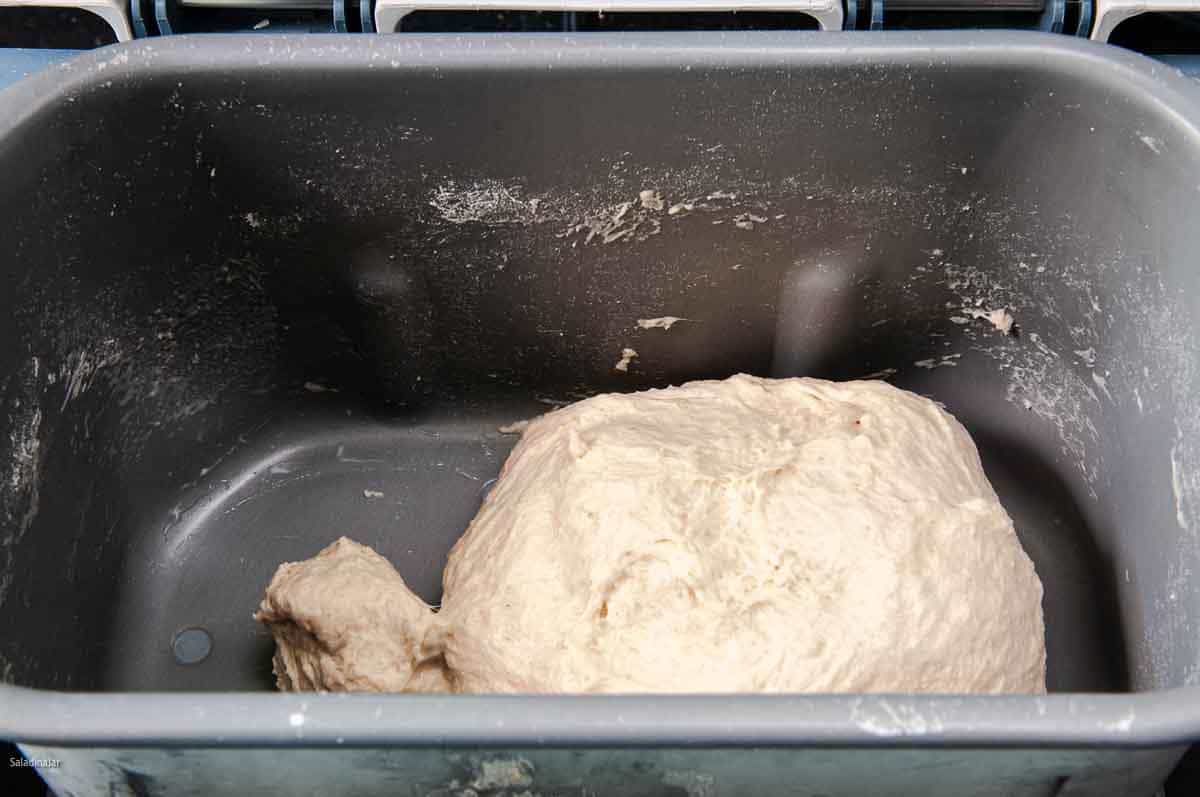
- Mix the dough: Combine 1 cup + 1 tablespoon (241 g) water, 1½ tablespoons (31 g) barley malt syrup, 1¼ teaspoons (8 g) sea salt, 3 tablespoons (22 g) vital wheat gluten, 1 teaspoon rye flour, 2¾ cups (330 g) bread flour, and 2 teaspoons (6 g) instant yeast in the bread machine pan. Select the DOUGH cycle and press START.
- Check the Dough: After 1 minute, ensure the paddles are engaged and the dough is clumping. At 15–18 minutes, the dough should stick to the sides and then pull away cleanly. If too sticky, add flour 1 tablespoon at a time. If too dry, add water one teaspoon at a time until slightly tacky.
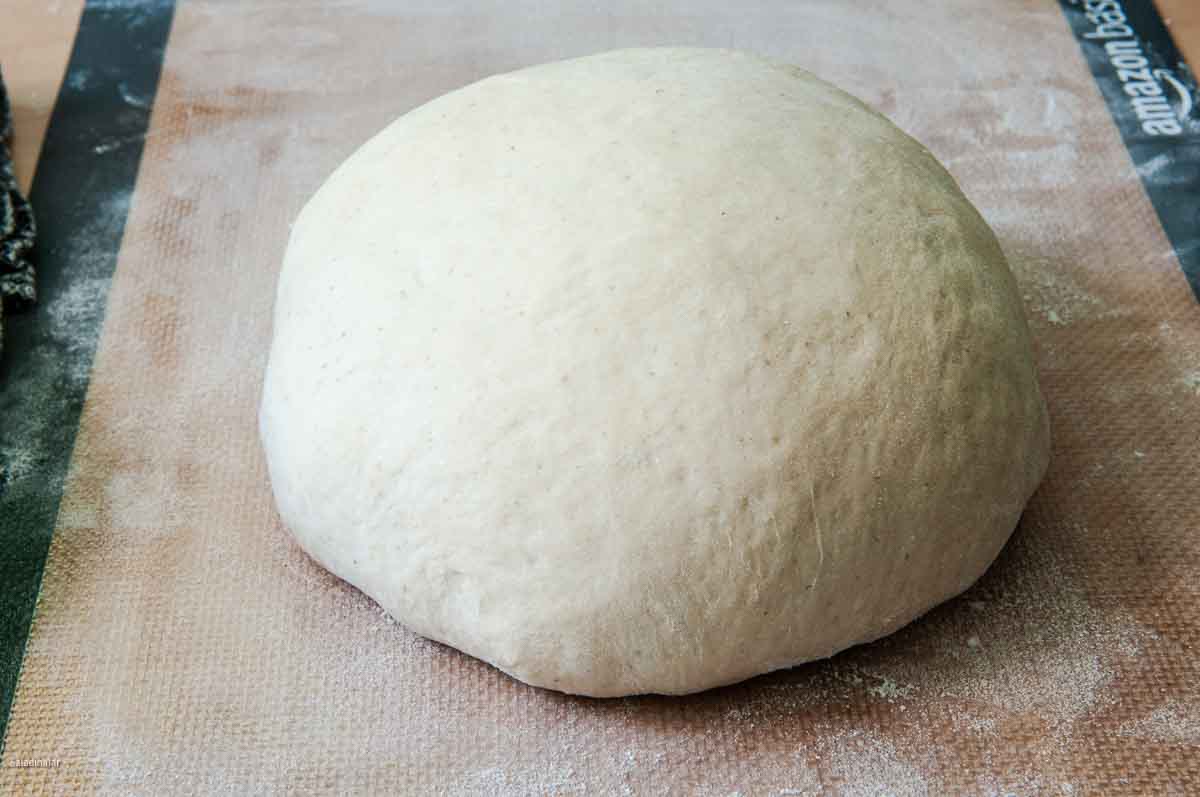
- End of DOUGH cycle: When the cycle ends, restart the DOUGH cycle after it finishes the first time and knead for 5 seconds to compress the dough. Then, remove the dough to a floured surface and shape into a smooth ball. Cover and let it relax for 10 minutes.
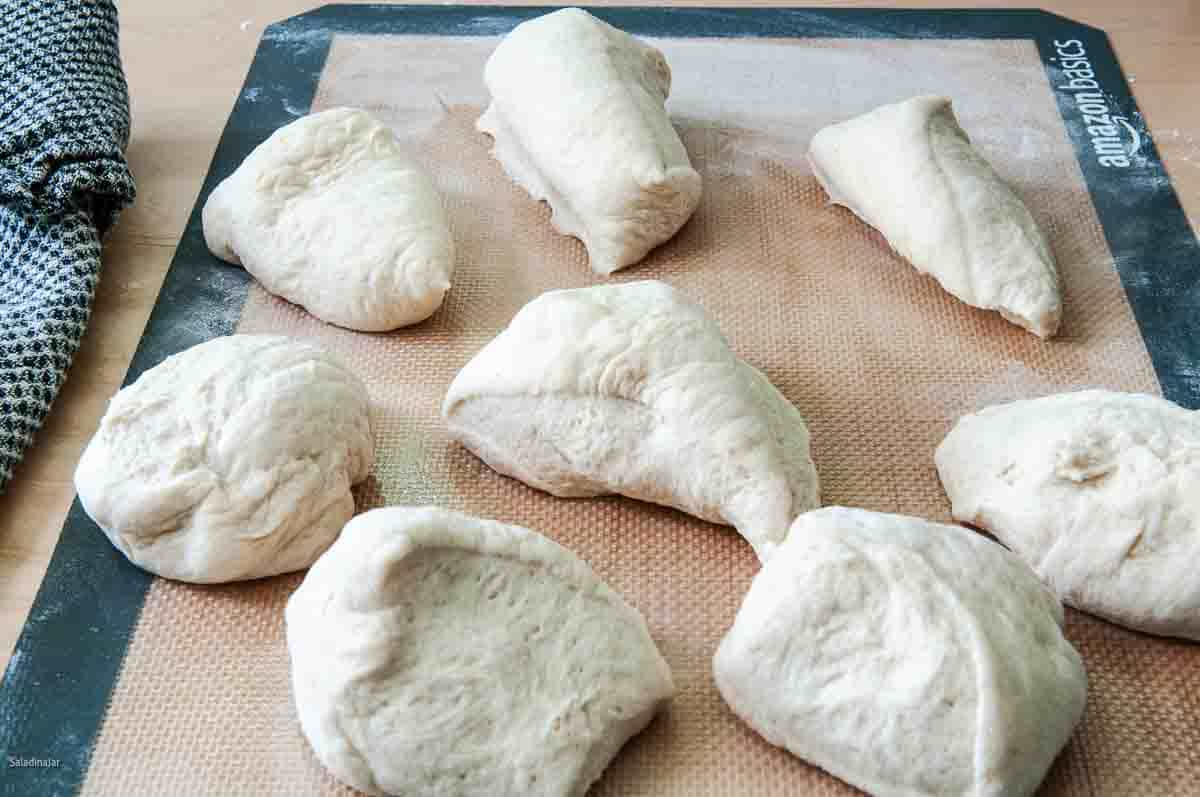
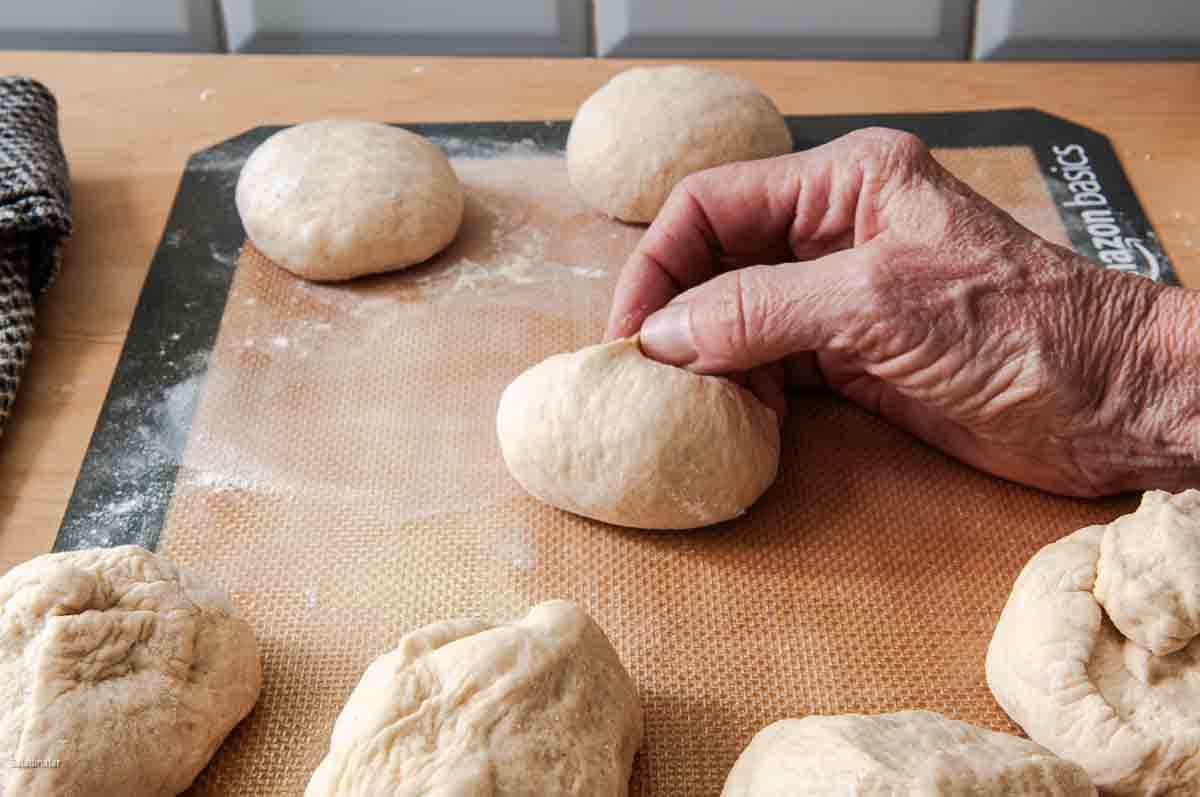
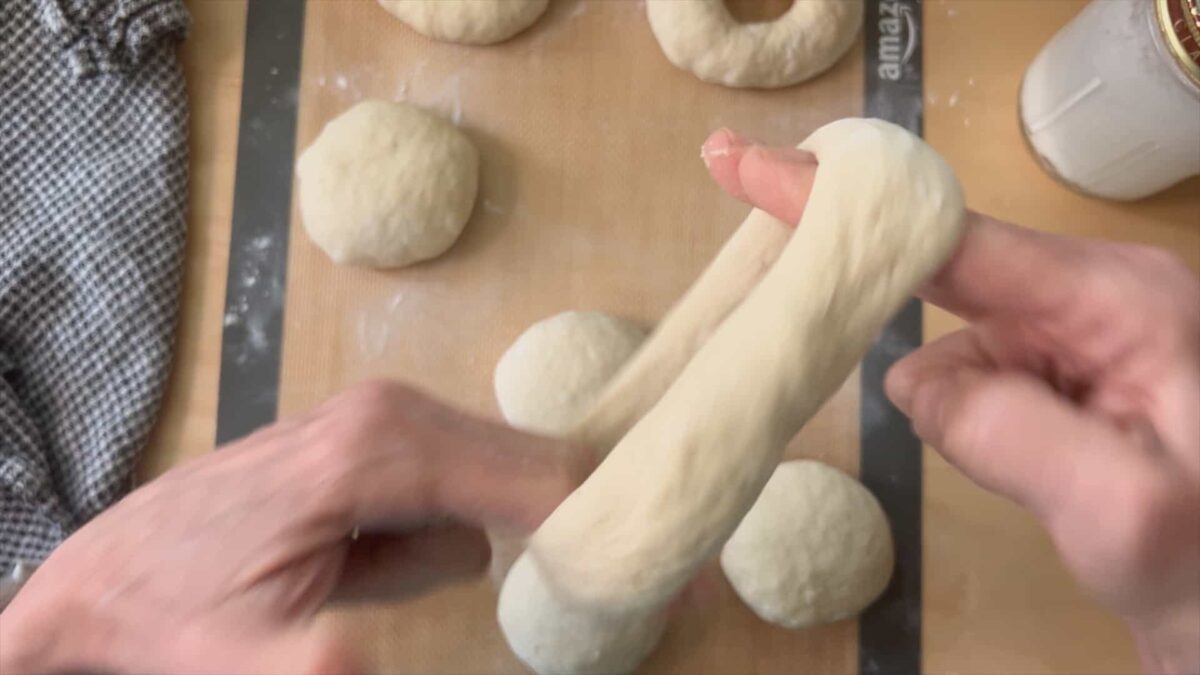
- Shape the Dough: Divide the dough into 8 equally-sized pieces. Form each piece into a round, smooth ball and flatten slightly. Poke a hole in the middle and use two or three fingers from each hand to stretch the hole without tearing it by rotating your hands–one over the other– inside the hole. (See video.) The hole should be large enough to stick your hand through (around 2 inches). Holes that aren't big enough will shrink to almost nothing by the time the bagels rise.
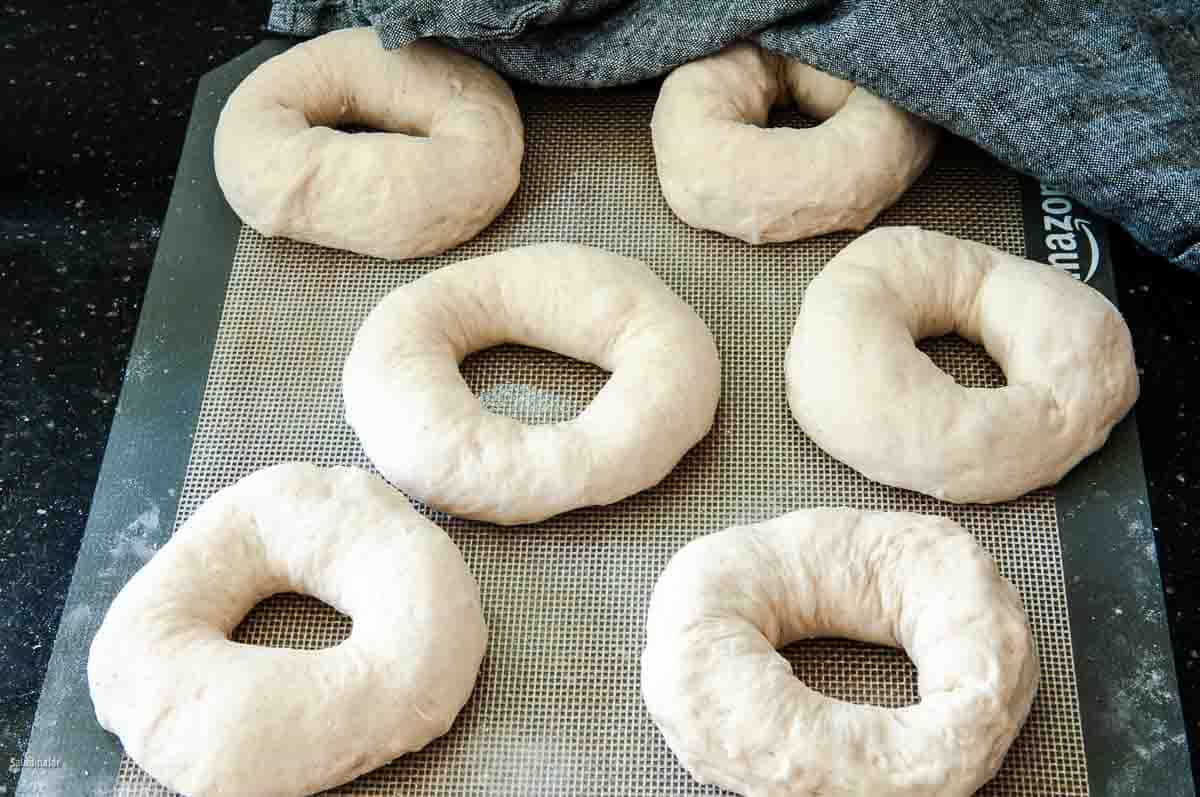
- Rise: Place each bagel on a prepared cookie sheet (covered with a silicone mat or parchment paper). Cover and let rest for 10-15 minutes.Preheat oven to 425˚F. (218˚C).
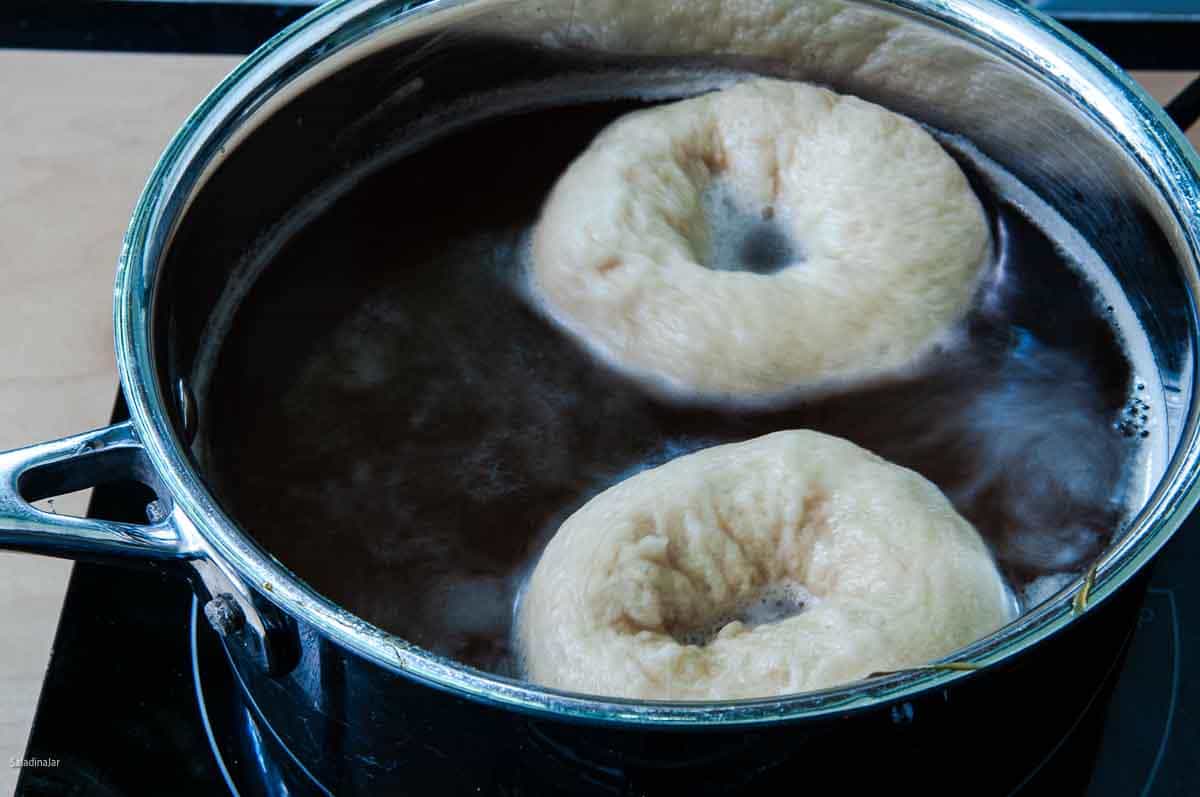
- Boiling the water: Fill a pot with 2 quarts water and 2 tablespoons (42 g) barley malt syrup. Bring to a boil and then immediately turn down to a simmer. Watch closely, as the syrup can cause it to boil over.Using a spatula or slotted spoon, place 2 bagels into the simmering water. After 15 seconds, turn the bagels over and simmer for another 15 seconds. (The longer the bagels boil, the thicker the skin.)Remove the bagels from the water to a clean towel to drain. After a minute or two, move the drained bagels to a prepared baking sheet. (A silicone baking sheet works especially well–worth the money!!)
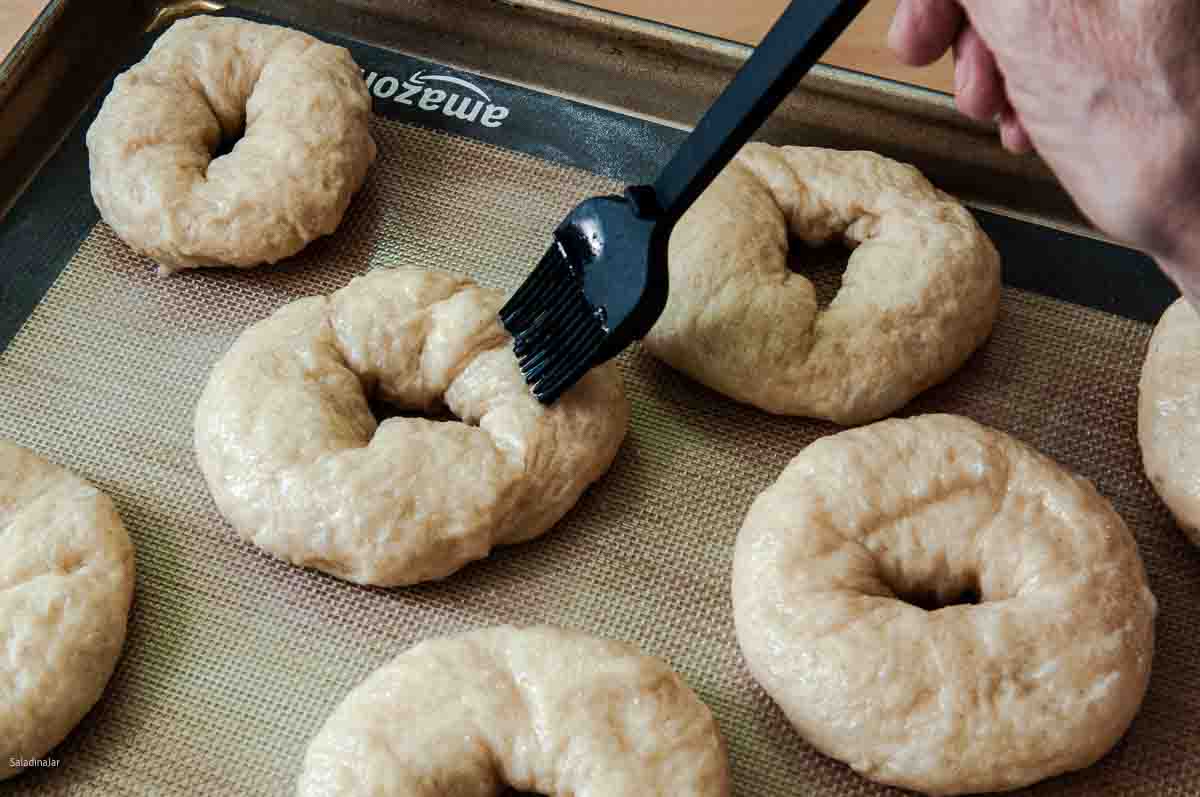
- Glaze: Whisk 1 egg white with 1 tablespoon water. Lightly brush the glaze over the top of the bagels. Sprinkle with sesame seeds, poppy seeds, everything but the bagel seasoning, Kosher salt if desired.
- Bake: Bake for 18-20 minutes until deep golden brown rotating the pan halfway through. Best enjoyed the day they're made. Freeze leftovers.
Notes
- Unbaked dough: Freeze after the DOUGH cycle or after shaping (before final rise). Defrost in the fridge overnight.
- Baked bread: Double-wrap and freeze up to one month. Reheat gently.
- Stand Mixer: Mix until moistened, then knead with a dough hook (speed 2–3) until smooth and elastic (5–10 minutes). Let rise, deflate, and shape as directed.
- By Hand: Mix to a shaggy dough, knead on a floured surface until smooth and elastic (10–20 minutes). Let rise, deflate, and shape as directed.
Equipment
Nutrition
All images and text ©️ Paula Rhodes for Salad in a Jar.com
Final Thoughts
I started testing this bagel recipe in response to more than a few readers’ requests over the past several years. My first bagels were delicious but ugly! Some were too fat (didn’t stretch them enough), others were uneven (not careful enough) and others had some holes inside (didn’t compress all the bubbles out of the dough when shaping them). Give yourself lots of grace in the beginning and you’ll be a pro after a little practice. Hope you love them.
If you enjoyed making these bagels, consider trying brioche, chocolate babka, or ciabatta for another fun challenge–all mixed in a bread machine, of course.
— Paula, Home Economist
Homemade Food Worth Sharing
Need help troubleshooting?
Email me: Paula at saladinajar.com — photos help!
Recipe slightly adapted from More Bread Machine Magic (paid link) by Linda Rehberg and Lois Conway.

Paula,
You’ve done it again!
These bagels are incredible! Sesame seeds stuck to the cream cheese all over my face, I love them!!!! they’re not the prettiest bagels but like you said that will come with time and practice.
I hunted all over yesterday looking for the barley malt syrup without luck but my guy at Global Grocers said rice malt syrup is very close and similar in taste. He’s not been wrong before and seems he was right again. Please don’t stop doing what you do so well, I look forward to your emails that have such great recipes to try.
Thank you for the positive feedback. Kudos to you for coming up with the rice malt alternative. I’ve never heard of that but it sounds good. May you have many delicious bagels in your future.
Can’t wait to try making bagels!
Everyone of your recipes that I have tried have been great!
Thank you!!!
Hi Robin,
How kind of you to say that! Let me know how your bagels turn out,
Hi Paula, I have a question about the chart for the flavor, color, & crust. It doesn’t give the amount of each to use. Is it always 1 1/2 tablespoons/ 31g as listed for the barley malt syrup?
Hi Shelley,
It doesn’t have to be the same, but the 1½ Tablespoons is a good place to start if you want to experiment. I did the same amount when substituting honey but the taste was milder and not as “bagel-like” as when I used the barley malt syrup.
I always forget to rate your superb recipes!!! Five stars, Friend!!
You asked me a year or so ago if I’d ever made bagels. I said no as it was a tedious process! Now I HAVE to make bagels because you have made it seem so easy…..thanks!!
We need to catch up….I’ve been on a communications sabbatical because of severe vertigo…worse than usual.???
Hi Gwynette,
I’m so happy to hear from you, but sorry to hear the vertigo is worse. I’ll write more, later. And yes, if you feel like it, the bagels will be easy for you, the English muffin queen.
This recipe is a direct result of my readers’ requests. I hope you love it and find the extra information below the recipe box helpful, especially if you’re new to making bagels. Send me a note or leave a comment to let me know how they worked for you–I can’t wait to hear.
Another winner, Paula. Easy to follow directions, and am really happy to see all the measurements in metric. I made 1.5 times the recipe for 12 bagels. The only issue was that the second pan of bagels was starting to overproof. I should have arranged the oven racks to bake 2 pans at once, alternating halfway through baking.
Instead of poking my finger through the doughball to begin shaping I poked the fat end of a chopstick to get it started.
The bagels were nice and chewy and the flavor was fantastic. BTW, I was the one who requested the recipe and am happy to be the first reviewer. Thanks for a great recipe, Paula.
Hi Elizabeth,
I’m so happy they turned out for you. Good idea about the chopstick. I found a similar tool to use for that myself. You motivated me to experiment with these, so I thank you for encouraging me.