
50/50 Whole Wheat French Bread (Dough Cycle + Oven-Baked)
Sneak Preview: Make this basic 50/50 Whole Wheat French Bread in your bread machine with white whole wheat flour and bread flour, which makes it higher in fiber than all-white French bread. Ready to eat in 3.5 hours.
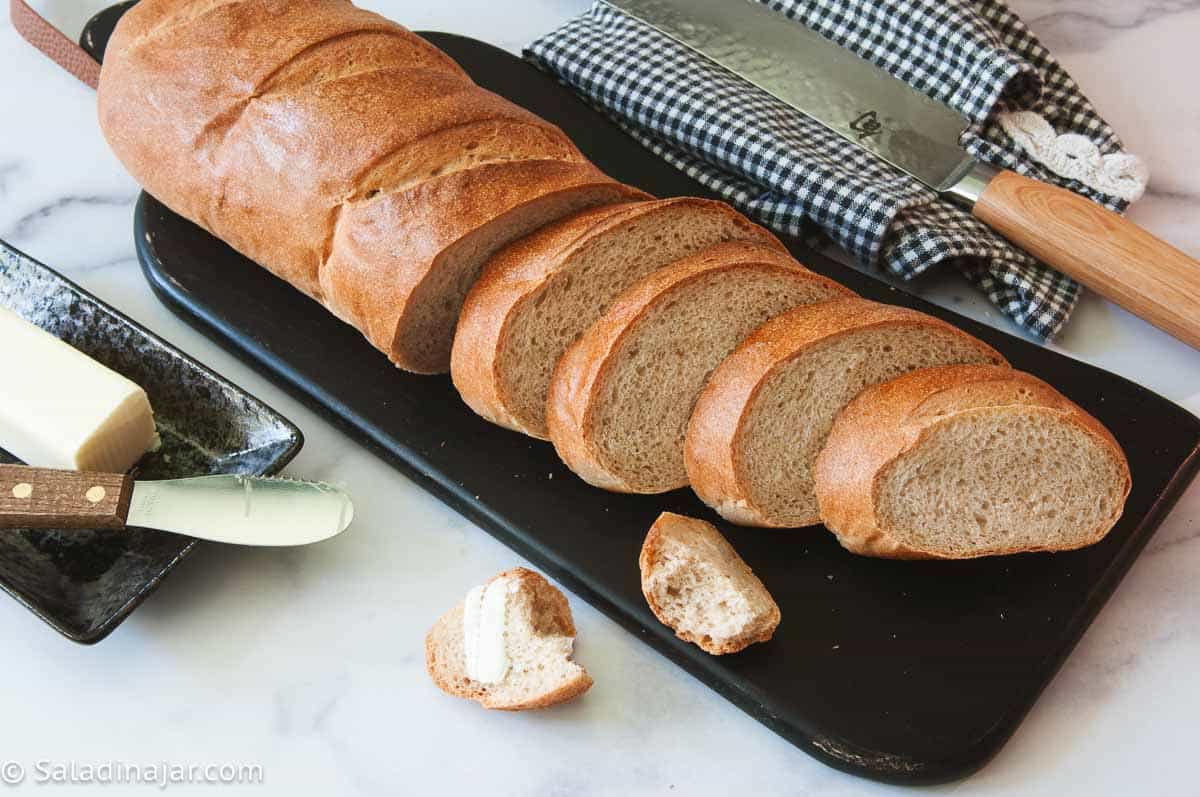
When a loyal reader asked for a heartier version of my popular Bread Machine French Bread recipe, I got to work. This half-whole-wheat and half white bread flour loaf stays soft inside with a crispy crust as it emerges from the oven. Picture eating a slice of this freshly-baked warm loaf with melting butter or browned butter slathered across it.
Don’t feel left out if you don’t have a bread machine. I’ve included directions in the recipe notes for using a stand mixer or making it by hand.
How I Use a Bread Machine for Better Bread
I use my bread machine (this is the model I use) to mix and knead the dough using the DOUGH cycle, then shape it by hand and bake it in a conventional oven. This approach takes advantage of the machine’s consistent kneading while giving me full control over shaping, rising, and baking—especially important for rolls, pizza, and other swirled and shaped breads.
My free Bread Machine Crash Course explains this approach in more detail.
Ingredients and Substitutions
Here’s what you’ll need…
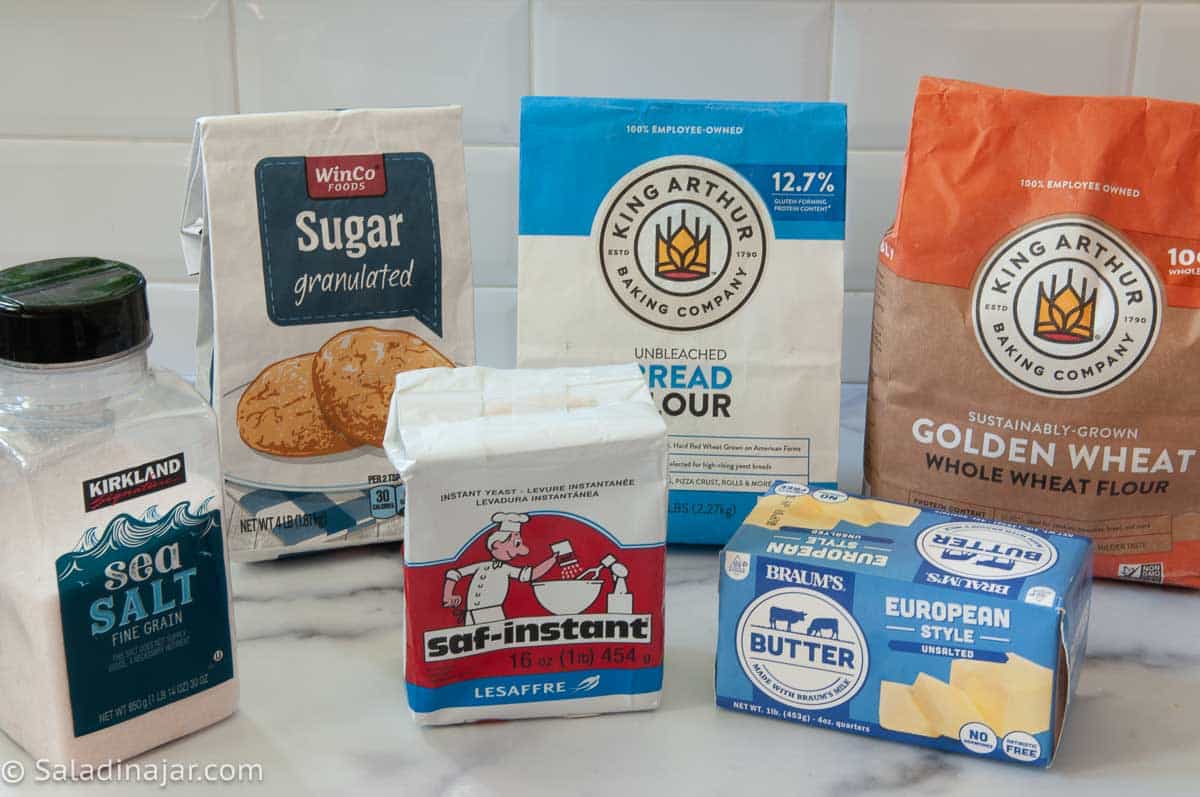
• WATER: Use cool water (around room temperature) to help control dough temperature.
• SUGAR: Adds a touch of sweetness and helps the yeast activate; honey works too.
• BUTTER: Adds tenderness and flavor. Olive oil or neutral oil can substitute.
• SALT: Enhances flavor and strengthens gluten—don’t omit or reduce too much. Table salt or sea salt.
• WHITE WHOLE WHEAT FLOUR: Gives a nutty flavor and extra fiber; you can substitute traditional whole wheat, but the loaf will be darker and slightly denser.
• BREAD FLOUR: Provides strength and chew. Substitute all-purpose flour if needed, but the loaf will be slightly softer.
• INSTANT OR BREAD MACHINE YEAST: Either type works well; if using active dry yeast, dissolve it in the water first before adding to the machine.
FOR THE GLAZE
• EGG WHITE: Whisked with a little water for a shiny glaze; omit for a matte crust or brush with milk for a softer finish.
Step-by-Step: How to Make Whole Wheat French Bread
⬇️ See the recipe card for exact amounts and complete instructions.



50/50 Whole Wheat French Bread (Bread Machine Dough & Oven Baked)
Video
Ingredients
DOUGH
- 1 cup + 3 tablespoons (270 g) cool water
- 1½ teaspoons sugar
- 1½ teaspoons butter
- 1½ teaspoons salt
- 1½ cup (168 g) white whole wheat flour
- 1½ cup (180 g) bread flour
- 1 teaspoon instant or bread machine yeast
GLAZE
- 1 egg white + 1 teaspoon water
Instructions
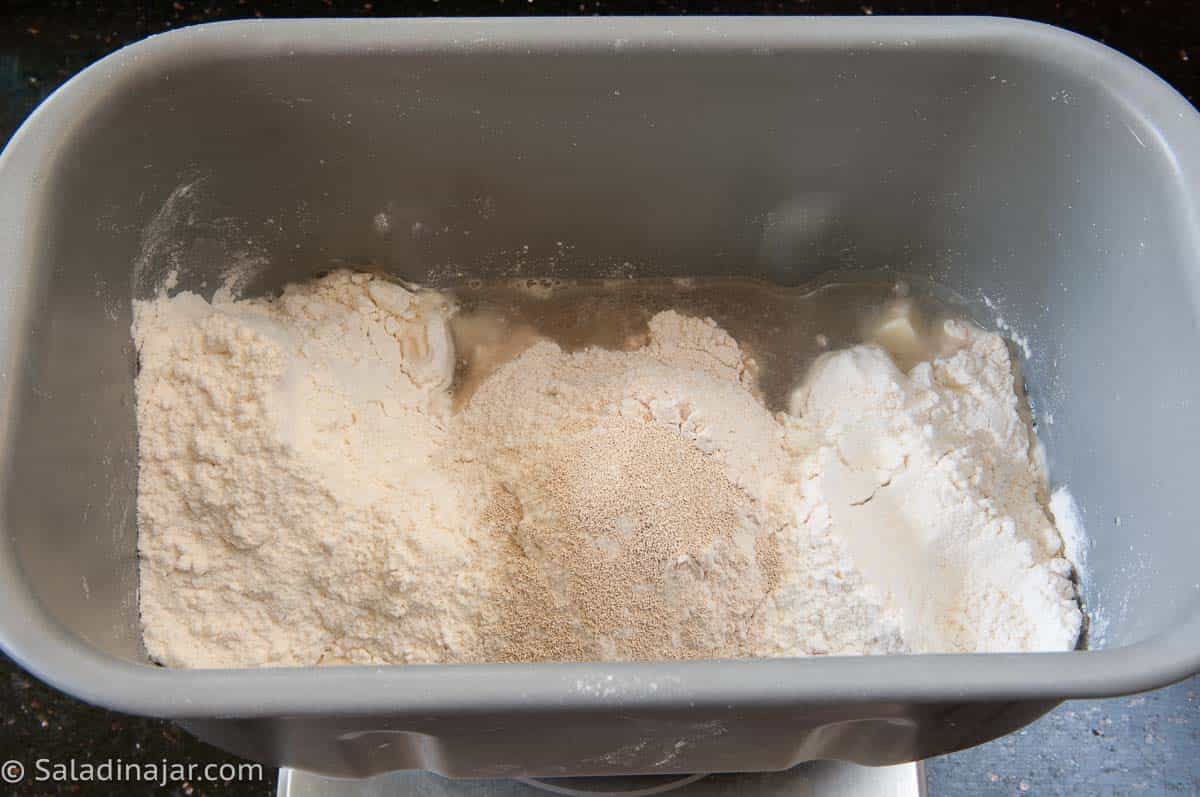
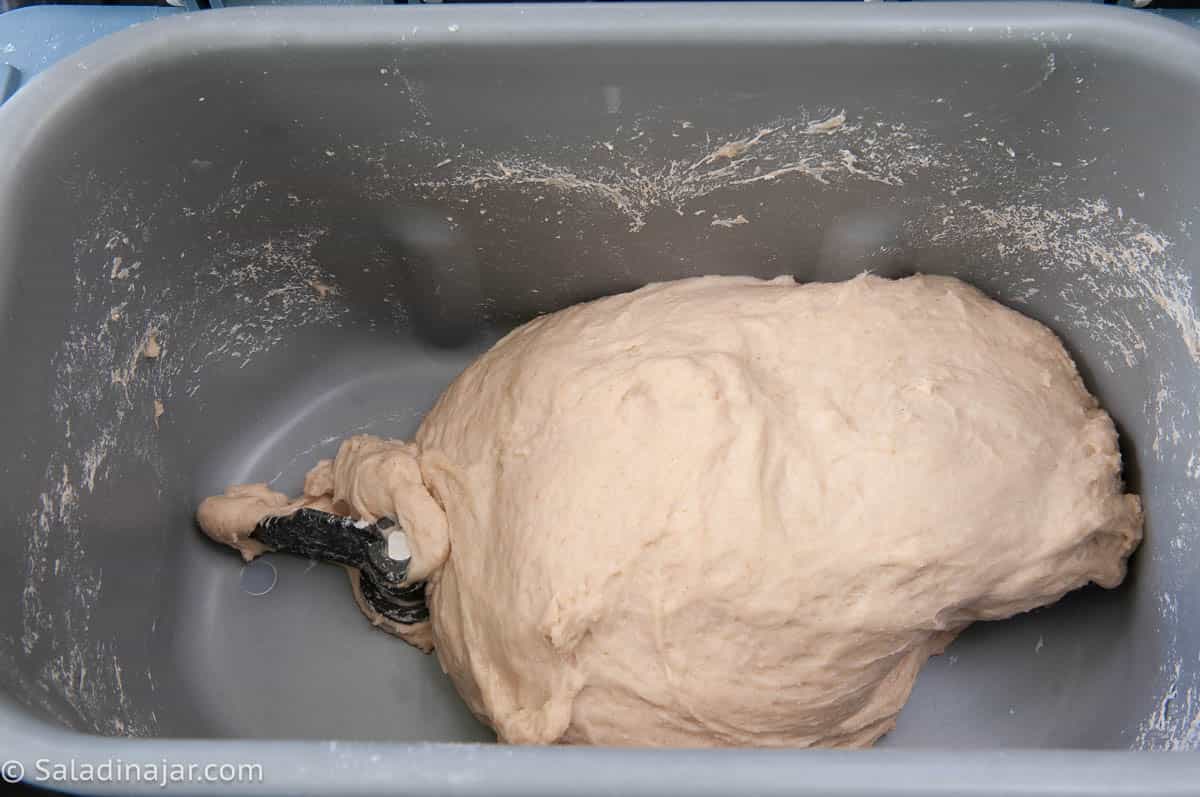
- Make the dough: Place all of the dough ingredients: 1 cup + 3 tablespoons (270 g) cool water, 1½ teaspoons sugar, 1½ teaspoons butter, 1½ teaspoons salt, 1½ cup (168 g) white whole wheat flour, 1½ cup (180 g) bread flour, 1 teaspoon instant or bread machine yeast into a bread machine pan in the order listed.
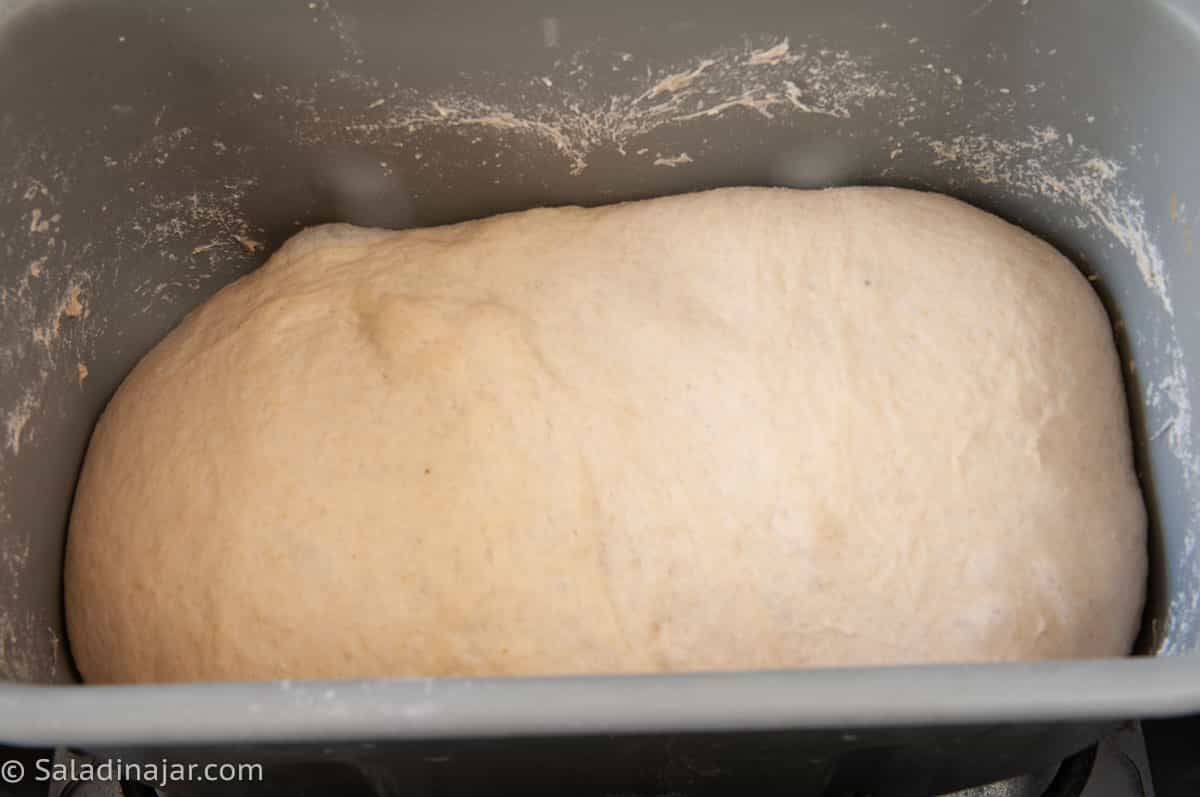
- Select the DOUGH cycle and press START. Run the machine just long enough to ensure that all ingredients are mixed together. Unplug or shut off the machine and let the dough rest for about 20 minutes, allowing the flour time to absorb moisture. Restart the DOUGH cycle.
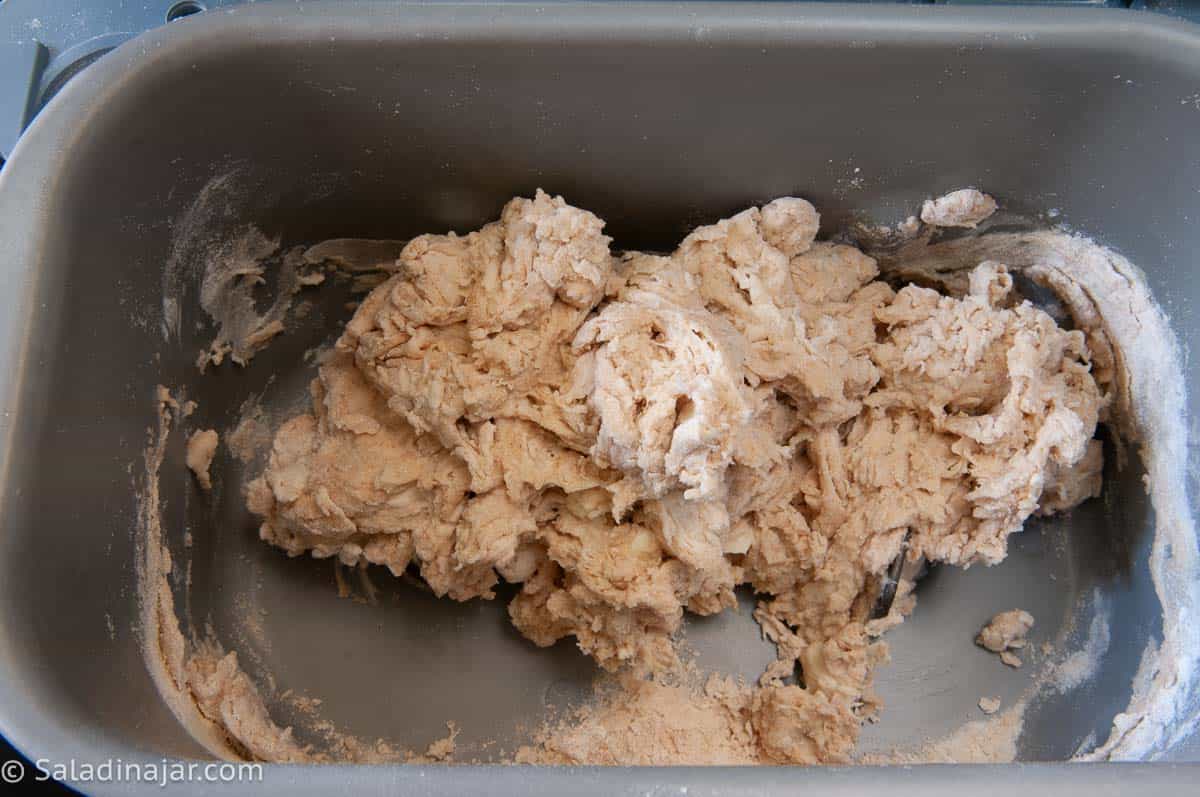
- First check: After a minute, check the dough to make sure it is coming together into a raggedy ball. If not, add more water 1 tablespoon at a time. If you see pancake batter instead of dough, you forgot some flour—just add it slowly until everything pulls together.Second check: Check dough again after about 15 minutes. The dough should stick to the sides of the pan, then pull away cleanly. If too wet, add flour 1 tablespoon at a time. If too dry and the dough doesn't stick at all, add more liquid. See more details–Surprising Secret for Making Better Bread with a Bread Machine.NOTE: Bread dough is influenced by flour, humidity, and even your kitchen temperature—so use this step to fine-tune the dough for your environment.
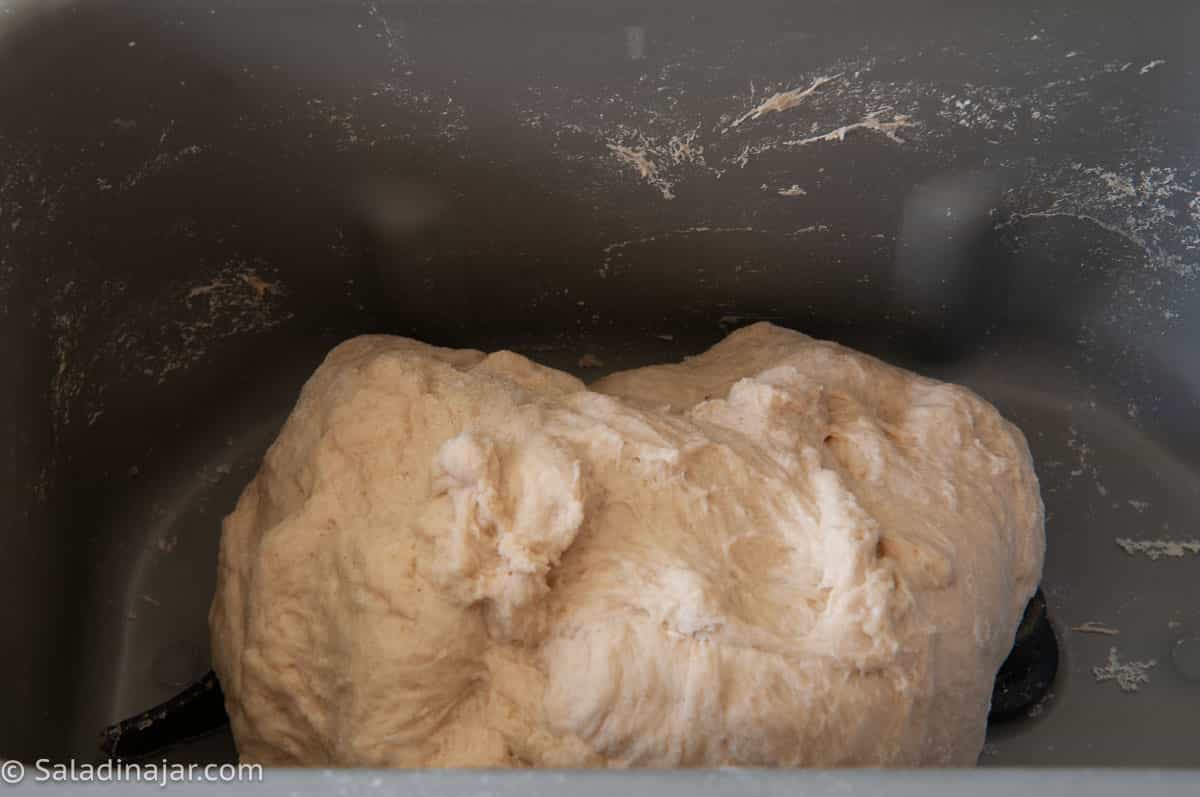
- Restart the machine: With the dough still in the bread machine pan, restart the DOUGH cycle and let it run for about 5 seconds to compress the bubbles before shaping. Stop the machine. (This results in a more even texture without noticeably large holes.)
- Preparing the dough: Remove the dough from the pan onto a lightly floured surface. Shape it into a loose ball. Cover and let it rest for 15 minutes.
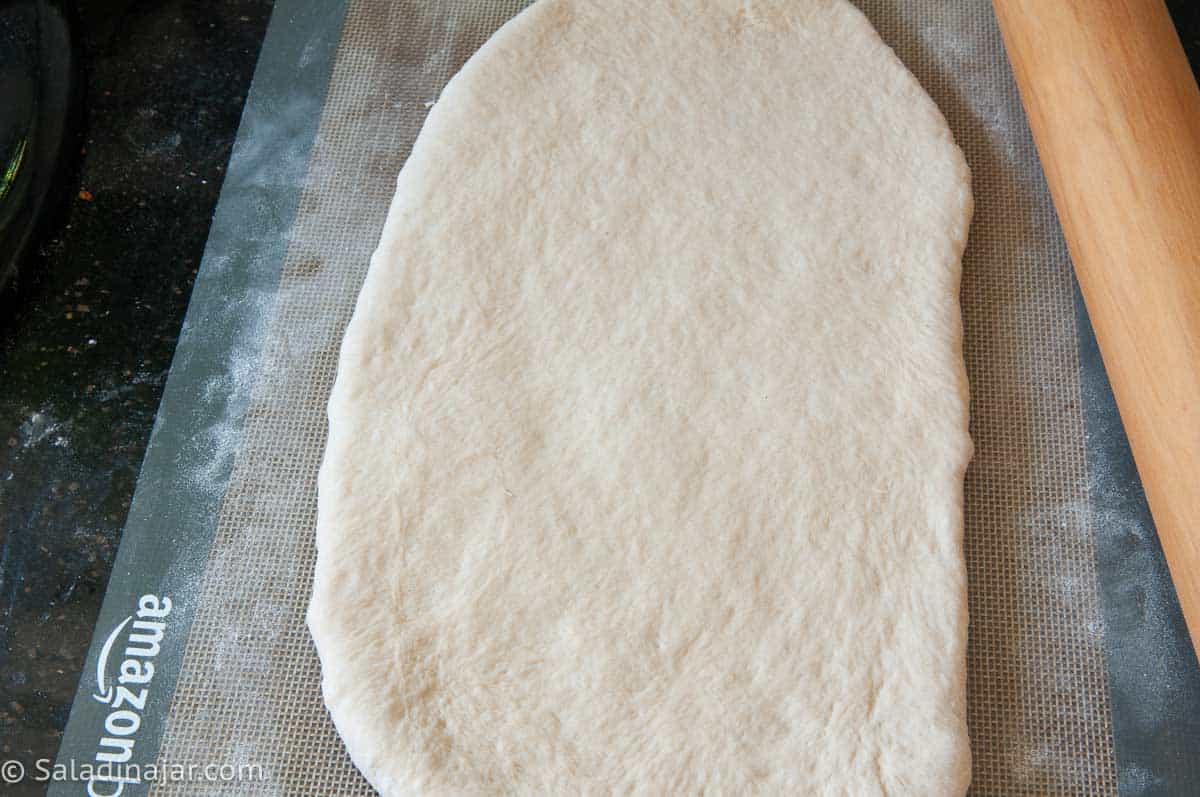
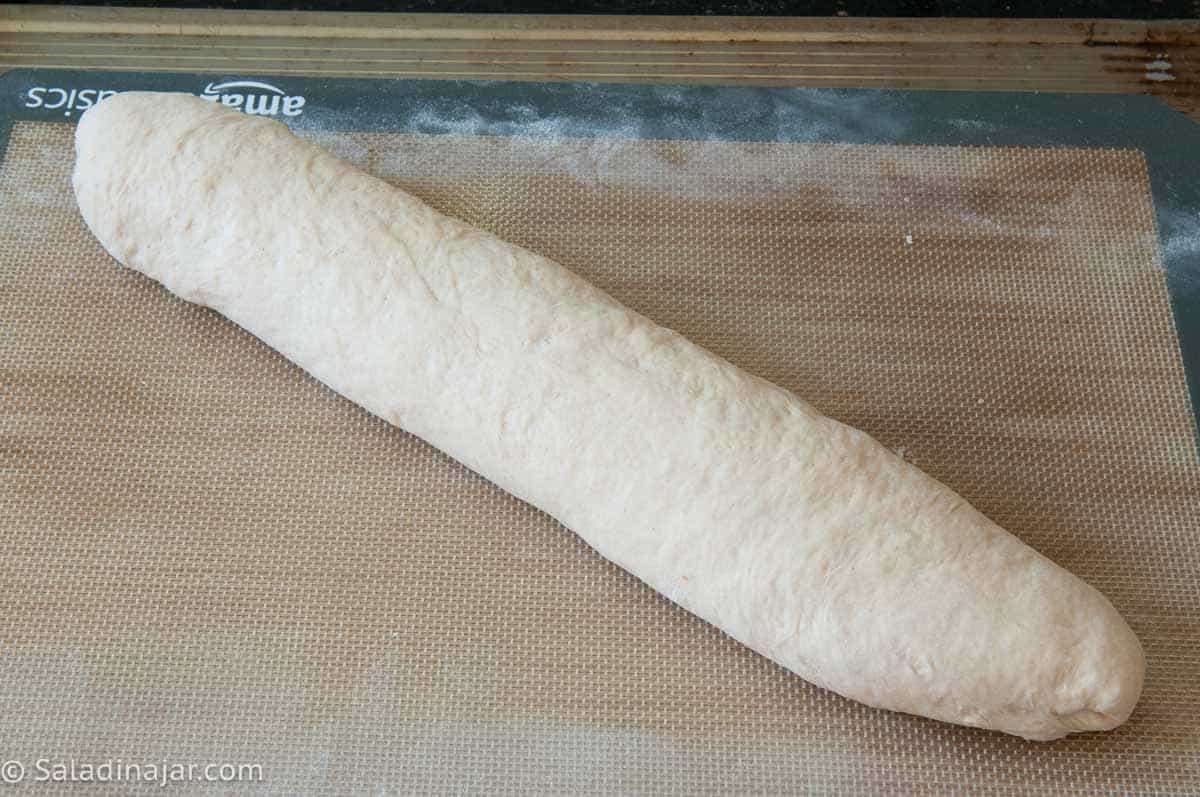
- Shaping the dough: Roll the dough into an oval shape slightly longer than you want your final loaf to be (about 9 x 12 inches is what I do.) Starting from a long side, roll the dough tightly into a cylinder. Pinch the seam and ends to seal. (See video.) Place seam-side down on a greased or lined baking sheet.
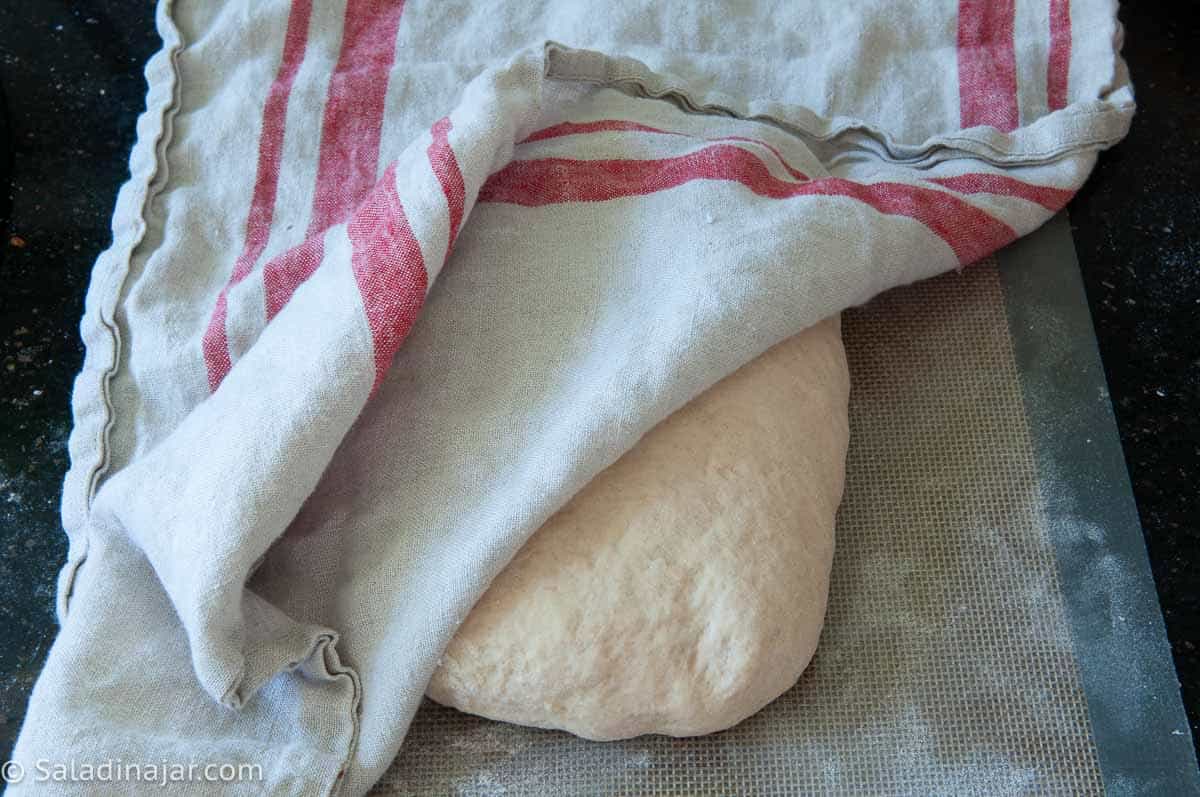
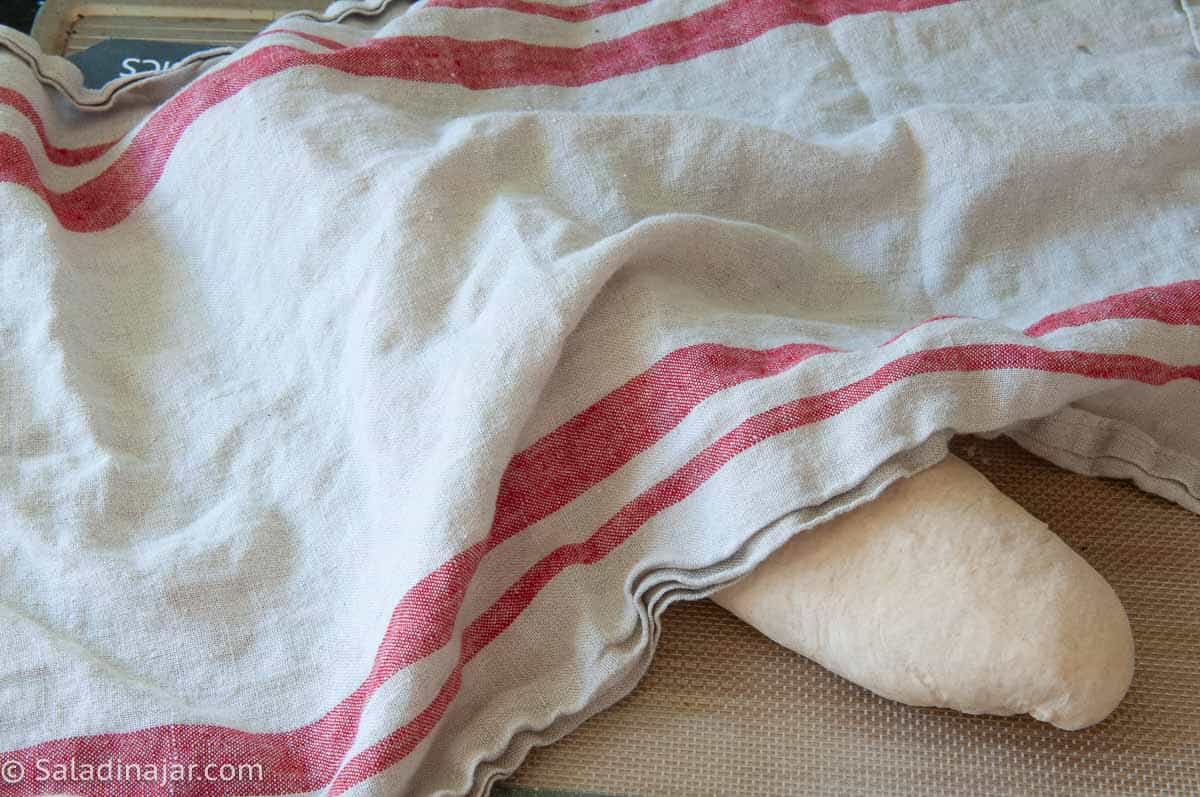
- Cover and final rise: Cover with a tea towel and allow to rise in a warm place (70–72˚F [21–22˚C] is ideal) until almost doubled in size. Whole wheat tends to rise faster than white flour. Check after 20-30 minutes. Don’t go by the clock, go by the appearance.
- Preheat oven to 425˚F (220˚C).
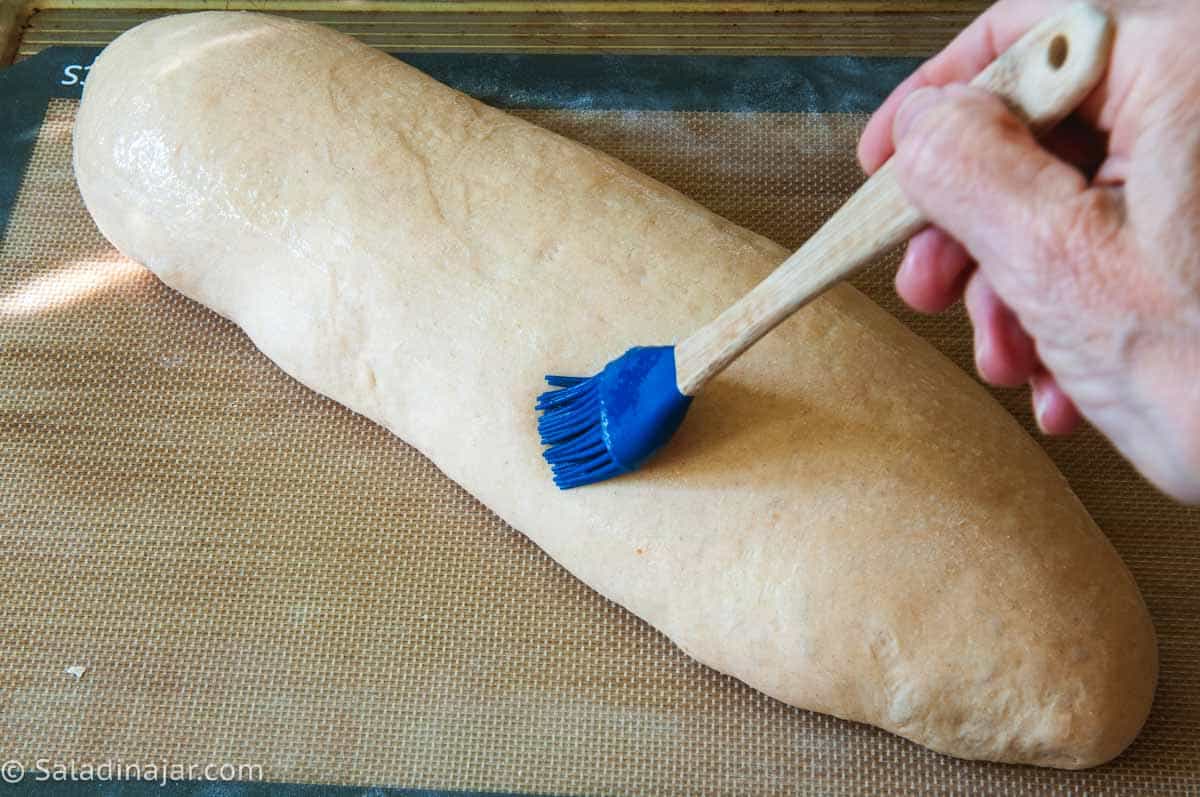
- Glaze: Whisk 1 egg white + 1 teaspoon water together for the glaze. Brush it over the loaf.
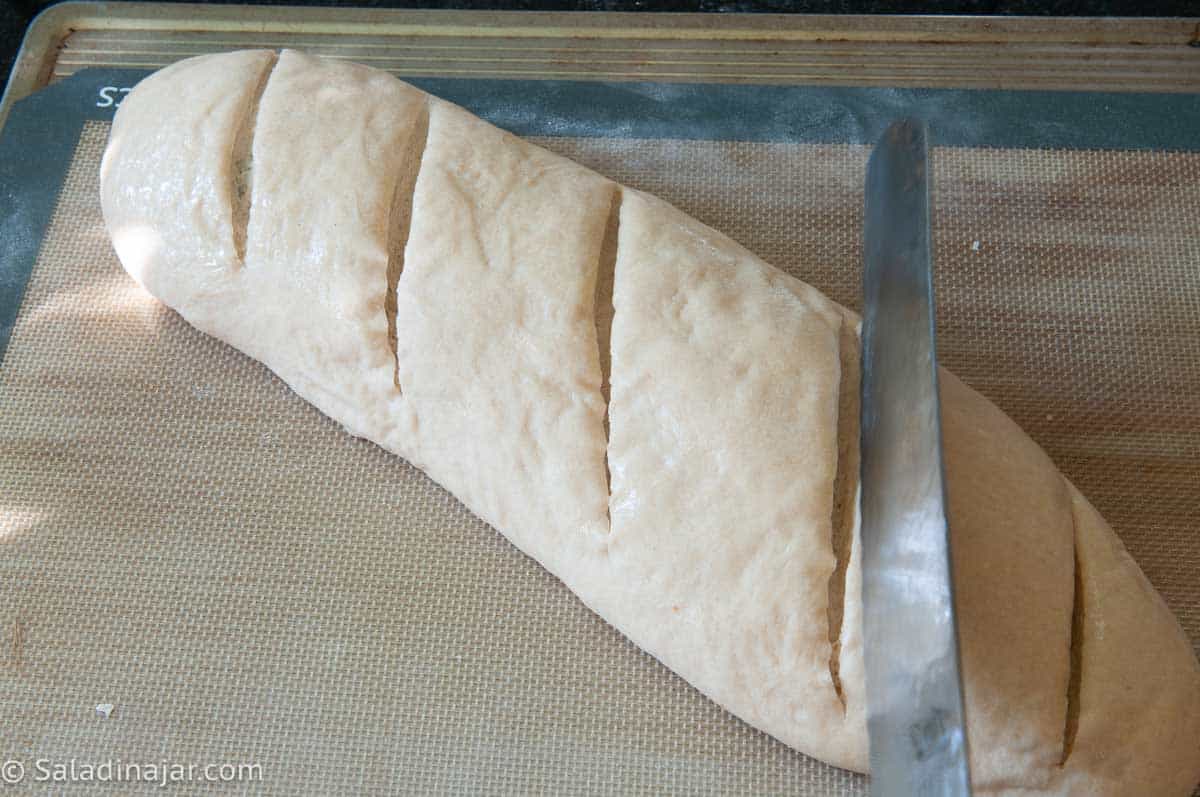
- Slash and Bake: Make diagonal slashes across the top. Bake for 20 minutes, or until golden and bread reaches 200°F (93°C) internally.
- Cool and serve: Remove to a cooling rack or slice and enjoy warm.
Notes
- Unbaked dough: Freeze after the DOUGH cycle or after shaping (before final rise). Defrost in the fridge overnight.
- Baked bread: Double-wrap and freeze up to one month. Reheat gently.
- Stand Mixer: Mix until moistened, then knead with a dough hook (speed 2–3) until smooth and elastic (5–10 minutes). Let rise, deflate, and shape as directed.
- By Hand: Mix to a shaggy dough, knead on a floured surface until smooth and elastic (10–20 minutes). Let rise, deflate, and shape as directed.
Equipment
Nutrition
All images and text ©️ Paula Rhodes for Salad in a Jar.com

Final Thoughts
This recipe strikes a happy middle ground between white and whole wheat. You get the flavor and fiber of whole grains without losing the tender texture that makes French bread so shareable. I owe a thank-you to the reader who nudged me to create it — a good reminder that the best ideas often come from my readers.
If you like the idea of artisan breads, check out one of my favorites, Seeded Sprouted Wheat Bread (Bread Machine + Oven Finish) If you want bread that’s 100% whole wheat, try this one: 100% Whole Wheat Sandwich Bread (Bread Machine Dough)
— Paula, Home Economist
Homemade Food Worth Sharing
Need help troubleshooting?
Email me: Paula at saladinajar.com — photos help!

The 50/50 has such great flavor compared to white French bread! I really like bread with white whole wheat and people don’t know it has whole wheat flour.
I couldn’t agree more about white whole wheat. It’s right up there with spelt. So happy you enjoyed this recipe.
How many servings does this loaf make?
Hi Julie,
I get 12 slices from this loaf. (See this information at the bottom of the picture in the recipe.)
Paula, a giant thank you for developing the whole wheat French bread! I’ve been baking bread to send to my grandkids. I hope to make the whole wheat French bread this week. Another question , would it be okay to add to add wheat bran to the crusty bread recipe? Would a half cup of bran be ok? Thanks again for your time and effort developing the recipe.
Hi Jill,
Hope you love the French bread.
Regarding the wheat bran, are you thinking of adding it to the bread or just coating the outside? A half cup is quite a lot in my estimation. It will soak up a lot of moisture and possibly result in a dry loaf. I haven’t actually tried it, but I would start much smaller, like 1/8 or 1/4 cup, then progress upward as you see fit.
It’s funny how you posted the recipe this morning because I was just having a conversation with my husband over toast and coffee about a new bread recipe I just made. The bread was 100% white bread flour with pumkin added and while the taste was good it was lacking in texture. I’m so accustomed now to making my bread with some whole wheat or spelt, that when I just use white flour the bread just doesn’t seem right to me. Thanks for your great post and recipe.
Hi PattiAnn,
I can identify with your comment! Plain white flour seems kinda boring after you get used to using whole-grain flours. I find myself adding ground spelt or ground white whole wheat to may of my recipes, even if it’s only a quarter or half a cup. Thanks for writing.
Great recipe, always looking for ways to add whole grains. Also, I made your Steakhouse Bread to go with a seafood chowder last week, It was wonderful! Love the texture.
Sharon S
Hi Sharon,
I often forget about the Steakhouse Bread, but the next time I make clam chowder, I will combine it with the Steakhouse Bread. Great idea!!!
Hi, I’m in the uk and use my oven for the second rise as the kitchen is so cold at the moment. I made your 50:50 French bread but after I had shaped it and whilst it was having its final rise it did double in size but spread outwards and didn’t retain its shape. Where did I go wrong? It tasted amazing but wasn’t aesthetically pleasing and had to be cut along the length of it to make a slice with having as it was so squat. Can you advise please?
Hi Jane,
So glad it tasted good! When a loaf spreads instead of rising upward, the dough usually didn’t have enough strength to hold its shape. That can happen if it’s slightly over-proofed or not shaped tightly enough.
Next time, shape firmly to build surface tension and let the final rise go only until puffy—not doubled. Using the oven for warmth is fine—just keep it gently warm, not hot. Hope this helps for next time.
This recipe is a whole-wheat version of my popular Bread Machine French Bread recipe. In case you missed it, you can see more tips for baking with whole wheat flour in my latest newsletter (10/17/25), accessible under the “newsletters” headline at the bottom of the page. Subscribe at the top of this page to receive all of my newsletters.